Haiti has received billions of dollars in international aid over the past several decades. Yet for most communities, the conditions that aid was meant to fix have persisted or worsened. The question is not whether the money arrived. It did. The question is whether it was designed to produce communities that no longer need it. Haitian community leadership is not a peripheral nice-to-have in development work. It is the structural difference between projects that outlast the funding cycle and those that collapse the moment outside support is withdrawn. At Community2Community (C2C), this is not a philosophy statement. It is the operating design.
| Key Insight | Explanation |
|---|---|
| Local leadership is structural, not symbolic | Haitian community leaders at C2C hold decision-making authority over development goals, not just ceremonial endorsement roles. Communities identify their own priorities before any program is designed. |
| Aid that bypasses local leadership creates dependency | External frameworks that replace rather than build local systems produce short-term outputs that communities cannot sustain once the outside organization exits. |
| The C2C model measures outcomes, not inputs | Success is measured by what communities can do independently over time, not by the volume of resources delivered or the number of projects completed. |
| Peasant associations in Petit-Goâve are genuine partners | C2C collaborates with established local peasant associations whose visions guide what gets built, funded, and sustained, not the other way around. |
| Health initiatives are community-managed, not clinic-driven | The Continuous Care Initiative uses community health workers and monthly doctor visits organized around how mountain communities actually live and travel, cutting healthcare costs by 92%. |
| Dignity is a design requirement, not a talking point | C2C frames development as “development with dignity,” meaning communities are never positioned as passive recipients but as the primary architects of their own futures. |
| Donor support should accelerate, not replace, community agency | International philanthropic investment works best when it provides resources communities have already identified as priorities, not when it arrives with pre-set programs. |
The pattern is well-documented by independent evaluations of post-2010 aid in Haiti: high volumes of funding flowed in, external organizations designed and delivered programs using frameworks built outside the country, and local leadership was bypassed at the decision-making level. The result was not development. It was a layered system of dependency that measured success by the volume of inputs delivered rather than by whether communities could meet their own needs once the organizations left.
This is not a critique of individual aid workers. Most showed up with genuine commitment. The problem was structural. When programs are designed externally, implemented by outside staff, and evaluated against foreign benchmarks, local capacity is not built. It is replaced. And when replaced capacity disappears along with the funding that sustained it, communities are left further from self-sufficiency than before the intervention began.
The shift that actually works is not cosmetic. It is not adding a local advisory board to an otherwise externally-controlled program. It is redesigning the entire model so that Haitian communities hold the authority, set the agenda, and own the outcomes from the start.
Pro tip: Before evaluating any development organization’s work in Haiti, ask one question: who decided what got built? If the answer is a headquarters staff in another country, that is not community-led development regardless of what the program brochure says.
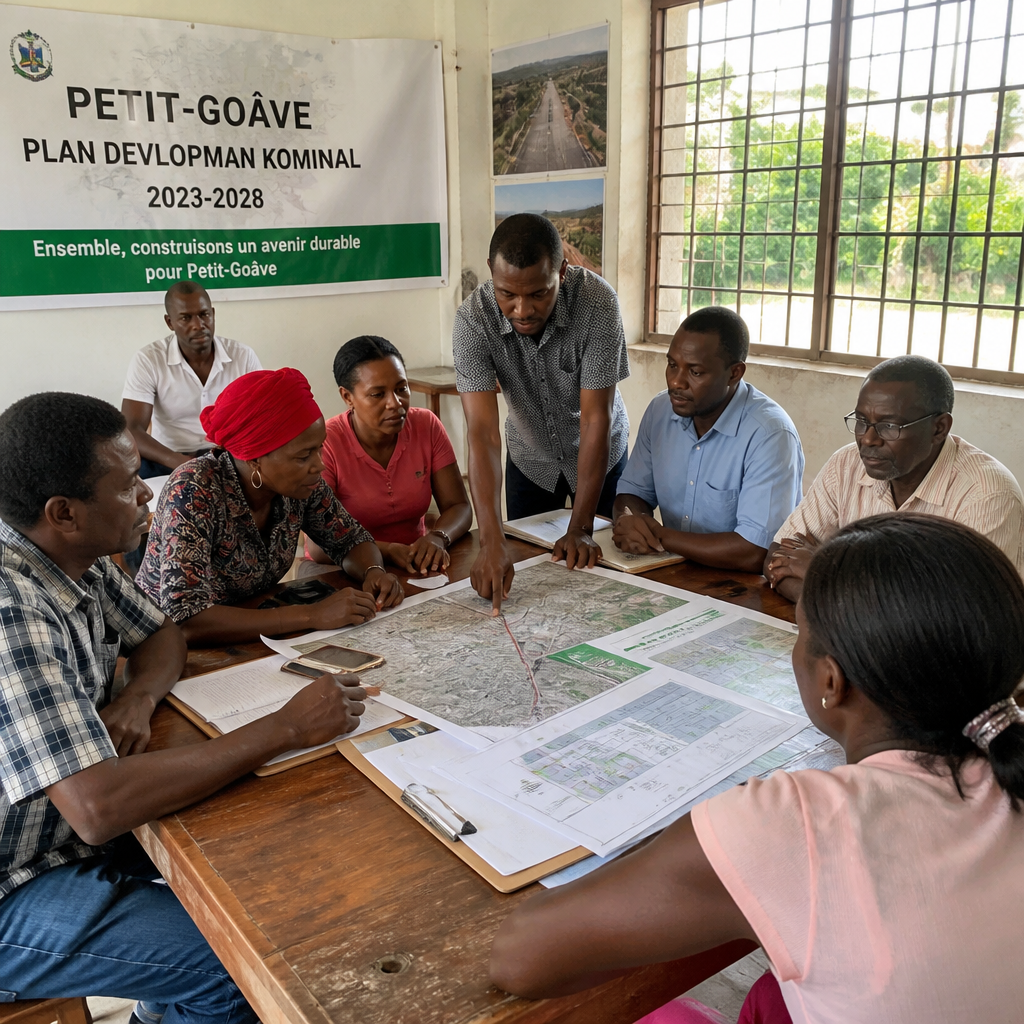
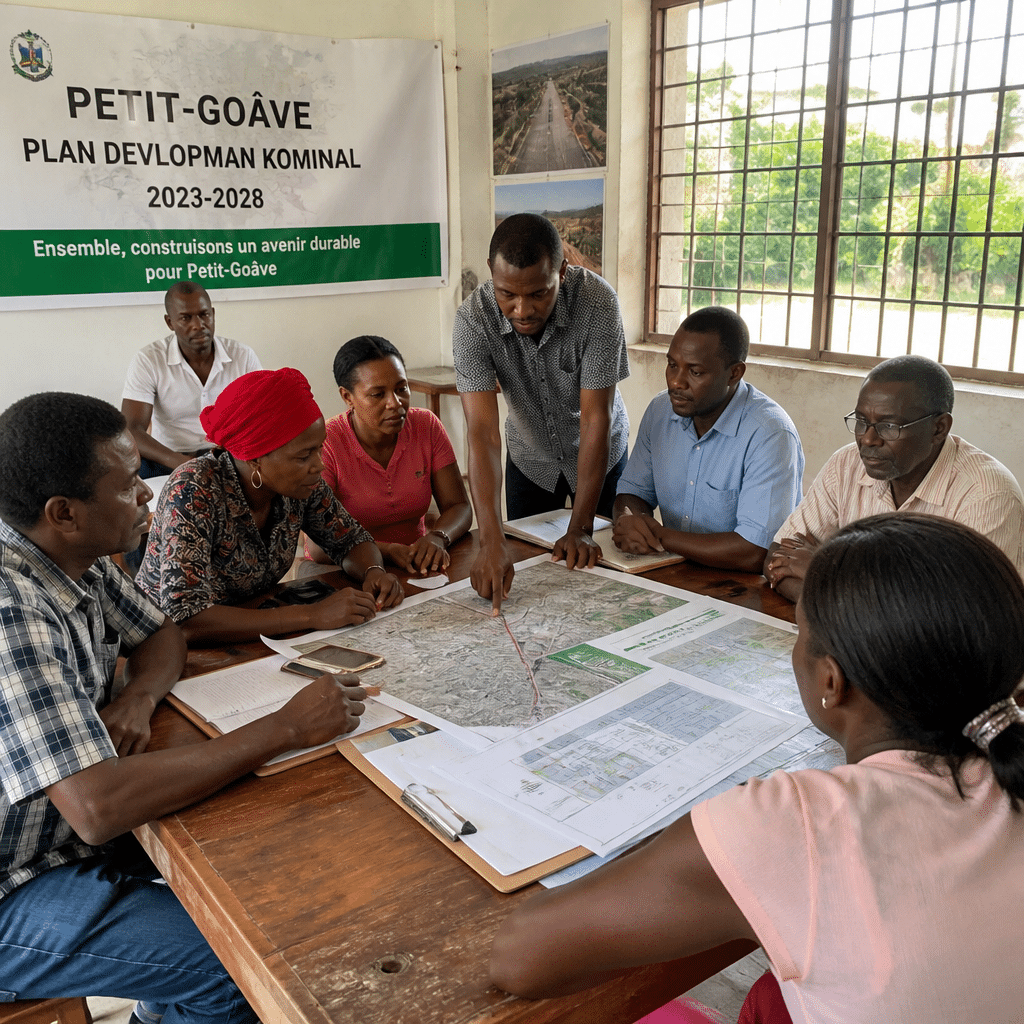
Local leadership in Haiti is a phrase that gets used loosely. Some organizations mean they have Haitian staff. Others mean they consult communities before rolling out programs they already designed. Neither is local leadership in any meaningful sense. Real local leadership means communities identify the priorities, and the external organization’s job is to resource and support that vision, not to shape or pre-approve it.
At C2C, partner communities hold decision-making authority over their development goals and implementation strategies. That is not a soft influence. It means the community’s priorities come first, and the program follows. This flips the conventional model, where an organization arrives with a program already structured and then seeks community buy-in.
In practice, this means meetings happen in the community before anything is proposed. Community members articulate what they need most, what has failed before and why, and what they are willing to steward long-term. A development project that a community has not chosen is a project that community has no reason to maintain. This is why C2C’s partner communities in the mountainside areas of Petit-Goâve have built projects that are still functioning years after initial implementation.
Consultation is when an external party asks for input and then decides. Authority is when the community decides and the external party executes. The distinction sounds simple, but it requires organizations to genuinely give up control over program design, which most are not structured to do. C2C is built around that transfer of authority as a founding principle, not an afterthought.
Development that does not start with what the community has already decided it needs is not development. It is a service delivery system that creates clients, not builders.
The C2C Collaborative Framework is the operational structure through which Community2Community works alongside Haitian partner communities. It is explicitly designed to build long-term self-sufficiency and reduce reliance on foreign aid. The framework starts with community-identified priorities rather than pre-designed programs, and that sequencing is everything.
The framework addresses UN Sustainable Development Goals covering poverty elimination, health, education, sustainable infrastructure, and other interconnected priorities, but those goal categories are filled with specific content by the communities themselves. No outside organization tells Petit-Goâve what its health priorities are. Petit-Goâve tells C2C, and then C2C works to resource what the community has named.
One of the most consistent failure modes in development work is the completed project that nobody maintains. A well was drilled. A school was built. A clinic was equipped. And within a few years, the infrastructure deteriorated because no community system for its upkeep was ever established. The C2C Collaborative Framework is designed specifically to prevent this by ensuring that communities are not just beneficiaries of a completed project but stewards of an ongoing system they helped design.
When communities identify their priorities and co-design implementation strategies, they develop ownership. Ownership produces maintenance. Maintenance produces longevity. That chain does not happen by accident. It happens because the framework requires it from day one.
Pro tip: When reviewing any development project’s success claims, look specifically at what happens after the funding ends. Projects that survive the loss of external funding are community-owned. Projects that collapse are not, regardless of how successful they looked during implementation.
Not all development models are built the same way. The differences in structure produce very different outcomes for communities. Understanding these distinctions helps donors direct support toward approaches that produce lasting results.
| Approach | Who Sets Priorities | Sustainability Outcome |
|---|---|---|
| Top-down relief model | External organization or donor determines program content before community engagement. Communities receive pre-designed services. | Low. Programs typically depend on continued external funding and staff. Capacity is not transferred. Communities remain service recipients. |
| Consultation-based NGO model | External organization designs programs, then consults communities for feedback or endorsement. Local input is advisory, not decisive. | Mixed. Some programs align with community needs; many do not. Ownership is partial. Longevity depends on continued outside management. |
| C2C Collaborative Framework model | Partner communities identify priorities and hold decision-making authority. C2C resources and supports community-defined goals. | High. Communities own the design, implementation strategy, and ongoing stewardship. Projects are built to function after external support ends. |
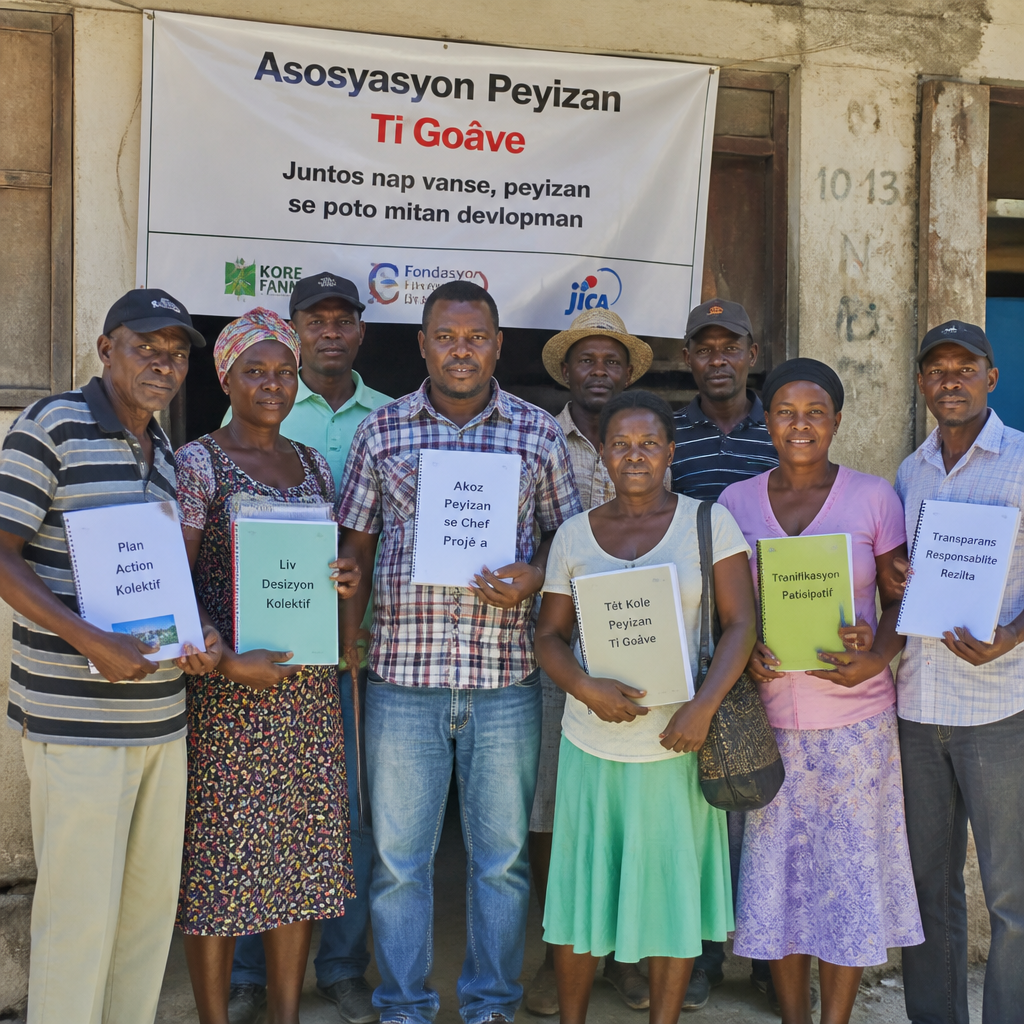
C2C’s work began in 2010 in Petit-Goâve, a coastal commune located roughly 42 miles from Port-Au-Prince. The work started not by designing programs for the community, but by collaborating and supporting the efforts of local peasant associations that already existed, already had organizational capacity, and already had a vision for their community’s future.
This is a foundational distinction. Peasant associations in Petit-Goâve are not auxiliary participants in a C2C program. They are the primary organizing structure through which community development priorities are identified and implemented. C2C’s explicit goal is to see the peasant associations’ visions realized, not C2C’s institutional agenda advanced.
Organizations that arrive in communities and build parallel structures to implement their programs create two problems at once. First, they duplicate or undercut organizations that already exist and already have community legitimacy. Second, when they leave, they take the management capacity with them because it was never transferred to a local institution. Starting with existing associations avoids both failures. The peasant associations in Petit-Goâve have organizational roots that predate C2C’s involvement. C2C strengthens what is already there rather than building something new that depends on C2C to function.
In 2017, C2C conducted a health assessment survey in the mountainside communities of Petit-Goâve. What came out of that assessment was not a clinic designed by an outside medical organization. It was the Continuous Care Initiative (CCI), a community development approach that partners with two main peasant groups and uses community health workers available on a daily basis.
The CCI is deliberately designed around how mountain communities actually live. Rather than requiring families to make a two-hour walk down the mountain to a hospital, the CCI brings monthly doctor visits to the mountain. It delivers health education on diet, hygiene, dental health, child nutrition, and sexual health at the community level. Monthly doctor visits led to a 30% decrease in high blood pressure through education and medication. Healthcare costs decreased by 92% from the start of the initiative. These are not external metrics imposed on a community program. They reflect what the community itself identified as its health priorities and what changed when those priorities were addressed through a community-managed system.
The outcomes that community-led development produces are categorically different from what relief-model programs produce, and the difference shows up most clearly over time. Short-term relief can be delivered quickly and measured in immediate terms: meals distributed, families housed, vaccines administered. Those outputs matter in crisis moments. But they are not development. Sustainable development builds the systems, institutions, and local capacity that allow communities to meet their own needs over time.
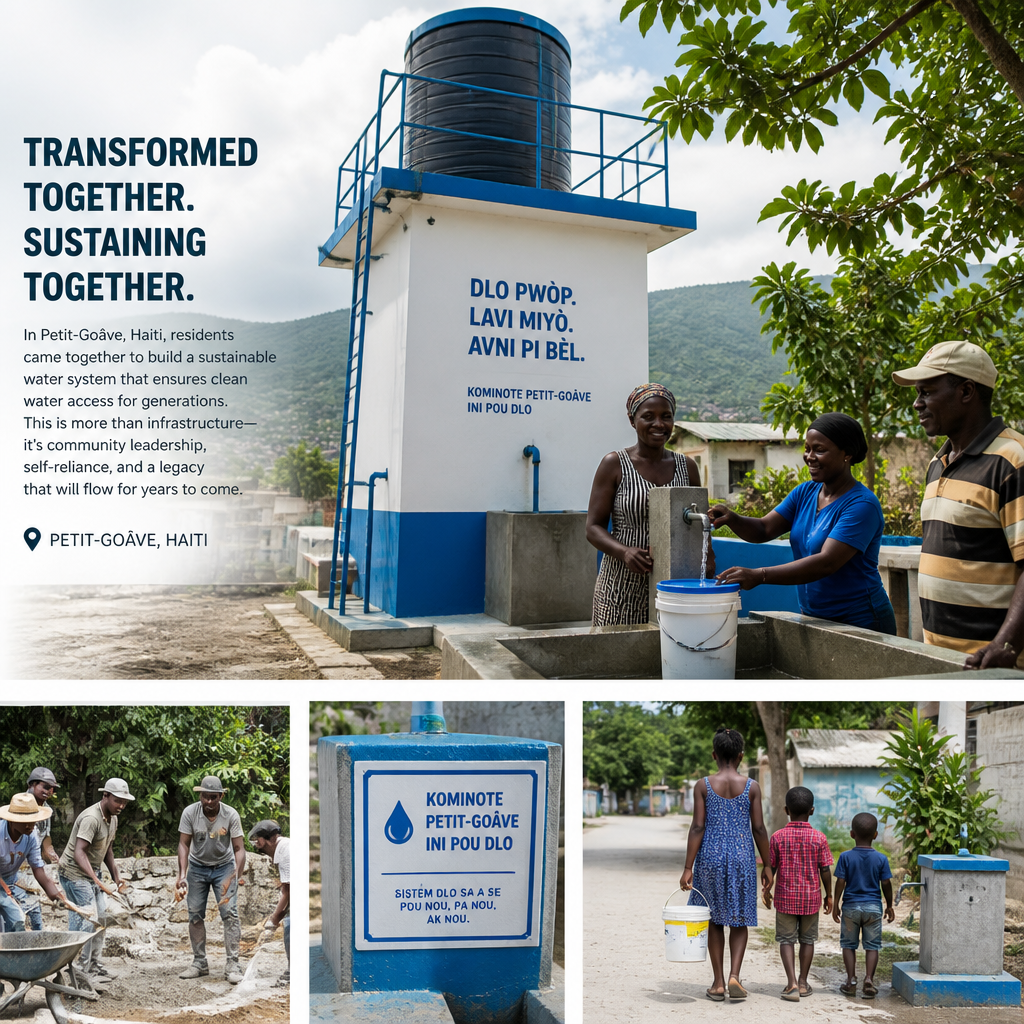
C2C’s over 12 years of work in Petit-Goâve demonstrates what accumulates when community leadership is the design principle from the beginning. A gravity-fed water distribution system is being built in phases for the mountainside community, not because C2C decided water infrastructure was a priority, but because the community identified it. The education initiative avoided building another temporary school shelter after community meetings concluded that permanent infrastructure was the only acceptable investment. These decisions came from the communities themselves.
C2C’s vision is specific: communities in Haiti that are self-sufficient, meaning they can secure their basic needs, including water, food, shelter, sanitation, and health and hygiene, without constant reliance on foreign aid. That benchmark is harder to hit than any input-based metric. It requires that the systems communities build actually function under community management, not just during the period when an outside organization is actively involved.
The measure of whether community-led development Haiti is working is not how many projects were completed. It is whether the communities that built those projects still control and maintain them years later. That is a much more demanding standard, and it is the right one.
For international donors and philanthropists, community-led development requires a shift in how support is understood. Funding that arrives with pre-set conditions about what will be built, how it will be measured, and when it will be “complete” is not well-suited to a model where communities set the agenda. The most effective philanthropic investment in this model provides resources that communities have already identified as what they need most.
This does not mean donors have no role in accountability. It means accountability flows toward community outcomes rather than donor-defined deliverables. Donors who invest in C2C’s partner communities are not buying a program. They are resourcing a community’s own roadmap toward self-sufficiency. That distinction matters for how impact is evaluated and reported.
Effective donor support in community-led development accelerates what communities are already trying to build. C2C’s partner communities in the mountainside areas of Petit-Goâve have identified specific infrastructure, health, and education priorities. Philanthropic investment funds those priorities, not a parallel program designed elsewhere. The result is that donor resources go directly into work the community already has the organizational capacity and local knowledge to implement and sustain.
A common mistake donors make is evaluating impact at the point of project completion rather than at a meaningful interval afterward. The real test of a development investment is what the community can do five years after the initial funding. That is where the C2C model consistently outperforms relief-based approaches, because community ownership is built into the design from day one, not added as a sustainability note at the end of a project report.
Haitian community leadership means that the people living in a community hold actual decision-making authority over what gets built, how it gets implemented, and who manages it long-term. It matters because development projects designed outside the community consistently underperform and fail to survive the end of external funding. When communities lead their own development, they build systems they understand, own, and have the practical motivation to maintain.
The C2C Collaborative Framework begins with community-identified priorities rather than pre-designed programs. Standard NGO approaches typically design programs externally and then seek community buy-in. The C2C framework gives partner communities decision-making authority over their goals and implementation strategies from the outset, which fundamentally changes what gets built and how long it lasts.
C2C has been working in Petit-Goâve, a coastal commune roughly 42 miles from Port-Au-Prince, since 2010. The work includes collaborating with local peasant associations to identify and implement community priorities in health, education, water infrastructure, and economic development. Specific initiatives include the Continuous Care Initiative, a gravity-fed water distribution system, and permanent education infrastructure, all driven by community-identified priorities.
The Continuous Care Initiative was born from a 2017 health assessment survey that C2C conducted in the mountainside communities of Petit-Goâve. Instead of imposing a clinic model designed elsewhere, C2C partnered with local peasant groups to build a community-managed health system using daily community health workers and monthly doctor visits brought directly to the mountain. This design reflects how the community actually lives, and the outcomes reflect that fit: a 30% decrease in high blood pressure and a 92% reduction in healthcare costs from the initiative’s start.
Most large-scale foreign aid in Haiti was designed using external frameworks that bypassed local leadership at the decision-making level, replaced local systems rather than strengthening them, and measured success by the volume of inputs delivered rather than by whether communities gained the capacity to meet their own needs. High funding volumes did not compensate for structural designs that built dependency rather than capacity. Independent evaluations of post-2010 aid in Haiti document this pattern consistently.
The most effective philanthropic investment resources priorities that communities have already identified rather than arriving with pre-set program designs. Donors working with C2C are funding a community’s own development roadmap, not a program designed by an outside institution. Effective donors also evaluate impact over time, looking at what communities can sustain independently years after initial funding, rather than measuring success only at the point of project completion.
Development with dignity means that Haitian communities are never positioned as passive recipients of outside charity, but as the primary architects of their own futures. In practice, it means that C2C’s partner communities lead the identification of needs, the design of responses, and the long-term stewardship of what gets built. Dignity is treated as a design requirement, not a rhetorical framing applied after the fact.
Have you seen community-led development approaches succeed or struggle in Haiti or other contexts? Share what you observed in the comments, because practitioners and donors alike benefit from what is actually happening on the ground.