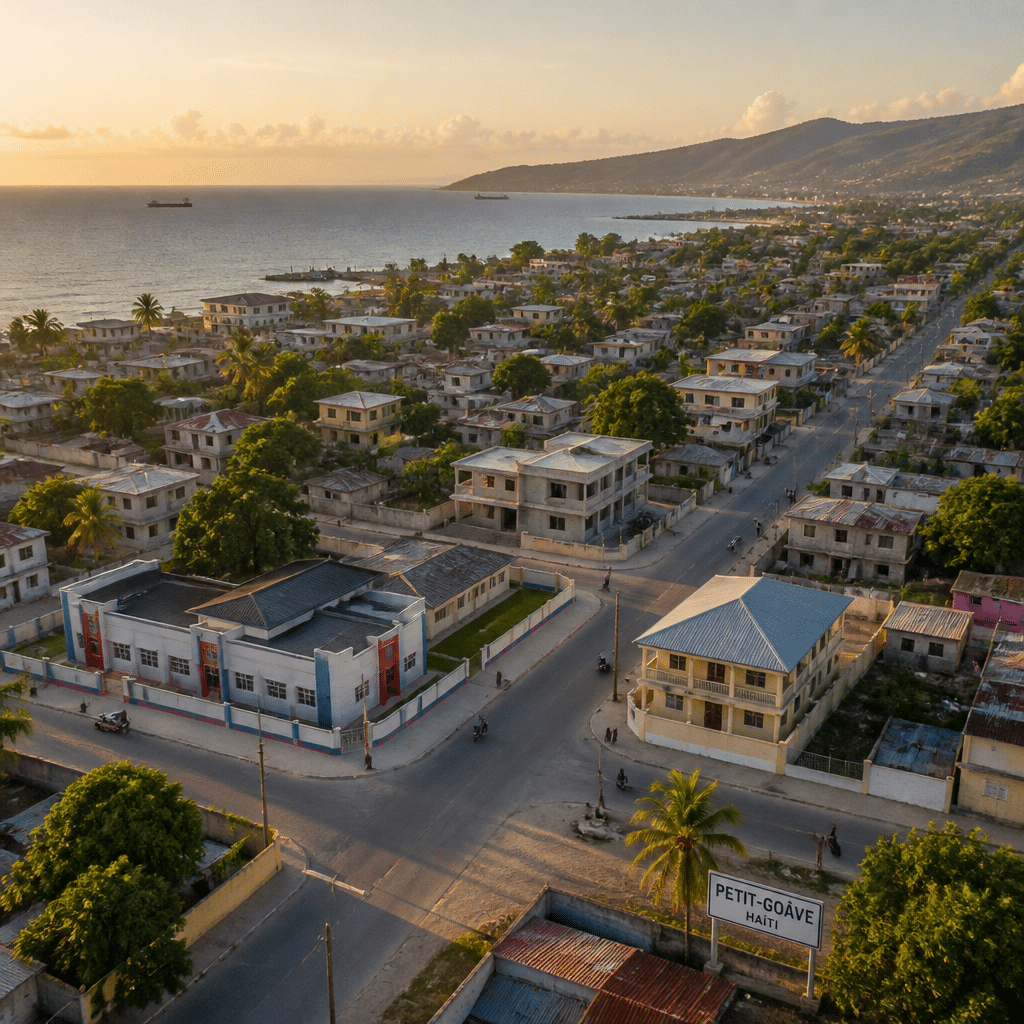
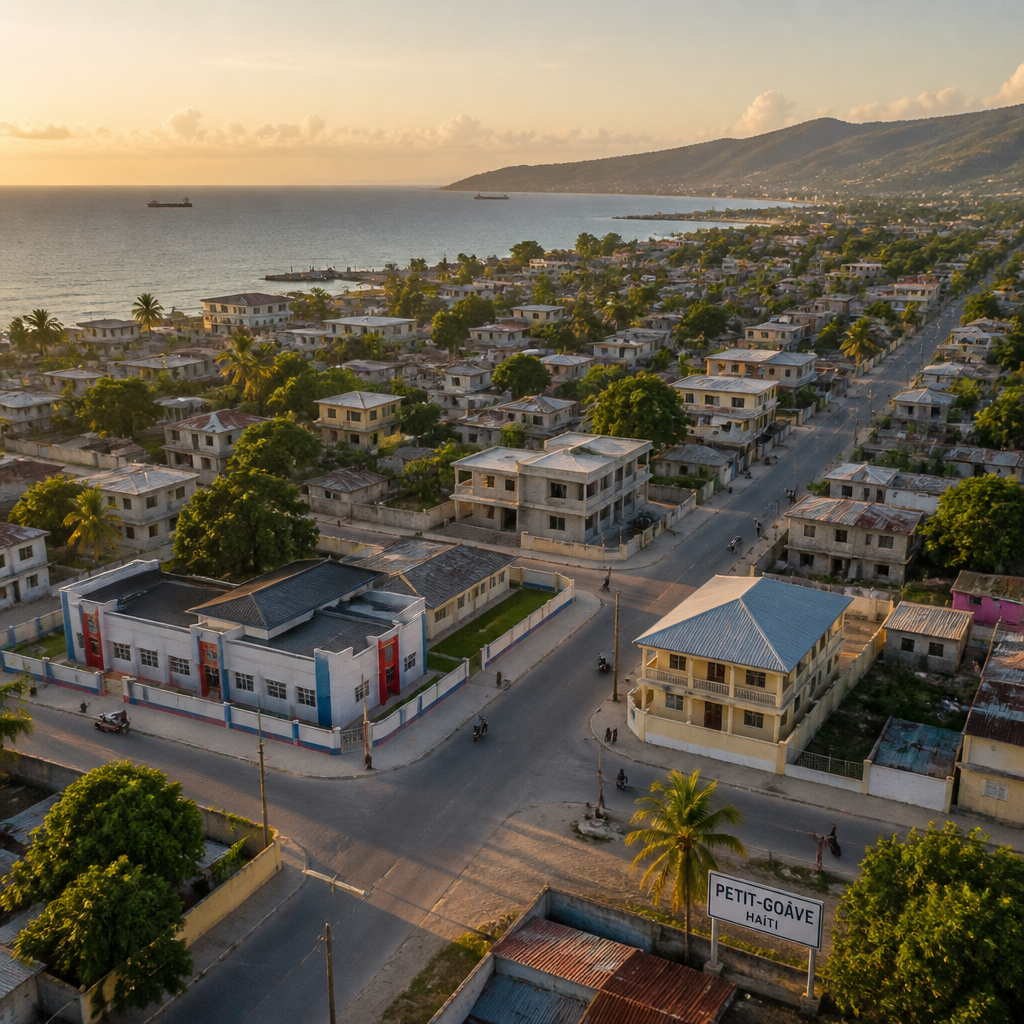
Most international aid organizations measure success by what they deliver to Haiti. Community2Community (C2C) measures it by how little Haiti needs them. That distinction is not a tagline. It is the operating logic behind every project C2C has supported since 2010 in Petit-Goâve, the coastal town 42 miles from Port-au-Prince where two partner peasant associations, APHD and ODCP, are proving that Haiti self-sufficiency is not an aspirational slogan. It is a documented, on-the-ground reality. These five stories show what community-led development looks like when foreign NGOs stop centering themselves in the work.
The failure mode of conventional foreign aid in Haiti is well-documented and not subtle. For decades, Haiti has received enormous amounts of relief and aid support from NGOs and various countries, yet the generational cycle of relief and dependency has had harmful effects on mindsets and behaviors in many Haitian communities, including an absence of personal responsibility. That outcome is not accidental. It follows directly from how most aid is structured.
International bodies providing basic care services in Haiti can prove destructive for the fragile Haitian health system, as local institutions found themselves in active competition with international ones. Free services delivered by foreign organizations undercut the people who were already doing the work locally. Engineers go unemployed because foreign contractors are cheaper on paper. Teachers lose students to programs funded by external grants. Communities learn to wait for the next NGO rather than solve problems themselves.
The goal is that C2C is the last non-profit our Partner Communities would ever need to work with, as they become fully self-sufficient. That is narrative-changing work.
C2C’s answer to this cycle is structural, not rhetorical. The C2C Collaborative Framework incorporates working with local communities of people in various professions, such as engineers, teachers, skilled trades people, and lay people in Haïti, who go unseen or underutilized. The five stories below are the result of that framework applied consistently over more than a decade.
| Key Insight | Explanation |
|---|---|
| Local leadership is non-negotiable | Every C2C project is initiated and driven by Haitian peasant associations, APHD and ODCP, not by external organizations deciding what communities need. |
| Education expansion happens from within | The Saul Louis Community School grew from pre-K through 9th grade because the community built that capacity, not because a foreign donor imported a curriculum. |
| Infrastructure built locally lasts longer | APHD-led road construction creates accountability that foreign-contracted builds do not. Local builders live with the results. |
| Tree planting signals long-term thinking | Planting 14,000 seedlings is a multi-decade investment. Communities that only rely on aid don’t make multi-decade investments. |
| Emergency response without external rescue is the real test | When cholera threatened Petit-Goâve, APHD responded with its own supplies, training, and infrastructure before outside help arrived. |
| The goal is to make C2C unnecessary | C2C explicitly states its goal is to be the last non-profit its partner communities ever need. Few aid organizations are willing to define success that way. |
| Dignity is a development metric | C2C frames self-sufficiency as restoring dignity, not just delivering services. That framing changes which projects get funded and which get measured. |
Before looking at the five stories individually, it is worth noting what connects them. None of these outcomes were designed in a foreign office. Each one started with a Haitian peasant association identifying a need, drafting a plan, and executing it with support rather than direction from C2C.
For years, children in C2C’s Mountainside Partner Community had access to elementary education through the Saul Louis Community School, run by the APHD peasant association. The school covered pre-Kindergarten through 6th grade, which meant that after 6th grade, families faced a choice: send children to schools farther away, with the safety risks that involved for families in a region with limited infrastructure, or pull them out of education entirely.
The Saul Louis Community School added 7th and 8th grade in 2023, ensuring over 300 children can continue their education locally, eliminating safety concerns for their parents. That expansion did not come from an international education grant with a foreign curriculum attached. It came from APHD deciding that their community’s children deserved continuity.
APHD added a trade school in 2022, and the community is currently adding 7th, 8th, and 9th grade curriculum to the Saul Louis Community School system. A trade school matters enormously in a community rebuilding its own infrastructure. It creates a local pipeline of skilled workers who build roads, construct buildings, and maintain water systems inside their own community instead of waiting for foreign contractors.
The 10 high school girls supported by the grant from the Haitian Women’s Collective continued their high school education in excellence and are on track to graduate on time.
Pro tip: When evaluating whether an education initiative in Haiti is building toward self-sufficiency, ask whether the curriculum is designed to keep young people in the community or funnel them out of it. C2C’s model explicitly builds skills that serve Petit-Goâve.
Access is a foundational development problem. A community that cannot reliably move people, goods, and agricultural produce between its farms and its markets cannot build economic stability, regardless of how many aid deliveries arrive by helicopter or motorcycle.
For 2024, the main priority for the Mountainside Partner Community Peasant Association, APHD, is completing phase 2 of the road construction. This is not a foreign-funded road project with foreign engineers overseeing local labor. It is a community-planned, community-executed infrastructure build that APHD itself identified as a priority and is carrying through to completion.
Roads built by foreign contractors in Haiti have a well-documented tendency to deteriorate without follow-up maintenance from the same external parties. The accountability loop is broken the moment the contractor leaves. When APHD builds and owns a road, the maintenance responsibility stays local. The people who use the road every day are also the people responsible for keeping it usable. That is a completely different incentive structure than a foreign aid project provides.
Pro tip: Donors evaluating infrastructure projects should ask who owns the maintenance responsibility after the ribbon is cut. If the answer is “the NGO” or “a future grant cycle,” the infrastructure is not actually serving community self-sufficiency. If the answer is “the community itself,” you are funding something durable.
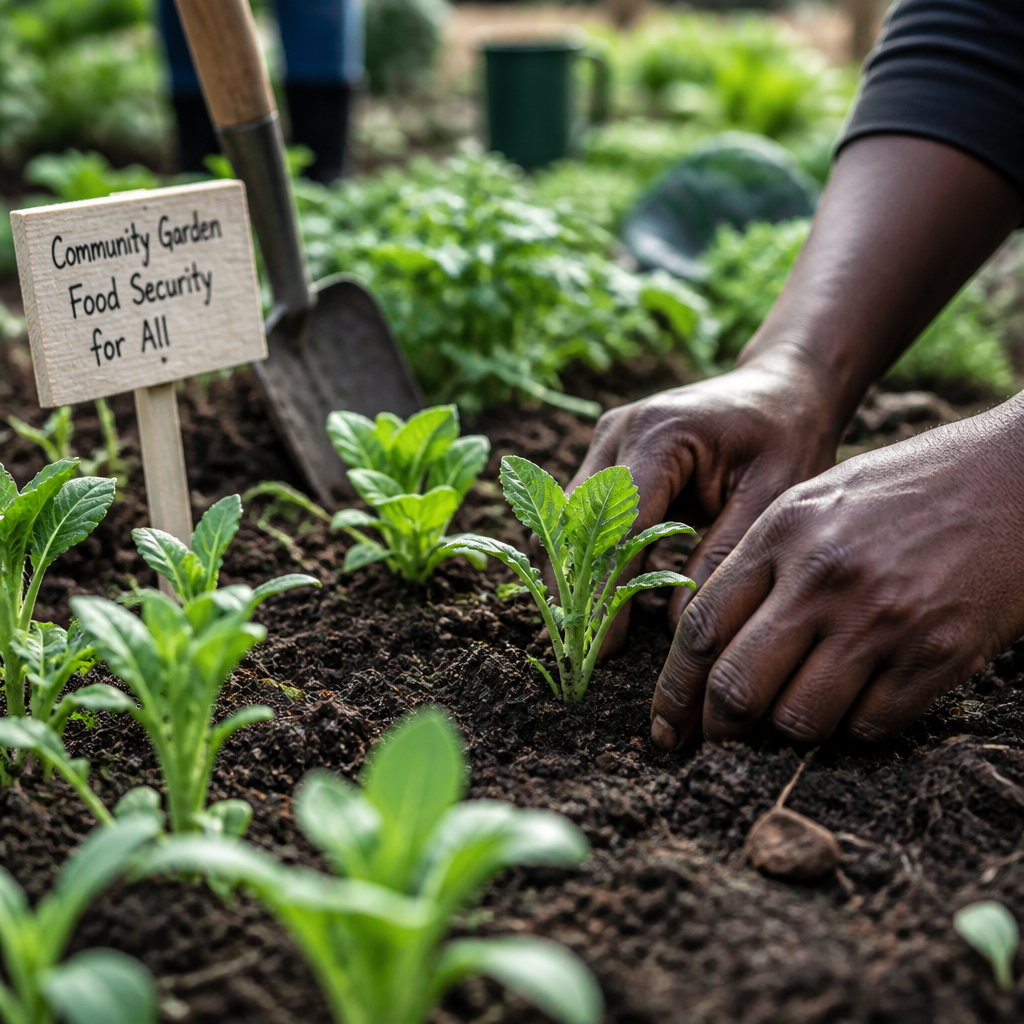
Planting trees is a commitment to a future you will not fully see for years. It is exactly the kind of investment that communities dependent on short-term aid cycles never make, because their planning horizon is as short as the next disbursement. The fact that C2C’s Mountainside Partner Community is planting trees at scale is itself evidence of a shift in how that community thinks about its future.
The Mountainside Partner Community planted 14,000 seedlings to promote agricultural development, encouraging sustainable farming practices and helping to enhance food security by purchasing and providing goats to families for milk, meat, and market within the communities. The goat program is particularly significant. Goats are a local economic asset, producing ongoing value in the form of milk and offspring, not a one-time food relief distribution.
The difference between giving a family food and giving a family goats is the difference between relief and development. The 14,000 seedling project and the goat program together represent a deliberate move toward food production as a community-owned economic activity. Families are not recipients in this model. They are producers.
The plan also includes planting 10,000 more trees and constructing a health and wellness center to serve 1,200 families. That health and wellness center, once built, will not require a visiting foreign medical team to function. It will be a community-owned facility staffed and maintained by community members.
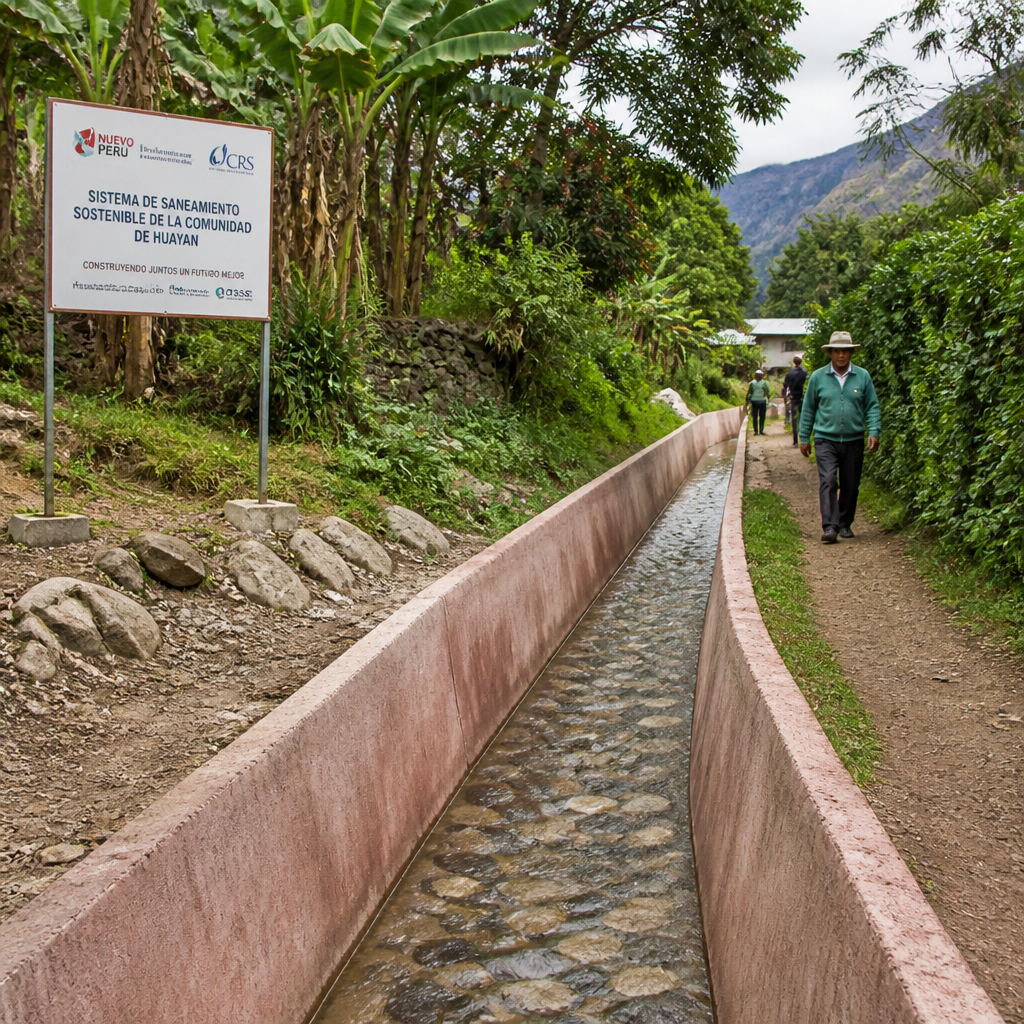
The second of C2C’s partner peasant associations, ODCP, serves the Petit-Goâve Proper community. Their priority infrastructure project addresses one of the most direct determinants of community health: sanitation and drainage.
For the Petit-Goâve Proper Partner Community Peasant Association ODCP, 2024 involves starting phase 2 of the canal construction. This will improve the health and sanitation conditions of the 85 families that make up their community. Canals matter in Petit-Goâve because inadequate drainage contributes directly to disease spread, including the cholera outbreaks that have repeatedly threatened the region. A community that controls its own drainage infrastructure is a community with real control over its health environment.
ODCP’s canal project is designed around the 85 families it directly serves. That precision is characteristic of the C2C approach. There is no ambiguous “tens of thousands of beneficiaries” language here. The community knows exactly who is affected, because the community is doing the work. That accountability is impossible to replicate in a top-down aid model where beneficiaries are defined by a donor’s reporting requirements rather than by the community’s own knowledge of itself.
Earlier in C2C’s history, community members constructed 85 latrines to combat cholera between 2011 and 2018. The canal represents the next phase of that same long-term sanitation strategy, now expanded in scope and owned entirely by ODCP.
This is the story that most clearly demonstrates what Haiti self-sufficiency looks like when it is tested by a real emergency rather than measured by a project milestone. When cholera returned to Petit-Goâve, APHD did not wait for an international health organization to show up with supplies and protocols.
In response to a cholera outbreak in Petit-Goâve, the Mountainside Peasant Association APHD purchased vital supplies, conducted educational workshops, and installed handwashing stations to prevent the spread. That response required APHD to have both the organizational capacity and the financial resources to act immediately. Both came from years of building, not from a reactive foreign grant.
Most aid organizations talk about “building local capacity” as a goal. C2C’s partner communities demonstrate it as a fact. C2C’s COVID-19 response plan also stayed true to the mission of creating self-sufficient communities by working with the community, accomplishing goals by listening to the C2C Haïti team and partner communities.
The distinction matters for donors. Funding “local capacity” through a model where the foreign NGO retains control of strategy and finances builds dependency with a local face. Funding communities that own their own strategies, execute their own responses, and make their own decisions builds actual capacity. The cholera response was not C2C’s response. It was APHD’s response. C2C was a support structure, not the rescue team.
The three most common frameworks operating in Haiti represent genuinely different philosophies about who is centered in development work. Understanding those differences matters for donors deciding where to put resources.
| Approach | Who Leads the Work | Long-Term Dependency Outcome |
|---|---|---|
| Traditional Foreign Aid (emergency relief model) | Foreign NGO or government donor, with local labor as implementers | High dependency. Communities learn to wait for the next cycle rather than build internal capacity. |
| Capacity-Building Partnerships (e.g., training programs with external curriculum) | Foreign organization designs programs; local leaders deliver them | Moderate dependency. Local leadership grows but strategy and funding remain externally controlled. |
| C2C Collaborative Framework | Haitian peasant associations (APHD, ODCP) identify needs, lead execution, own outcomes | Decreasing dependency. The explicit goal is that C2C becomes unnecessary to the communities it serves. |
The column that matters most for long-term outcomes is the third one. Development approaches that feel locally-led but retain external control over strategy and funding produce a more sophisticated form of the same dependency problem. C2C’s framework is unusual precisely because it accepts the outcome of its own success: communities that no longer need C2C.
Funding community-led development in Haiti requires a different mental model than funding conventional relief. The results are less immediately photogenic than a foreign volunteer building a school. The timelines are longer. The metrics are harder to compress into a single annual report. And the success condition, communities that stop needing you, runs counter to how most charitable organizations define growth.
Foreign voices tend to dominate the conversation surrounding Haiti’s needs. In order for Haiti to advance, Haitians need to be at the forefront of those efforts. Donors who fund C2C’s partner communities are funding exactly that: Haitian communities at the forefront of their own development.
C2C’s work addresses UN Sustainable Development Goals 1 through 4, 6, 8, 11, 13, 15, and 17, with partner communities building long-term self-sufficiency, reducing reliance on foreign aid, and creating lasting impact for future generations. That scope means donor resources touch poverty elimination, health, education, infrastructure, and environmental sustainability simultaneously, without duplicating efforts or creating the competitive dynamic that foreign aid programs frequently impose on local service providers.
C2C’s first annual golf classic fundraiser raised $56,000 toward its goals. That number matters less than what it represents: community members and diaspora supporters investing in a model they believe in, not a foreign charity soliciting sympathy donations. Donors who join that effort are joining a network of people who have already decided this approach works.
Pro tip: If you are a donor evaluating Haiti development organizations, ask specifically: what happens to this community if your organization closes tomorrow? If the honest answer is “they lose most of their services,” you are funding dependency. If the answer is “they continue most of what they are doing,” you are funding self-sufficiency. C2C’s answer, by design, is the second one.
C2C partner communities, specifically the APHD and ODCP peasant associations in Petit-Goâve, are not recipients in the conventional sense. They identify their own priorities, lead their own projects, and own their own outcomes. C2C provides collaborative support and resources, but the associations make the strategic decisions. That is a fundamental structural difference from models where a foreign NGO decides what a community needs and then delivers it.
C2C has been operating since the aftermath of the January 2010 earthquake, giving the organization more than 12 years of continuous presence in Petit-Goâve. Verified outcomes include the Saul Louis Community School expanding from pre-K through 9th grade, a trade school added in 2022, road infrastructure built by APHD, 14,000 seedlings planted, canal construction for sanitation serving 85 families, and community-led responses to cholera and COVID-19.
The five stories in this article are not theoretical. They are specific, documented outcomes from specific communities in Petit-Goâve. APHD’s cholera response, ODCP’s canal construction, the Saul Louis school expansion, and the agricultural programs are all real and ongoing. The C2C model explicitly defines success as the communities no longer needing C2C, and the progress toward that goal is measurable in completed phases of road construction, grades added to local schools, and trees in the ground.
The core difference is where decision-making authority sits. Larger organizations tend to operate top-down models where foreign staff determine strategy and local staff implement it. C2C’s Collaborative Framework places strategic authority with Haitian peasant associations from the start. C2C also explicitly measures success by decreasing dependency, which most large organizations do not do, because decreasing dependency means shrinking your own role, which runs against most organizational growth incentives.
The framework requires that partner communities come with their own identified priorities, their own leadership structures, and their own commitment to execution. C2C is not looking for communities that will implement a pre-designed foreign program. It works with communities that have a vision for their own future and need collaborative support, resources, and connections to carry that vision forward. The peasant associations APHD and ODCP are examples of what that looks like in practice.
Donors can support C2C through direct financial contributions that fund specific community priorities like the road construction, school expansion, and health center that APHD has identified for 2024. C2C also engages partner organizations, including churches, schools, and businesses, through awareness events and collaborative programming. The most direct route is through c2chaiti.org, where donors can access impact reports, community updates, and specific funding needs.
If you have supported community-led development work in Haiti or are evaluating where to direct philanthropic resources in 2025, share your experience or questions below. The conversation about what actually works in Haiti development is one worth having out loud.
We would love your feedback and any insights you would share with others. What perspective would you add?