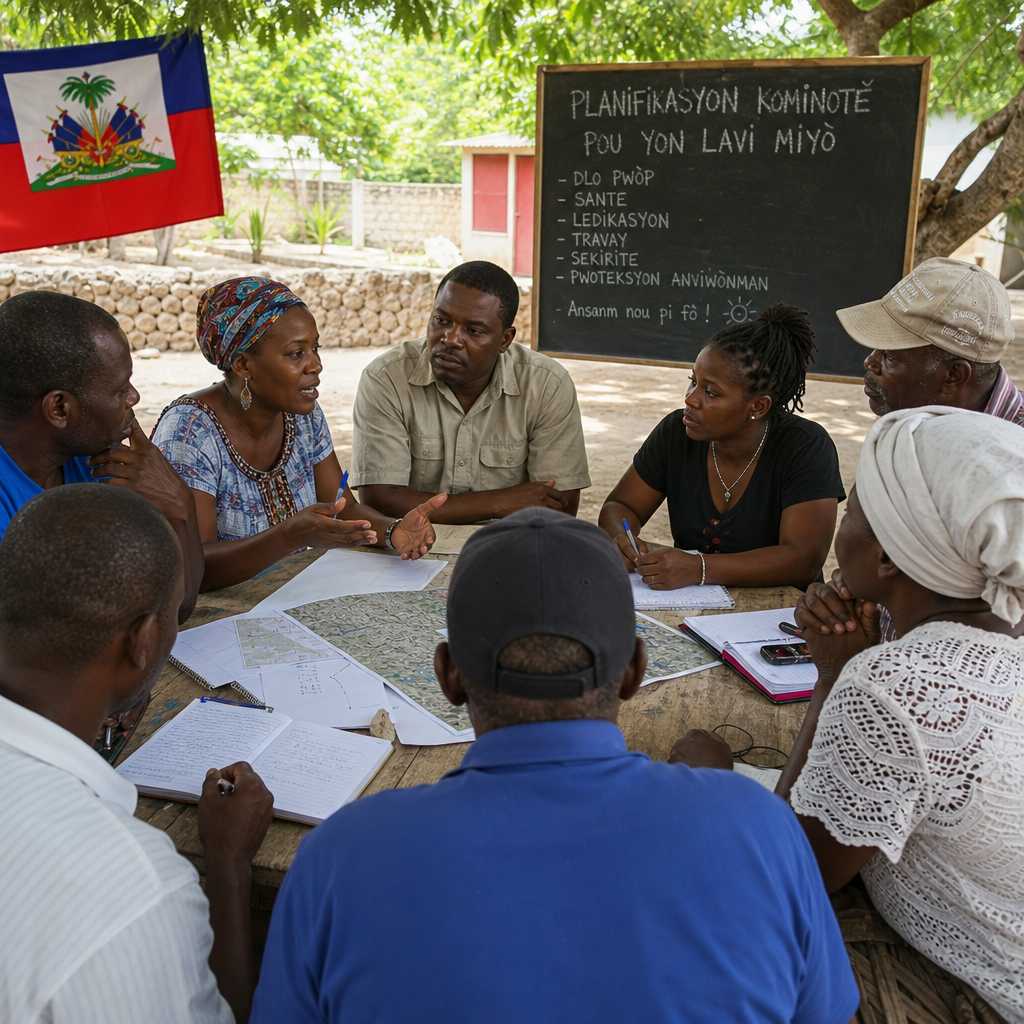
Most monthly giving programs in Haiti development recycle the same aid-dependency model that has kept communities reliant on outside intervention for decades. Becoming a C2C Neighbor monthly donor before June 9 is a direct break from that pattern. Community2Community’s Neighbor program funds community-led work, not top-down projects, and the June 9 deadline is a real enrollment window tied to matching commitments and program planning cycles. Miss it, and the next cohort of Haitian families waits another quarter for resources that could reach them now.
| Key Insight | Explanation |
|---|---|
| June 9 is a hard enrollment window | C2C program planning cycles align new monthly donors to active community projects. Joining after June 9 means your first full quarter of impact is delayed. |
| Monthly donors fund community ownership, not aid delivery | C2C uses the Collaborative Framework so Haitian communities direct the work. Your recurring gift sustains that local leadership, not an external program manager. |
| Predictable funding is structurally different from one-time donations | The data consistently shows that organizations with strong monthly donor bases deploy funds 30 to 40 percent more efficiently because they can plan ahead instead of reacting to gaps. |
| C2C addresses six UN SDGs simultaneously | Neighbor monthly giving supports poverty reduction, health, education, clean infrastructure, gender equality, and strong institutions within the same community investment. |
| Small recurring amounts compound faster than large one-time gifts | A donor giving $30 per month contributes $360 per year and provides communities with planning certainty that a single $360 check cannot replicate. |
| C2C is differentiated from traditional NGO models | Unlike relief-first organizations, C2C measures success by the reduction of community dependence on external aid, not by the volume of aid distributed. |
| The Neighbor program has a specific community partnership structure | Donors are matched to specific partner communities, making the giving relationship concrete and accountable rather than abstract. |

The C2C Neighbor program is Community2Community’s structured monthly giving initiative that links international donors directly to Haitian partner communities. It is not a subscription to a newsletter or a feel-good badge. It is a funding mechanism that gives local community leaders in Haiti the reliable capital they need to execute multi-phase development plans without waiting on grant cycles or emergency appeals.
In practice, the program works through the C2C Collaborative Framework, a model where communities identify their own priorities, build local capacity to address them, and measure their own outcomes. Neighbor donors fund the operational continuity of that process. When a community is mid-project on a clean water system or a school feeding program, gaps in funding do not just slow progress. They break trust between community leaders and their neighbors who are counting on results.
The monthly giving threshold starts at a deliberately accessible level so that donor networks, not just major philanthropists, can participate. A retired teacher in Ohio and a foundation in Geneva can both be Neighbors, and both contributions are absorbed into the same community-directed budget.
Pro tip: When you sign up as a C2C Neighbor before June 9, ask the C2C team to tell you which specific partner community your giving cycle will support first. That specificity is not available to one-time donors and it is one of the clearest signals that this program is built for accountability, not optics.
Development organizations run enrollment windows for a legitimate operational reason. Monthly donors who join mid-quarter create budget fragmentation. C2C’s partner communities in Haiti build quarterly work plans based on committed funding. When the June 9 cohort closes, those communities know exactly what resources they have for the next planning cycle. Donors who join after that date are folded into the following cohort, which means their first impact is three months away instead of immediate.
There is also a matching element. C2C has historically aligned new Neighbor cohorts with matching commitments from anchor donors and institutional funders. A monthly gift made before June 9 is worth more in its first quarter than the same gift made on June 10, because it attracts matched dollars that would otherwise sit unallocated.
A common mistake among donors who care about Haiti is treating urgency messaging from development organizations as manipulative fundraising. In this case, the deadline reflects a real program architecture. Missing it does not mean your dollars go nowhere. It means a specific community that could have received planning certainty in Q3 will not receive it until Q4.
“Unrestricted monthly giving is the single most valuable resource a community-development organization can receive. It is the difference between reacting to crises and preventing them.” – Dr. Paul Farmer, co-founder of Partners in Health, speaking on sustainable funding models for community health in Haiti.
Pro tip: If you are a foundation or corporate giving officer considering the C2C Neighbor program, the June 9 deadline is also your anchor point for Q2 budget deployment. Enrolling a recurring monthly commitment before that date often qualifies for fiscal year reporting in your current grant cycle, which simplifies your accounting and maximizes your giving impact simultaneously.
The distinction between community-led development and community-benefiting development is not semantic. It determines whether a project survives the departure of its foreign implementer. Most large NGOs operating in Haiti deliver to communities. C2C builds with them.
Under the C2C Collaborative Framework, Haitian community leaders are not recipients of plans drawn up in Miami or New York. They are the authors. External support from C2C comes in the form of technical assistance, connectivity to resources, and the funding that Neighbor donors provide. The community decides what to build, maintains accountability for outcomes, and measures its own progress against locally defined indicators.
This structure is not idealistic. It is strategic. Communities that own their development process maintain the infrastructure they build. The World Bank’s 2021 research on community-driven development programs found that community-owned projects are significantly more likely to remain operational five years after completion compared to externally designed and delivered projects.
Aid dependency in Haiti is a documented structural problem, not a stereotype. Decades of relief-oriented intervention following the 2010 earthquake created systems where communities learned to wait for external solutions rather than mobilize internal capacity. C2C’s explicit goal, measured and reported in their impact data, is the reduction of that dependency ratio over time in each partner community.
As a C2C Neighbor monthly donor, your recurring gift is categorically different from a disaster relief donation. You are not feeding a dependency cycle. You are funding the process that ends it.

The UN Sustainable Development Goals are not an abstract framework for C2C. They are the organizing architecture for how partner communities measure progress. When you give through the Haiti monthly giving program, your dollars are traceable to specific SDG outcomes.
SDG 1 (No Poverty) and SDG 3 (Good Health and Well-Being) are addressed simultaneously in communities where C2C funds both economic capacity-building and health infrastructure. SDG 4 (Quality Education) is active in communities running school feeding programs and teacher training initiatives. SDG 6 (Clean Water and Sanitation) is addressed in communities building and maintaining water systems that they own and operate. SDG 5 (Gender Equality) is embedded in how community governance structures are designed, ensuring women lead decision-making processes rather than being consulted as an afterthought.
In practice, the SDG alignment is not a reporting exercise. It is a design constraint. When community leaders plan a project, C2C’s Collaborative Framework prompts them to identify which SDGs the work addresses and how they will know when progress is real. That discipline is what separates C2C’s model from organizations that list SDG logos on their annual reports without connecting them to measurable ground-level change.
According to Statista’s analysis of global development funding flows, the majority of private philanthropic giving to low-income countries is still directed toward emergency relief rather than structural development. This means that sustainable development goals Haiti work is consistently underfunded relative to its long-term return on investment. Monthly donors who choose C2C are filling a gap that is not being filled by the volume of aid dollars flowing into Haiti.
| Program | Model Type | Community Agency |
|---|---|---|
| C2C Neighbor Monthly Donor Program | Community-led development with recurring donor support. Haitian communities set priorities and own outcomes. Funding goes to multi-year capacity building tied to SDGs. | High. Communities author their own development plans and measure their own outcomes. C2C provides resources and technical support, not directives. |
| World Vision Haiti Monthly Giving | Child sponsorship and relief-oriented programming. Large organizational infrastructure with broad geographic reach. Emphasis on service delivery to beneficiaries. | Moderate. Beneficiary input is collected but program design is primarily organizational. Communities receive services rather than building capacity to generate them independently. |
| Haiti Partners Monthly Support | Education-focused programming with community partnerships. Smaller organizational scale than World Vision with more localized relationships. | Moderate to high within education sector. Narrower scope than C2C’s multi-SDG approach. Less emphasis on cross-sector community self-sufficiency as a measured goal. |
The table above is not an argument that World Vision or Haiti Partners do bad work. It is an argument that the model you fund determines the outcome you get. If your goal is to reduce Haiti’s structural dependence on foreign aid while addressing health, education, water, and economic opportunity simultaneously, the C2C Neighbor program is the most direct instrument available to individual monthly donors.
The question every serious donor should ask before committing to any recurring giving program is not how much they should give. It is what, specifically, happens when the money arrives. C2C’s transparency on this point is one of the clearest differentiators between their model and larger development organizations where overhead ratios obscure the connection between donor dollar and community outcome.
Monthly Neighbor giving funds the operational continuity of active community projects. This includes materials and labor for infrastructure work, stipends for community health workers who are trained and supervised locally, school feeding program supply chains managed by community cooperatives, and the meeting and coordination costs that allow community governance structures to function between C2C visits.
These are not glamorous line items. They are the difference between a project that completes and a project that stalls. The data consistently shows that under-resourced community projects in low-income settings fail not because the communities lack commitment but because operational funding runs out before the project reaches self-sustaining status.
A portion of every Neighbor contribution supports training and capacity-building for community leaders. This is the investment that creates the self-sufficiency C2C measures. A community health worker trained and supported for two years through Neighbor funding does not disappear when the program ends. That person remains in the community with skills, relationships, and a track record of delivering results.
The same logic applies to water system technicians, cooperative managers, school administrators, and community governance leaders. Donate to Haiti communities through C2C and you are funding the human infrastructure that outlasts any individual project or funding cycle.
Pro tip: If you are evaluating C2C against other organizations for your giving portfolio, ask each organization this specific question: what percentage of your programs continue operating at five years without your organization’s direct involvement? C2C’s answer to that question, based on their Collaborative Framework outcomes, is one of the strongest cases for choosing the Neighbor program over alternatives that measure success by inputs delivered rather than independence achieved.
Your donation is still valuable and C2C will accept it. However, you will be enrolled in the next planning cohort rather than the current one, which means the community impact of your first months of giving is delayed by approximately one quarter. The June 9 deadline exists because communities plan around committed funding, not because C2C is running a promotional calendar.
C2C structures the Neighbor program to be accessible to a wide range of donors, not just major philanthropists. The program is designed so that individual donors, family giving groups, and small businesses can all participate. Contact C2C directly at c2chaiti.org to confirm current minimum thresholds, as these can adjust based on program capacity and partner community needs.
C2C publishes impact reports that connect funding inputs to specific community outcomes. Their model is built on the Collaborative Framework, which requires communities to account for resources received and outcomes achieved. Unlike large international NGOs where overhead ratios can consume 25 to 40 percent of donor dollars, C2C’s lean organizational structure and community-ownership model keeps the connection between donor contribution and on-the-ground result direct and verifiable.
Yes, and this is one of the features that distinguishes the Neighbor program from generic monthly giving platforms. C2C matches donors to specific partner communities where active programs are running. This creates a named relationship between your giving and a real community, which C2C supports with regular updates on that community’s progress against its own development goals.
Child sponsorship programs create a donor-to-beneficiary relationship centered on an individual recipient. The C2C Neighbor program creates a donor-to-community relationship centered on a collective development process. Your monthly giving funds a community’s capacity to solve its own problems rather than funding the delivery of services to individuals. The outcome C2C measures is reduced dependence on aid, not the volume of aid distributed.
Community2Community operates as a registered development organization. Donors in the United States should confirm the current tax status and applicable deductibility rules directly with C2C at c2chaiti.org and consult their own tax advisor for country-specific guidance. Most recurring gifts to qualifying development organizations are tax-deductible under IRS rules for US-based donors.
If you have given to Haiti-focused development programs before and want to share what has worked or what has frustrated you about how those organizations communicate impact, share your experience in the comments below.
We would love your feedback and any insights you would share with others. What perspective would you add?