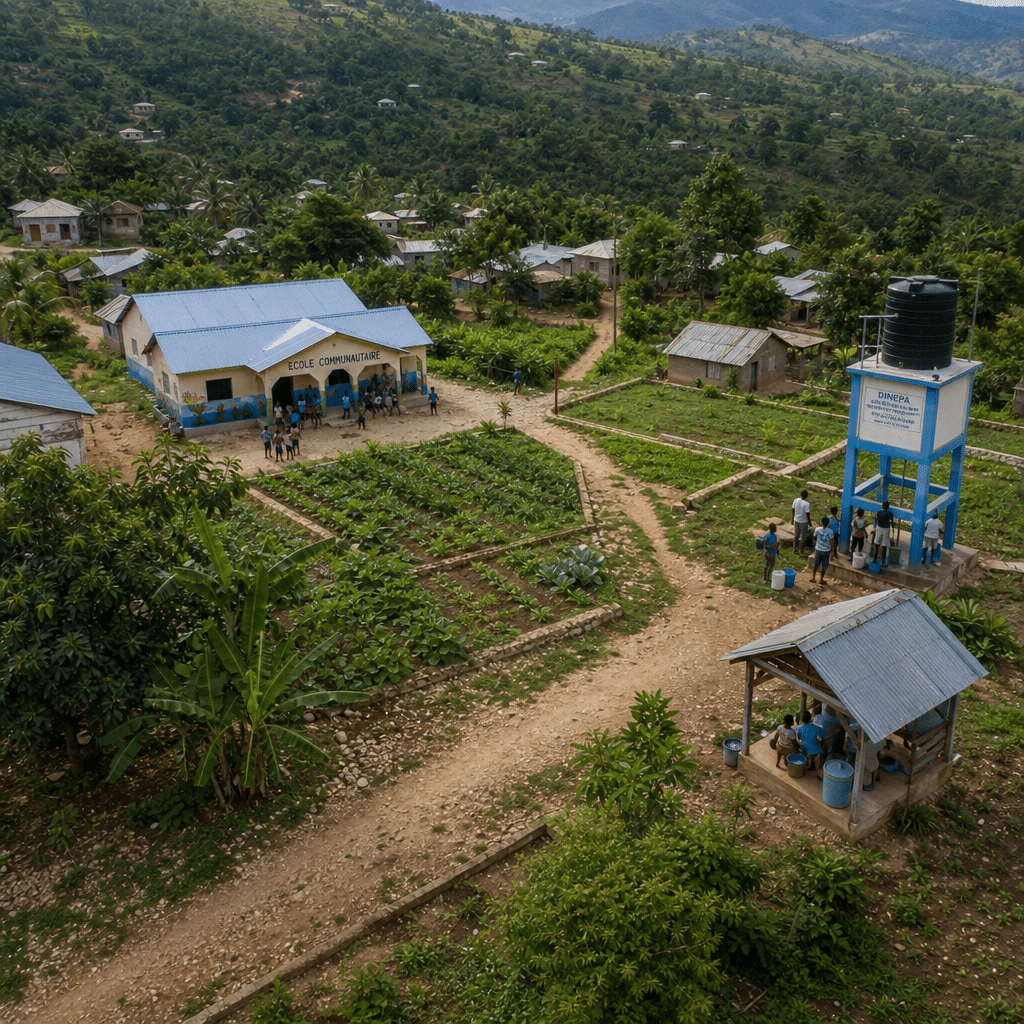
Most Haiti NGOs pick one or two problems to solve, then spend years slowly widening their scope. Community2Community (C2C) built its entire model around the opposite premise: that poverty, poor health, inadequate education, and fragile infrastructure are not separate problems but one interconnected system. The result is the C2C Collaborative Framework, a structured, community-led approach that simultaneously addresses 11 UN Sustainable Development Goals in Haiti without scattering resources or duplicating the failed top-down models that have left Haiti dependent on foreign aid for decades. This article breaks down exactly how that framework works and why it outperforms the single-issue approach.
| Key Insight | Explanation |
|---|---|
| C2C targets 11 SDGs simultaneously | The Collaborative Framework links poverty, health, education, clean water, infrastructure, and more into one integrated community plan rather than addressing each in isolation. |
| Community ownership is non-negotiable | C2C does not parachute solutions into Haiti. Partner communities set priorities, own assets, and manage outcomes, which is why gains persist after external funding cycles end. |
| Reduced foreign aid dependency is the measurable goal | Unlike organizations that measure success by inputs (dollars spent, volunteers deployed), C2C measures success by whether communities need less external support over time. |
| SDG alignment attracts institutional donors | Foundations and bilateral donors increasingly require SDG mapping in grant applications. C2C’s documented 11-goal coverage makes it an audit-ready partner for sophisticated funders. |
| The framework addresses root causes, not symptoms | Providing food aid addresses hunger for a week. Building agricultural capacity (SDG 2) while also improving roads (SDG 9) and water access (SDG 6) addresses hunger permanently. |
| Haiti’s SDG gap is severe and documented | Haiti ranks among the lowest in the Caribbean on nearly every SDG index, which means the potential for measurable impact from a well-executed framework is disproportionately high. |
| C2C differentiates by framework, not by sector | Where competitors like World Vision or Haiti Partners work within defined sectors, C2C’s differentiator is the integrated framework itself, which is transferable across communities. |
Haiti has received billions in international aid over the past three decades. According to the United Nations Development Programme, Haiti remains the poorest country in the Western Hemisphere despite that sustained investment. The primary reason is structural: most aid organizations operate in silos. An NGO focused on clean water installs a pump but does not train local technicians (SDG 4), establish a community maintenance fund (SDG 1), or connect the water source to agricultural use (SDG 2). When the pump breaks, the community is worse off than before, because expectations were raised without capacity being built.
This is not a critique of individual organizations’ intentions. It is a design flaw. Single-issue development treats poverty as a checklist rather than a system, and Haiti’s challenges are definitively systemic. A family that gains access to clean water but cannot afford school fees for their children, cannot get to a clinic, and cannot sell crops because the road is impassable has not experienced development. They have experienced one intervention.
C2C was built specifically to solve this design flaw. The Collaborative Framework starts from the assumption that no single SDG can be sustainably achieved without progress on several others simultaneously. That is not idealism. The data consistently shows that countries with the fastest SDG progress achieved it through integrated national strategies, not sector-by-sector campaigns.
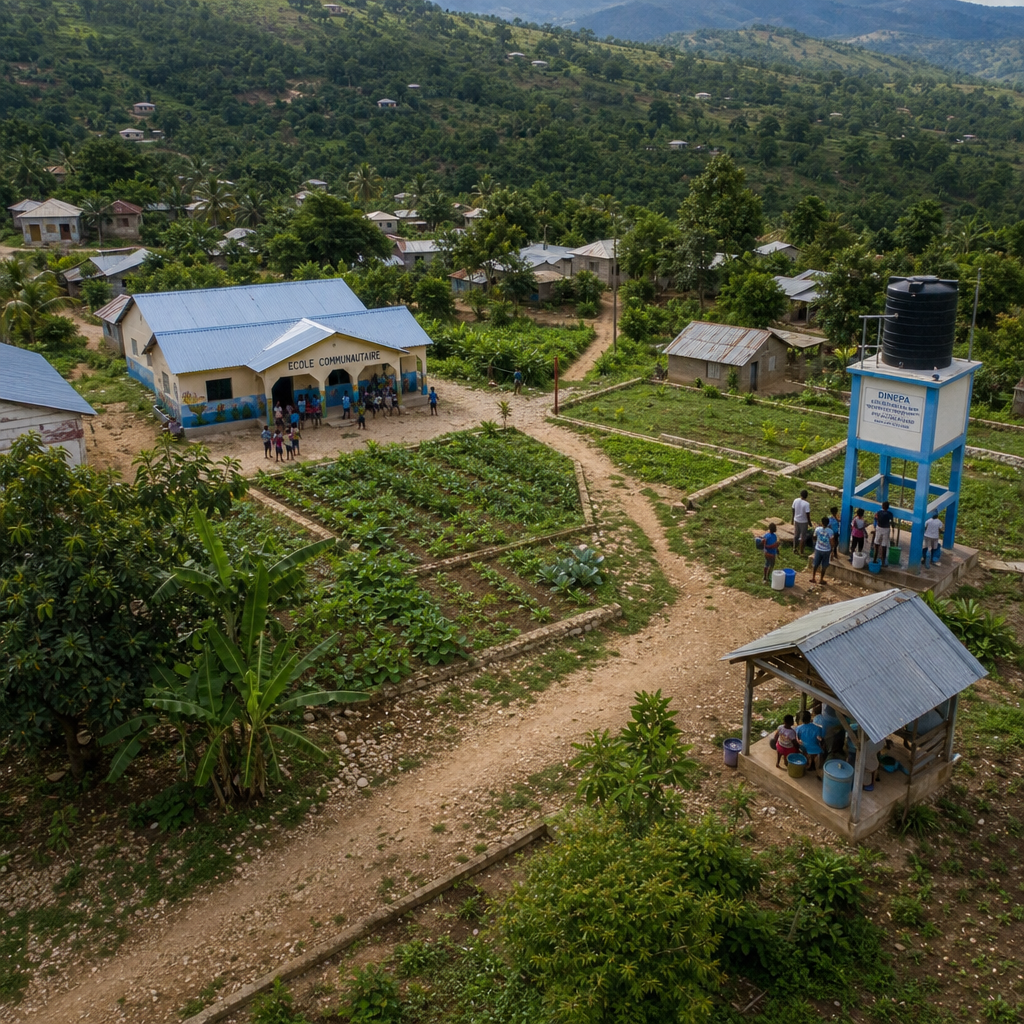
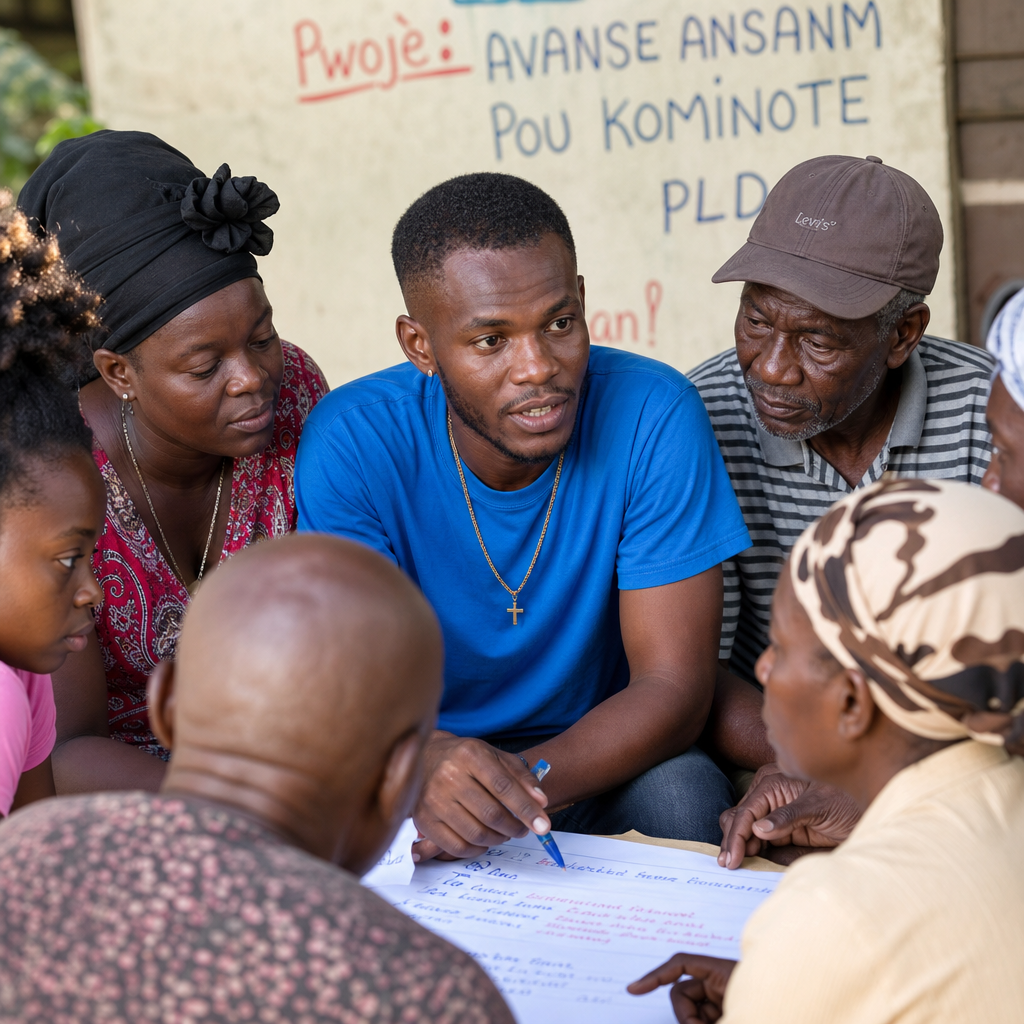
C2C’s Collaborative Framework does not simply claim alignment with SDGs for marketing purposes. Each goal is addressed through specific activities embedded in the community development plan. Here is how the framework maps to each of the 11 goals:
C2C builds economic capacity at the household level through income-generating projects, savings groups, and market access programs. The target is not charity transfer but sustainable household income, so that families exit poverty rather than cycle through relief programs.
Agricultural training, seed support, and food storage infrastructure are integrated into community plans. C2C links food production to local market systems rather than creating dependency on food aid distributions, which suppress local agricultural incentives.
C2C works with communities to improve access to basic health services, train community health workers, and address the environmental conditions (clean water, sanitation) that drive preventable disease. In Haiti, where maternal mortality and child malnutrition remain critical, this integration is not optional.
Education interventions in the C2C model go beyond building schools. The framework addresses school attendance barriers including economic pressure on families to pull children out of school for labor, and it supports local teacher capacity rather than importing external educators.
Women in C2C partner communities are not passive beneficiaries. They hold leadership roles in community governance structures, access economic programs directly, and participate in decision-making about community priorities. This is a structural feature of the framework, not an add-on program.
Water infrastructure in C2C projects is community-managed from day one. Maintenance responsibilities, cost-recovery mechanisms, and governance are established before the infrastructure is built. This is why C2C water projects outlast externally managed installations by years.
Roads, bridges, community centers, and market infrastructure are built through community labor contributions and local material sourcing where possible. This keeps economic value inside the community while creating durable assets.
C2C specifically targets historically marginalized groups within partner communities, including women, people with disabilities, and rural households with no prior access to formal services.
Community governance structures established through the C2C framework build local institutional capacity. These are the same institutions that manage disaster response, land use, and resource allocation long after a project cycle ends.
Transparent community governance, participatory decision-making, and accountability mechanisms are embedded in the C2C framework. In a country where institutional distrust is a barrier to development, this is foundational work.
C2C’s Collaborative Framework is designed to be replicated and adapted. Partnerships with international donors, local organizations, and Haitian diaspora networks are structured components of the model, not opportunistic add-ons.
The C2C Collaborative Framework is the operational architecture that makes simultaneous SDG progress possible. It is built on three non-negotiable principles: community ownership of the process, integration of multiple development domains into one plan, and measurement of long-term self-sufficiency rather than short-term outputs.
In practice, a community entering the C2C framework begins with a participatory needs assessment. Community members, not external consultants, identify the priorities. This step is critical because it surfaces the real interdependencies: a community might identify income as the top priority, but the participatory process reveals that income is constrained by poor road access, which is constrained by lack of community savings, which is constrained by school fees pulling household cash. The integrated plan addresses all of these layers, not just the presenting symptom.
“Development that is done to communities rather than with them tends to create dependency rather than capacity. The most durable gains come when communities own both the problem and the solution.” – United Nations Development Programme, Human Development Report
Pro tip: When evaluating any Haiti NGO, ask for their theory of change on foreign aid dependency. An organization without a credible answer to how they plan to become less necessary over time is likely reinforcing the problem they claim to solve.
The framework also builds in accountability structures. Community-elected committees manage project resources, report on progress, and adjust plans based on results. This is not oversight imposed from outside. It is governance built from within, which is what distinguishes a development organization from a charity operation.
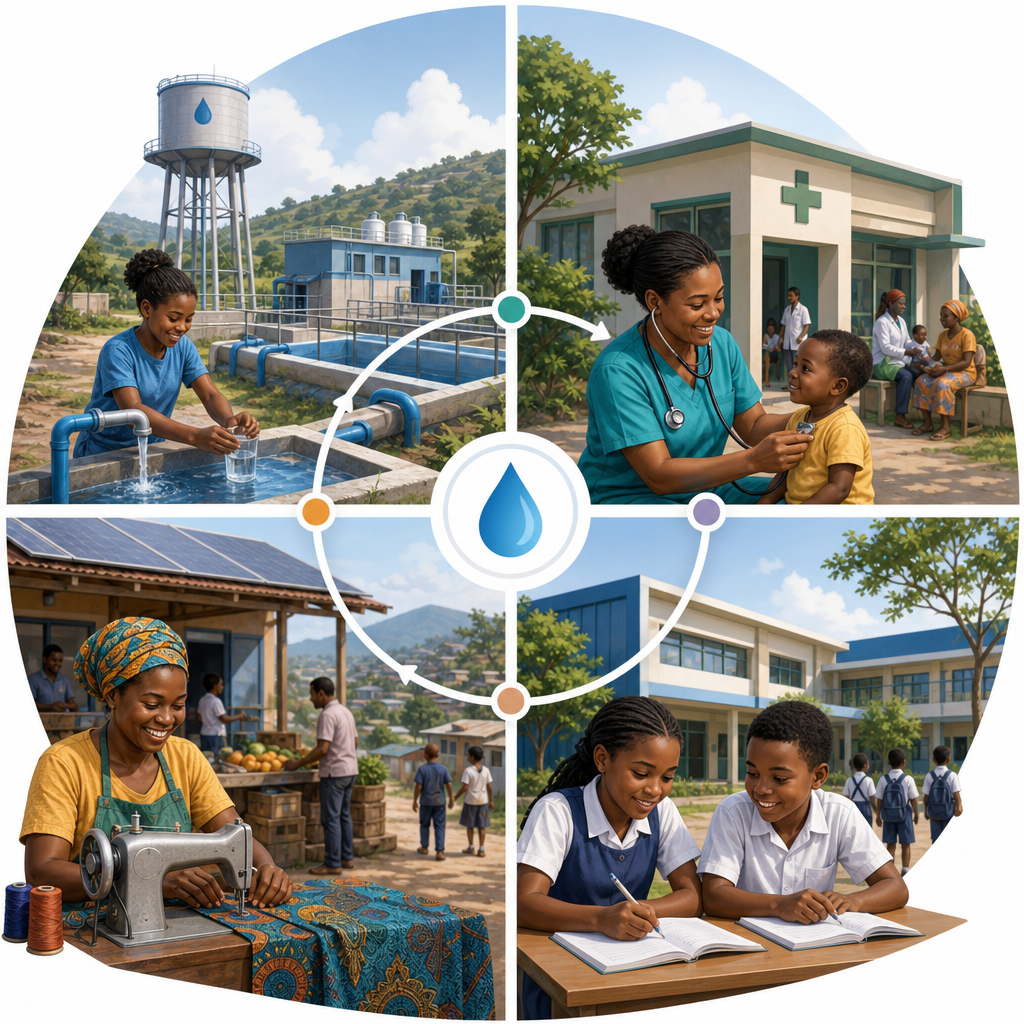
Not all development approaches are equal in Haiti. The differences between models have direct consequences for whether gains last or disappear when external funding ends. The table below compares C2C’s framework against two common alternative approaches used by Haiti NGOs and international organizations.
| Approach | SDG Coverage | Long-Term Self-Sufficiency Outcome |
|---|---|---|
| C2C Collaborative Framework (community-led, integrated) | 11 SDGs addressed simultaneously through a single integrated community plan | Communities manage assets, governance, and revenue independently after the program cycle; foreign aid dependency measurably decreases |
| Sector-specific NGO model (e.g., single-focus health or water programs) | 1-3 SDGs addressed per program; cross-sector gains are incidental, not planned | Gains in one sector frequently stall or reverse without parallel progress in adjacent sectors; sustainability depends on ongoing external management |
| Emergency relief model (e.g., post-disaster aid distributions) | SDG 1 and SDG 2 addressed in the short term only; no structural SDG progress | Communities return to pre-crisis vulnerability because the model is designed for acute response, not development; often increases long-term dependency |
The data consistently shows that integrated, community-owned models outperform single-sector and relief-based approaches on long-term sustainability metrics. The World Bank’s research on community-driven development programs across low-income countries confirms that community ownership of assets and decision-making is a stronger predictor of program sustainability than the size of the budget invested.
Pro tip: International donors evaluating Haiti NGOs should request a sustainability audit: what percentage of projects remain operational and community-managed three years after the funding cycle ends? This single metric separates development organizations from relief operations faster than any impact report narrative.
The term “community-led” is used so broadly in the development sector that it has nearly lost meaning. In C2C’s framework, it has a precise operational definition: the community makes binding decisions about priorities, resource allocation, and timelines. C2C staff provide technical assistance and facilitate access to resources, but they do not hold decision-making authority over the community’s plan.
This distinction matters because it determines who controls the outcome. A common mistake in Haiti development work is confusing community participation with community leadership. Participation means people are consulted. Leadership means people decide. C2C’s framework only functions as designed when communities are in the leadership role, because that is the mechanism through which institutional capacity is built.
In practice, this looks like community committees that hold and manage project funds directly, not as pass-through recipients but as fiduciaries. It looks like community members trained in monitoring and evaluation so they can measure their own progress. It looks like communities that negotiate with local government and private sector partners without C2C as an intermediary.
This approach requires more time in the early stages of a project than a top-down delivery model. Training governance committees, building financial management skills, and establishing accountability systems all take time. But the return on that investment is that gains last. Communities that built a water system, managed the construction process, and established a maintenance fund still have clean water five years later. Communities that received an externally managed water installation frequently do not.
International donors and philanthropists who fund C2C’s work are not simply underwriting charity. They are investing in a replicable development model that reduces the total amount of foreign funding Haiti needs over time. This framing is important because it positions donor capital differently: not as recurring humanitarian support but as catalytic investment in capacity that compounds.
C2C’s SDG alignment also serves a practical function for institutional donors. Foundations with SDG-linked grant mandates, bilateral development agencies, and impact-focused family offices all require grantees to demonstrate how their work maps to the global development agenda. C2C’s documented 11-goal coverage, with specific activities linked to each goal, provides the evidence base those funders need for their own reporting obligations.
For individual donors who have previously supported Haiti through emergency relief channels, C2C offers a fundamentally different value proposition: the money does not just solve a problem this year. It builds the local capacity to prevent that problem from recurring. That is a harder story to tell than an emergency appeal, but it is a more honest and more durable form of impact.
A common mistake among well-intentioned donors is evaluating Haiti organizations primarily on overhead ratios. A low overhead percentage is meaningless if the program model itself creates dependency. The more relevant metric is cost per unit of sustained community capacity, and C2C’s integrated framework is specifically designed to maximize that metric.
The UN Sustainable Development Goals are 17 global targets adopted in 2015 to guide international development through 2030. They cover poverty, hunger, health, education, gender equality, clean water, economic growth, infrastructure, inequality, climate, and governance. Haiti’s performance across nearly all 17 goals ranks among the lowest in the Western Hemisphere, making SDG progress in Haiti both urgent and measurable. Organizations that can credibly demonstrate SDG progress provide funders with a standardized framework for evaluating impact across geographies and sectors.
World Vision operates primarily through sector-specific programs in health, nutrition, and child sponsorship. Haiti Partners focuses on education and civic empowerment. Both organizations do important work, but their models are largely sector-defined. C2C’s differentiator is the Collaborative Framework itself, which is an integrated, community-governed architecture that addresses 11 SDGs through a single community plan rather than running parallel programs in different sectors. The integration is the point, not a feature.
Yes, and the mechanism is community ownership of the integrated plan. The framework does not require C2C to run 11 separate programs. It requires the community to build one comprehensive development plan that addresses interconnected needs together. When a community builds a road, it simultaneously improves market access (SDG 1), agricultural distribution (SDG 2), and health clinic access (SDG 3). The integration is a natural property of holistic planning, not an administrative burden.
C2C uses community-based monitoring systems that track both output metrics (infrastructure built, people trained, services accessed) and outcome metrics (household income changes, school enrollment rates, self-sufficiency indicators). Critically, communities track their own progress using tools C2C provides, which builds local evaluation capacity alongside the development outcomes themselves. This is fundamentally different from external evaluation reports that communities never use.
Ask three questions before committing funds to any Haiti NGO: Does the community own the assets created? Does the community manage the governance of the project? Does the organization measure and report on declining external aid dependency over time? If the answer to any of these is no, the model is likely creating managed dependency rather than self-sufficiency. C2C’s Collaborative Framework is explicitly designed to produce a yes answer to all three.
The Collaborative Framework is designed to be replicable across different community contexts because it is process-based rather than sector-prescriptive. The community-led planning process, integrated SDG mapping, and governance structures are adaptable. However, C2C’s current focus is on Haiti, where its partner community relationships and contextual knowledge create the most credible impact. Replication into other geographies would require equivalent community trust-building, which takes years, not months.
What has your experience been with sustainable development approaches in Haiti, and what do you think differentiates frameworks that genuinely reduce aid dependency from those that do not? Share your perspective.