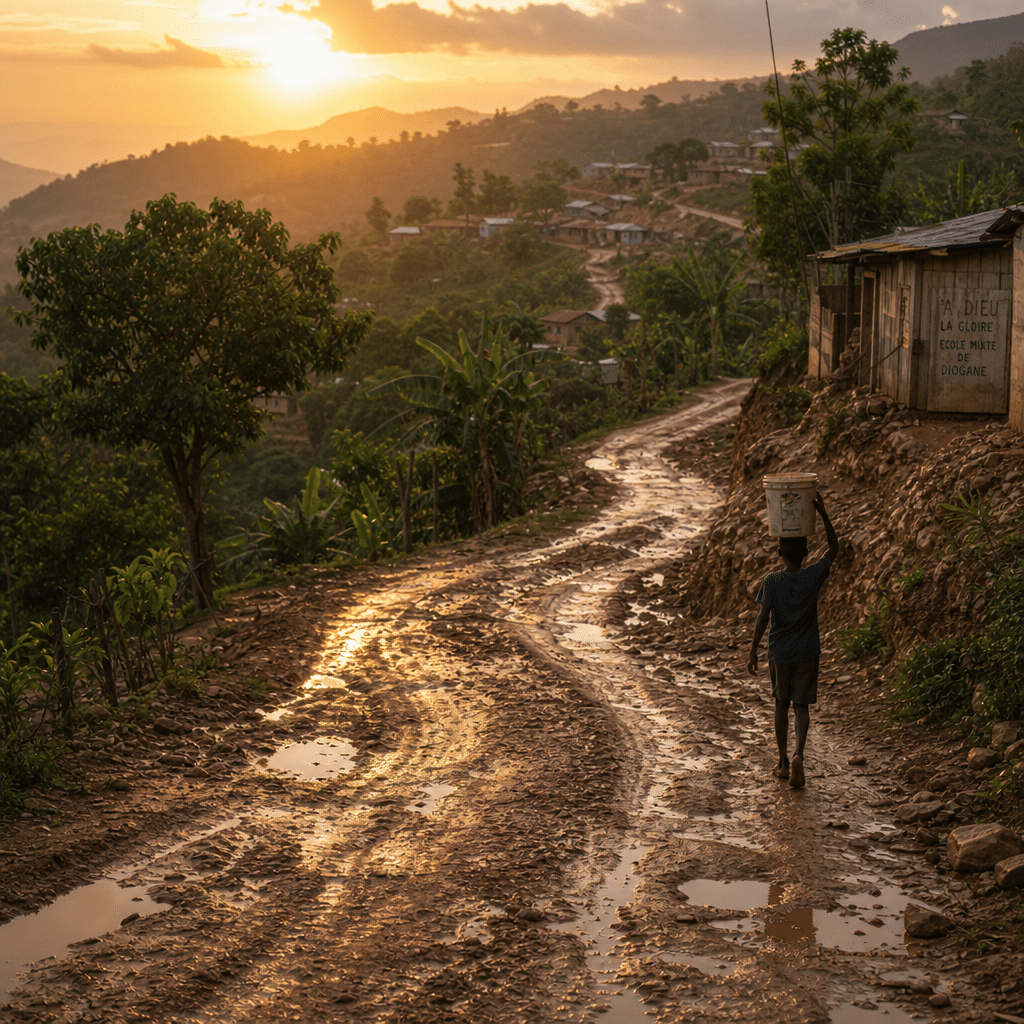
Most conversations about sustainable cities Haiti focus on Port-au-Prince, as if urban density is a prerequisite for sustainable development. That framing misses where most Haitians actually live. Roughly 45% of Haiti’s population resides in rural areas where paved roads are rare, clean water is a daily negotiation, and infrastructure projects too often arrive as short-term foreign interventions that dissolve within years. UN SDG 11, Sustainable Cities and Communities, applies directly to these rural realities, but only when the framework is adapted to community-led realities rather than top-down project delivery.
SDG 11 is typically visualized as gleaming urban transit systems and smart city dashboards. In rural Haiti, it means something far more grounded: a road that stays passable during hurricane season, a school that doesn’t collapse, a water system communities can maintain without a foreign technician on call.
The UN defines SDG 11 targets around access to safe housing, inclusive transportation, cultural heritage preservation, disaster risk reduction, and participatory planning. Each of those targets translates into something tangible and achievable at the community level in Haiti, provided the implementation model is built around the communities themselves rather than around donor timelines.
The data consistently shows that infrastructure projects in Haiti with strong community ownership have measurably better maintenance rates and longevity than those delivered through external contractors with no local accountability structure. This is not an opinion, it is a pattern verified across decades of post-earthquake reconstruction and rural development programming.
| Key Insight | Explanation |
|---|---|
| SDG 11 applies to rural Haiti, not just cities | Sustainable communities include villages, rural districts, and small towns. Urban framing excludes most of Haiti’s population from this goal. |
| Community ownership determines project longevity | Infrastructure installed without community input is typically abandoned or poorly maintained within 3 to 5 years, regardless of build quality. |
| Haiti infrastructure development must survive climate shocks | Haiti ranks among the world’s most climate-vulnerable countries. Resilience against hurricanes and floods must be built into every structure and plan. |
| Foreign aid dependency actively undermines sustainability | Communities conditioned to wait for external resources lose the institutional capacity and confidence to self-organize. Reducing this dependency is itself a development outcome. |
| UN SDG 11 Haiti goals require localized metrics | Global SDG indicators don’t map cleanly to rural Haitian contexts. Effective programs define success through community-specific benchmarks, not generic national data. |
| Cultural identity is infrastructure | SDG 11 explicitly protects cultural heritage. In Haiti, Kreyol language, local governance traditions, and community practices are assets to build development on, not obstacles to overcome. |
| Participatory planning reduces implementation failure rates | Projects co-designed with communities from day one consistently outperform externally designed projects delivered to communities for approval at the end. |
Rural Haiti’s infrastructure deficit is not a single problem. It is a layered series of compounding gaps: transportation networks that prevent agricultural products from reaching markets, water systems that fail during dry seasons, school buildings constructed cheaply and without seismic consideration, and health facilities that exist on paper but lack supplies, staff, or reliable power.
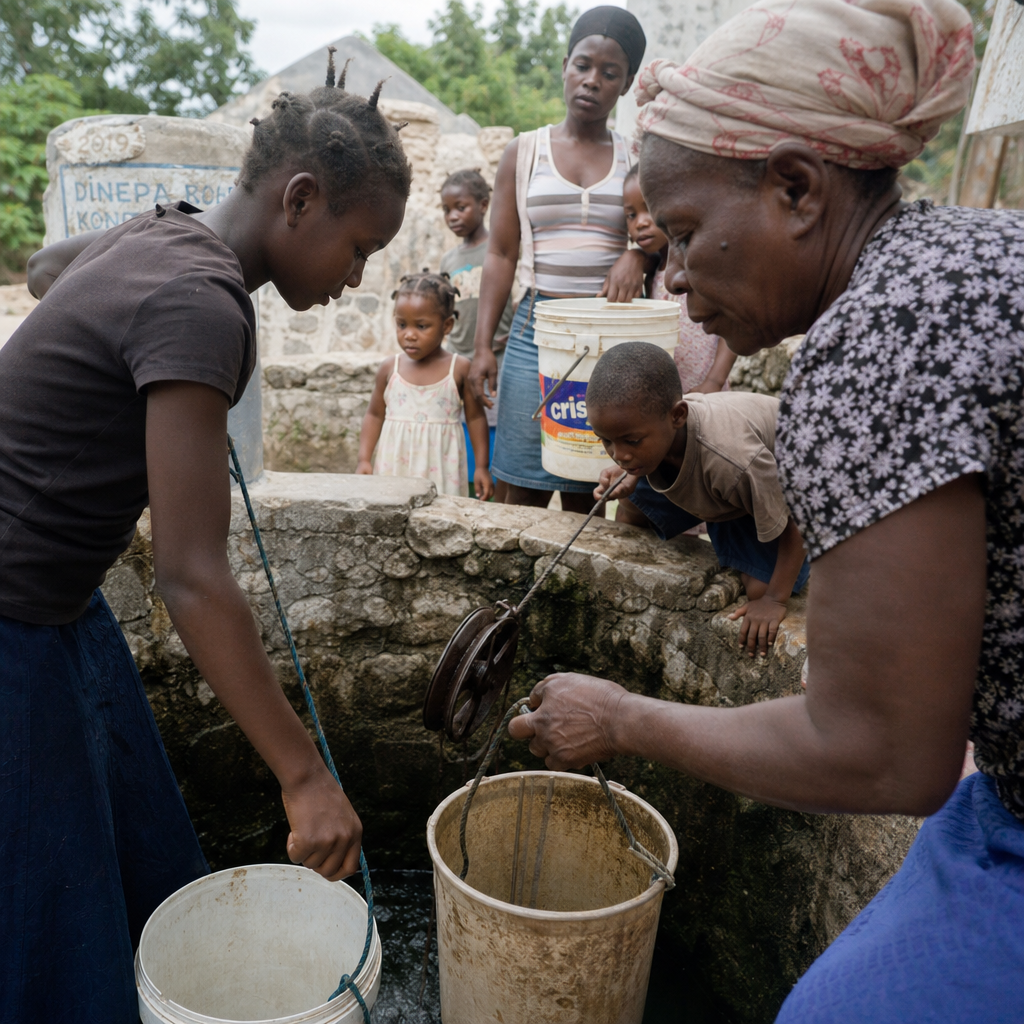
According to the World Bank, only about 24% of Haiti’s rural population had access to improved water sources as of recent reporting periods. That number tells part of the story. What it doesn’t capture is how frequently existing systems break down without local technical capacity to repair them, or how women and girls disproportionately absorb the time burden of collecting water from unsafe sources when systems fail.
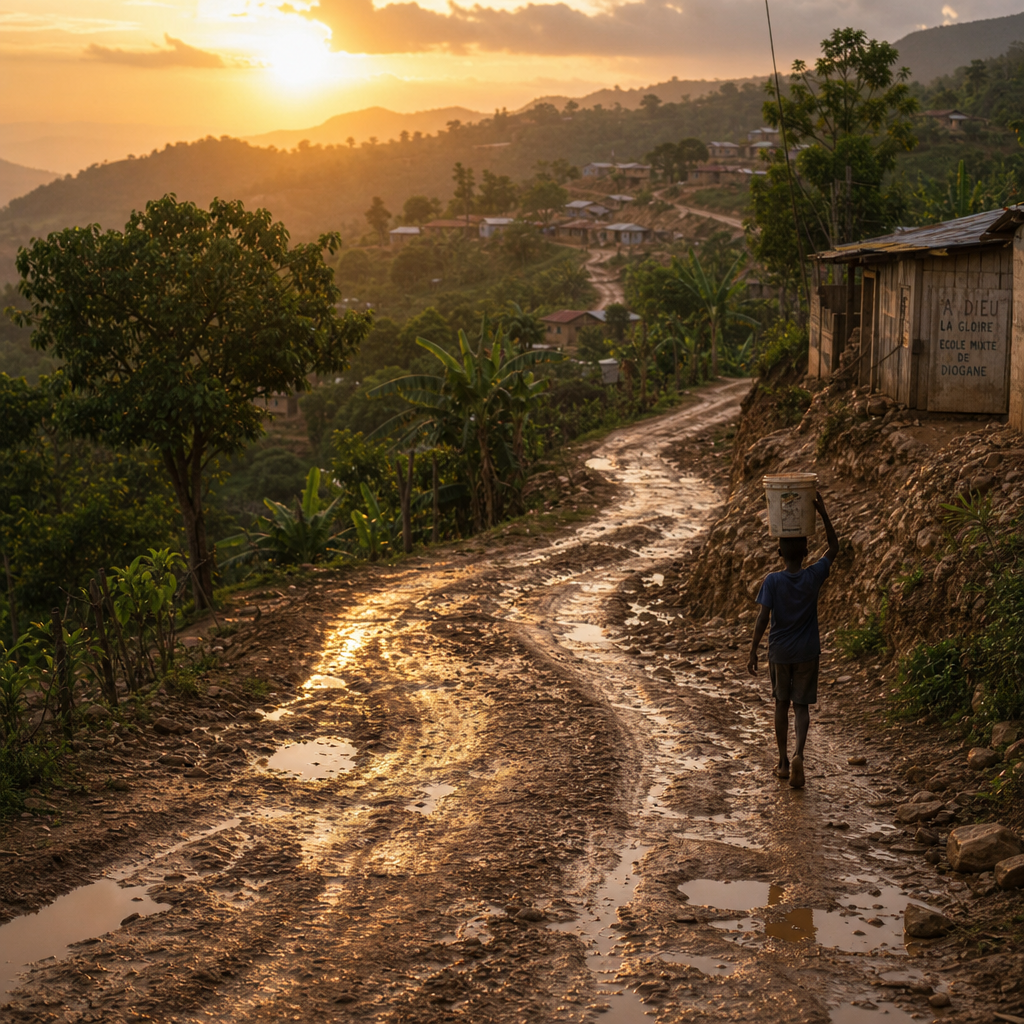
In practice, rural road conditions in Haiti directly determine whether a farming community can sell its produce or whether crops rot before reaching buyers. A road impassable during the rainy season isn’t just inconvenient, it’s an economic trap that reinforces poverty regardless of how productive a community’s agriculture is.
Haiti infrastructure development that ignores road connectivity is, by definition, incomplete. Sustainable community development must treat transport access as a foundational input, not a luxury add-on.
Haiti has some of the lowest electricity access rates in the Western Hemisphere. In rural areas, the national grid is effectively absent. Solar microgrids and community-managed energy systems represent the realistic pathway to SDG 7 and SDG 11 intersections, where energy access enables schools to function after dark, health clinics to refrigerate vaccines, and small businesses to operate reliably.
A common mistake in energy projects is installing solar infrastructure without training community members to maintain it. Equipment without institutional knowledge behind it has a predictable failure timeline.
Pro tip: When evaluating Haiti-focused development organizations, ask specifically how they transfer technical maintenance knowledge to community members, not just how they install infrastructure. The transfer plan is where sustainability either happens or doesn’t.
The distinction between community-led and donor-driven development is not semantic. It determines who sets priorities, who holds accountability, and who owns the outcomes after the project cycle ends.
Donor-driven development in Haiti has a documented history of producing infrastructure that communities didn’t ask for, can’t maintain, and don’t use as intended. The billions of dollars that flowed into Haiti following the 2010 earthquake are the most visible example. A 2015 review by Oxfam and multiple academic institutions found that large proportions of reconstruction funds bypassed Haitian institutions entirely, creating dependency rather than capacity.
“The most sustainable development projects are those where outside actors play a supporting role to community vision, not the other way around.” – Oxfam International, post-earthquake Haiti reconstruction review findings
Community2Community’s Collaborative Framework is built on the premise that communities already know what they need. The role of the development organization is to provide structured support, resources, and connection, not to arrive with a predetermined solution. This approach directly mirrors the participatory planning targets embedded in UN SDG 11 Haiti implementation guidelines.
The practical implication for donors is significant. Funding organizations that route resources through community decision-making structures produces different outcomes than funding organizations that design programs in offices and deliver them to communities as recipients.
Pro tip: Donors evaluating Haiti development organizations should request documentation of how communities were involved in project design, not just project delivery. Meeting attendance records and community vote outcomes are more informative than polished impact reports written after the fact.
Resilience in the context of rural Haiti means surviving what Haiti reliably delivers: Category 4 and 5 hurricanes, heavy rainfall-induced flooding, seismic activity, and periodic political instability that disrupts supply chains and service delivery. Infrastructure designed without these variables built in is infrastructure designed to fail.
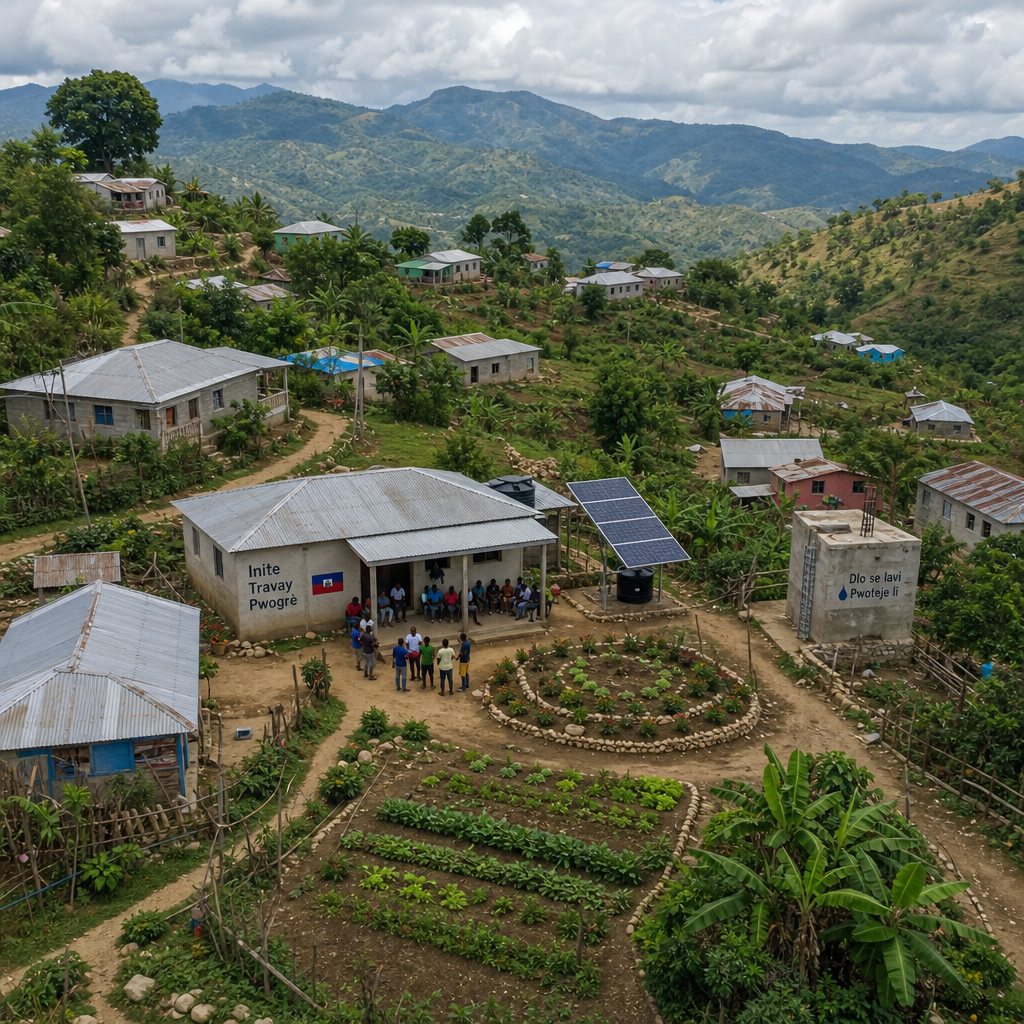
In practice, resilient infrastructure in rural Haiti includes several elements that don’t always show up in standard development project budgets: elevated foundations for flood-prone areas, reinforced roof connections designed for high-wind loads, gravity-fed water systems that function without electrical pumps, and community-maintained drainage systems that prevent erosion from destroying roads.
Haiti has more than 80% of its schools in the private and NGO sector, many of which are structurally substandard. When a school collapses in an earthquake or hurricane, the community loses not just a building but years of educational continuity. Rebuilding a school correctly, with community labor participation and local material sourcing where possible, builds both the physical structure and the community’s technical knowledge base simultaneously.
This is the SDG 11 vision made real: infrastructure that communities understand, can repair, and take pride in because they helped build it.
A water system installed without a community maintenance fund and trained local technicians is a temporary water system. The most effective rural Haiti water programs establish community water committees with fee collection mechanisms, basic spare parts inventories, and at least two trained local technicians before the tap is ever turned on. This is not idealism, it is the operational requirement for a system that still works in year seven.
Not all development organizations operating in Haiti take the same approach to sustainable communities and infrastructure. The differences in methodology produce significantly different long-term outcomes.
| Development Approach | Community Role | Long-Term Sustainability Outlook |
|---|---|---|
| Top-Down Aid Delivery (common in large INGOs) | Passive recipient. Community consulted minimally or after design is finalized. | Low. Maintenance gaps appear within 3 to 5 years. Dependency on repeat funding cycles. |
| Partnership Model (organizations like Haiti Partners) | Moderate involvement. Communities participate in implementation but not always in design or priority-setting. | Moderate. Better than pure aid delivery but still subject to external priority influence. |
| Community-Led Collaborative Framework (C2C model) | Active co-designer and decision-maker. Community sets priorities, contributes labor and local resources, owns outcomes. | High. Communities develop institutional capacity and self-sufficiency that persists beyond individual project cycles. |
Community2Community’s approach to Haiti infrastructure development is inseparable from its philosophy about community dignity. Every infrastructure project C2C supports is framed not as aid delivery but as community empowerment, where the community defines the need, participates in the solution, and retains the knowledge and ownership after completion.
This alignment with SDG 11’s participatory planning targets is not accidental. The C2C Collaborative Framework was designed specifically to address the failure modes that have characterized foreign-led development in Haiti for decades. Those failure modes include parachute project delivery, infrastructure without maintenance systems, and capacity building that exists only on paper.
There is a dignity dimension to community-led infrastructure that pure technical assessments miss entirely. When a community builds its own school, maintains its own water system, and makes its own decisions about what to prioritize next, the narrative shifts. The community is no longer a recipient of external generosity. It is an agent of its own development.
This shift is not soft or unmeasurable. Communities with strong self-organization capacity are more likely to complete projects, sustain infrastructure, resist political disruption, and attract aligned funding partners over time. The data consistently supports community agency as both a development input and a development outcome.
One underused opportunity for Haiti-focused organizations is connecting community-level outcomes to the UN SDG reporting framework. Donors who care about SDG 11 Haiti progress can track specific indicators such as percentage of population with access to adequate housing, safe transport options, and resilient infrastructure at the community level rather than only at the national level where data is often too aggregated to be meaningful.
C2C’s community-specific reporting framework makes this connection explicit, giving international donors the accountability link between their contribution and measurable SDG 11 outcomes in specific Haitian communities.
SDG 11 explicitly covers both urban and rural communities. The full title is “Sustainable Cities and Communities” and the UN’s own guidance documents clarify that the goals apply to human settlements of all sizes. In the Haitian context, applying SDG 11 exclusively to Port-au-Prince would exclude the majority of the population from its benefits, which directly contradicts the SDG principle of leaving no one behind.
The three most consistent barriers are access constraints, meaning roads that prevent materials and technicians from reaching project sites; funding gaps in maintenance rather than construction; and institutional capacity deficits where communities lack trained personnel to manage infrastructure after installation. Political instability compounds all three barriers by disrupting supply chains, scaring away contractors, and diverting government attention and resources.
Participatory development typically means communities are consulted during a process still controlled by an external organization. Community-led development means communities hold decision-making authority from the start, including over what to build, how to build it, and what success looks like. The distinction matters for sustainability because ownership follows decision-making authority, not just consultation.
The most common failure pattern is construction without a maintenance system. A water pump installed without a community maintenance fund, trained technicians, and a spare parts supply will fail when its first component breaks down, typically within two to three years. A second common failure is misalignment between what donors fund and what communities actually need, which produces infrastructure that communities don’t prioritize maintaining because they didn’t ask for it in the first place.
The most effective donor approach is to fund organizations that route decision-making authority to communities rather than retaining it externally. Specifically, donors should prioritize organizations with transparent community governance structures, multi-year funding commitments that allow for proper maintenance system establishment, and reporting frameworks that measure community capacity growth alongside physical infrastructure outcomes. Single-year project funding is structurally incompatible with genuine sustainability.
It is central, not supplementary. Haiti is consistently ranked among the ten countries most vulnerable to climate change impacts globally. Any infrastructure that does not account for hurricane wind loads, flooding, and erosion is infrastructure designed for a climate Haiti does not have. SDG 11 Target 11.5 specifically addresses disaster risk reduction, and in Haiti this means every road, building, and water system must be designed and maintained with climate resilience as a baseline requirement, not an optional upgrade.
If you have worked in rural Haiti or supported development projects there, share what you have seen work and what hasn’t. Real field experience from donors, practitioners, and community members shapes better programming for everyone involved.
We would love your feedback and any insights you would share with others. What perspective would you add?