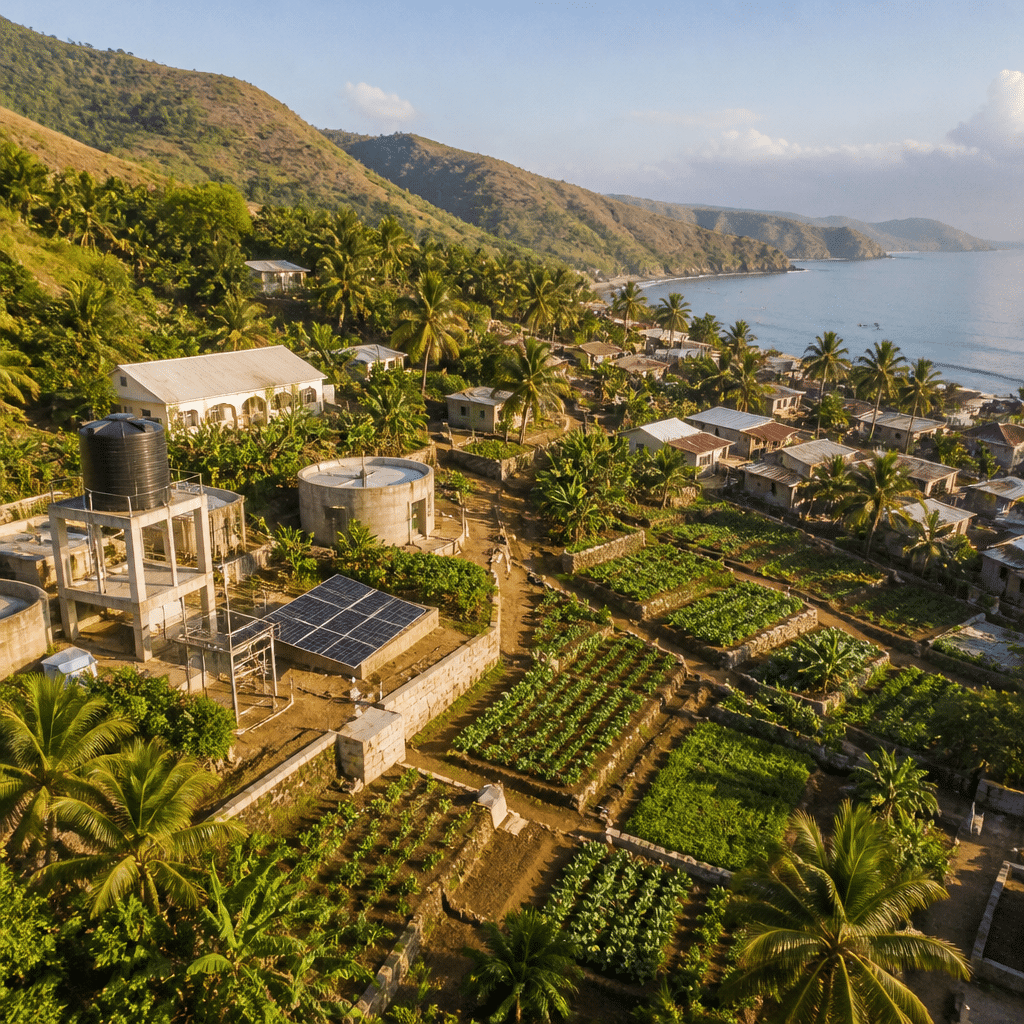
Most international development efforts in Haiti treat communities as recipients of aid rather than drivers of change. Petit-Goâve development, as practiced by Community2Community (C2C), inverts that model entirely. Since launching the Haiti Restoration and Transformation Pilot Project (HRTPP) in April 2011, C2C has worked in Petit-Goâve not by bringing in outside solutions but by partnering with locally organized peasant associations to define, build, and sustain every project themselves. What has emerged in this coastal commune is one of the most instructive examples of community-led development in the country, and it deserves a detailed, honest examination.
Petit-Goâve is a coastal commune located approximately 68 kilometres southwest of Port-au-Prince in the Léogâne Arrondissement of Haiti’s Ouest department. It sits on the coast of the Gulf of Gonâve and has historically functioned as a port and commercial hub. That geography matters: the mountainside areas surrounding the town are remote, cut off by poor roads, and home to farming families who have faced compounding crises including earthquakes and hurricanes.
C2C chose Petit-Goâve for its pilot project deliberately. The community had organized local peasant associations capable of taking real ownership of development work, and the town’s combination of urban-adjacent and mountainside populations offered a realistic test case for scaling to other Haitian communities. This was never meant to be a one-off charity project. From the beginning, HRTPP was designed as the proof of concept that C2C could replicate across Haiti.
Haitian-born founder MarieYolaine Toms launched C2C in May 2010, following the January 2010 earthquake, after resigning from a corporate career specifically to address the gap between foreign-aid dependency and genuine community self-sufficiency. The people of Petit-Goâve were not a backdrop for that mission. They are its authors.
| Key Insight | Explanation |
|---|---|
| Petit-Goâve is C2C’s founding pilot site | The HRTPP launched in April 2011 in Petit-Goâve and is designed to be replicated across other Haitian communities once proven at scale. |
| Two distinct partner communities operate in parallel | APHD leads the Mountainside Partner Community and ODCP leads the Petit-Goâve Proper Partner Community, each with its own development roadmap. |
| All four HRTPP initiatives were community-determined | Water, reforestation, education, and road construction were identified collectively by partner communities, the C2C Haiti team, and local government officials, not by external consultants. |
| The Saul Louis Community School now covers Pre-K through 9th grade | Starting as an elementary school, it added a trade school in 2022 and is expanding to include 7th, 8th, and 9th grades, keeping over 300 children educated locally. |
| 14,000 seedlings planted to rebuild the mountainside ecosystem | Reforestation work directly protects community water sources and supports food security through sustainable farming and goat programs. |
| The health and wellness center will serve 1,200 families | Planned construction of this facility is part of APHD’s 2024 roadmap, complementing the existing Continuous Care Initiative that provides preventative health education. |
| Emergency response is built into the partnership | When Hurricane Melissa caused catastrophic flooding and loss of life in Petit-Goâve, APHD and ODCP were immediately operational, conducting search-and-rescue before national aid arrived. |
The community development work happening in Petit-Goâve is not theoretical. Each of the four HRTPP initiatives has a documented construction or implementation history, a local association managing it, and a clear next phase. That specificity is what separates this from most aid-sector activity in Haiti, where projects are announced with fanfare and then quietly abandoned when funding cycles end.
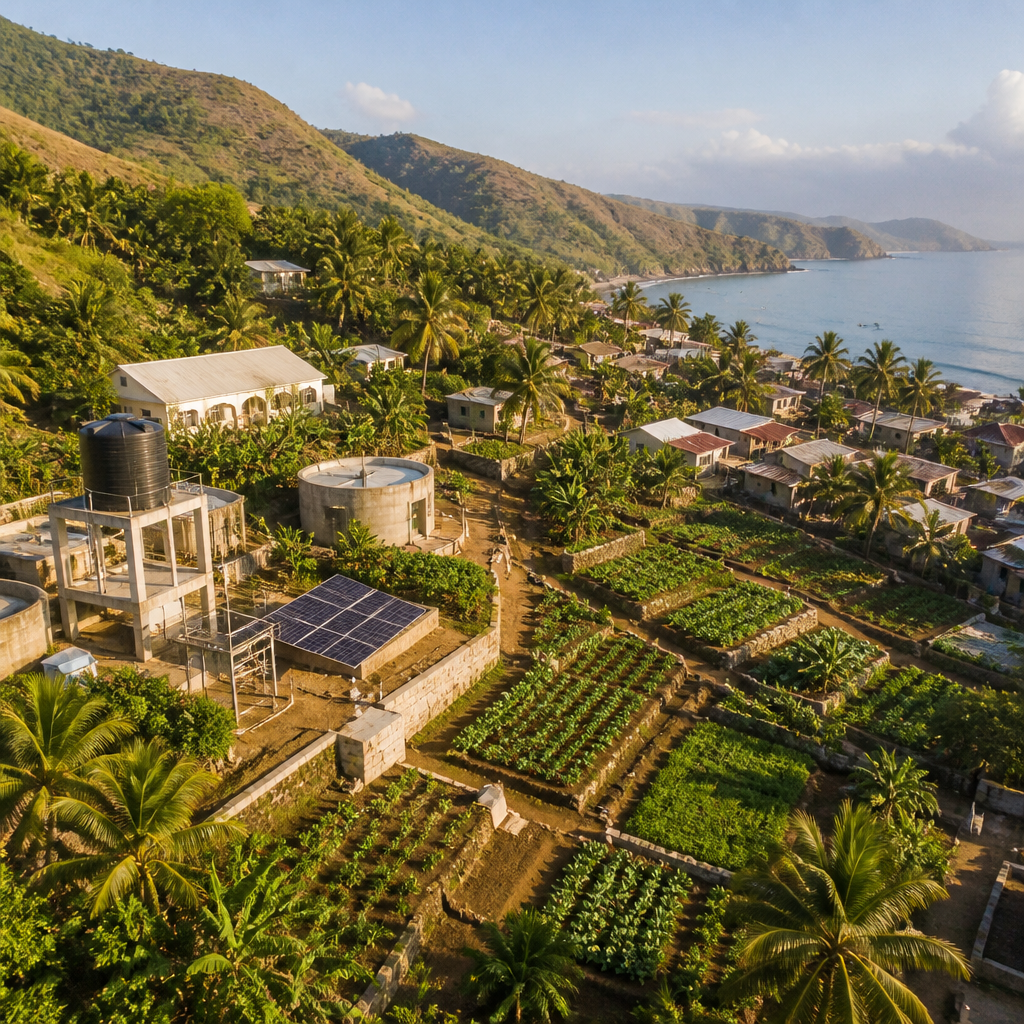
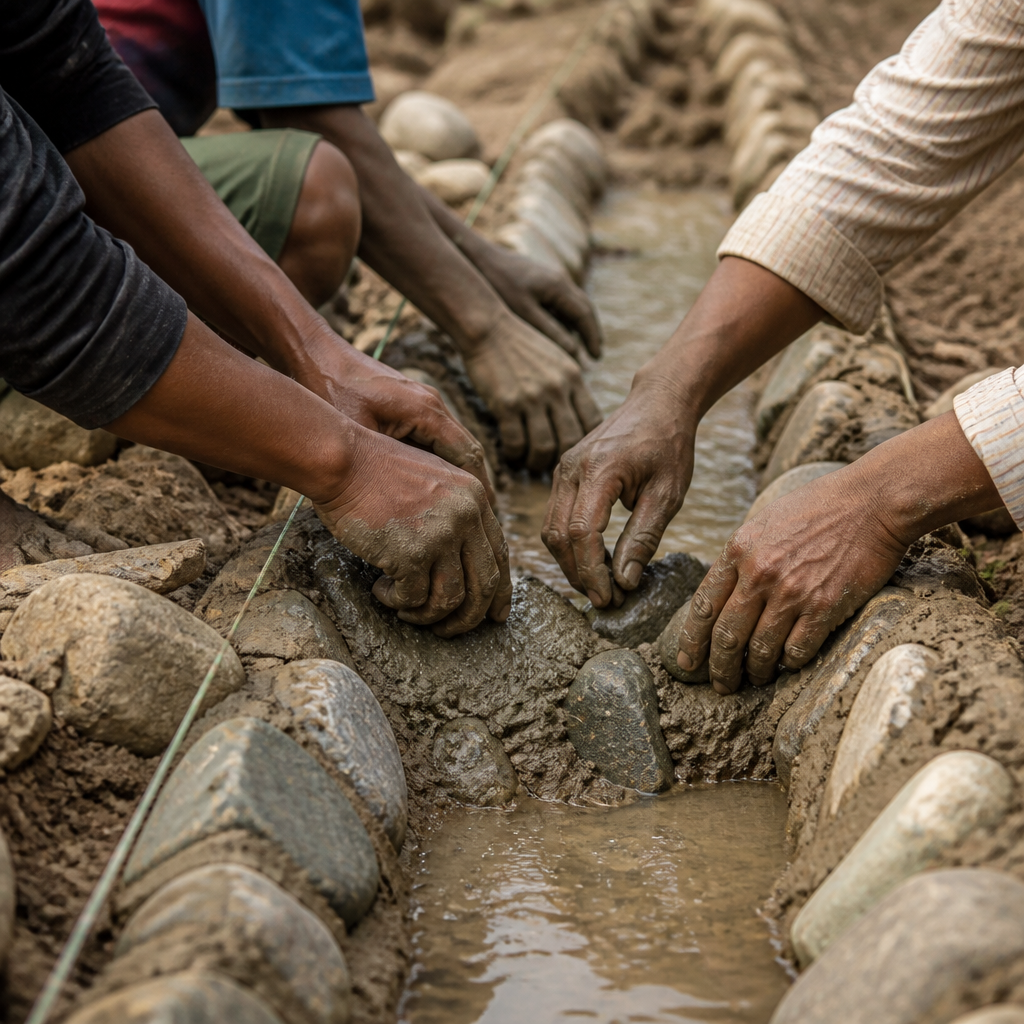
The Haiti Restoration and Transformation Pilot Project is built around one project with four distinct initiatives: water, reforestation, education, and road construction for economic development. What makes this framework credible is its origin. These four priorities were not handed down by a headquarters in New York or Geneva. They were determined collectively by the partner communities themselves, the C2C Haiti team, and local government officials as the development pathways with the greatest potential for lasting, sustainable impact.
Each initiative addresses a root cause of poverty rather than a symptom. Clean water reduces disease and frees women and children from long daily walks to collect it. Reforestation protects water sources, rebuilds soil, and supports agricultural livelihoods. Education delivered locally removes the safety risks of long-distance school travel for children in mountainside communities. Road access breaks the economic isolation that keeps farming families from reaching markets.
Real development in Haiti is not something done to communities. It is something communities do, when given the resources and the partnership to act on their own knowledge of their own needs.
The four-pillar structure also reflects a practical understanding of how poverty works. Addressing only one dimension, say water alone, while leaving education, economic access, and environmental degradation untouched, produces temporary relief rather than transformation. C2C’s insistence on treating all four as connected and co-dependent is one of the model’s most important design decisions.
C2C works through two locally organized peasant associations, or peyizan groups, in Petit-Goâve. These are not NGO-created community committees. They are the organizational backbone of their respective communities, and C2C’s role is to equip, resource, and support them, not to run operations on their behalf.
APHD manages the mountainside partner community, which is geographically more remote and faces greater challenges around infrastructure and access. APHD has been responsible for the water distribution system, road construction, reforestation, the Saul Louis Community School, and the ongoing Continuous Care Initiative health work. When the cholera outbreak reached Petit-Goâve, it was APHD that purchased supplies, ran educational workshops, and installed handwashing stations to contain the spread.
ODCP manages the Petit-Goâve Proper Partner Community and has its own distinct development agenda. Their priority has centered on canal construction to address health and sanitation conditions for the 85 families in their community. Phase 2 of the canal construction is a key milestone in ODCP’s roadmap, targeted to improve drainage and reduce waterborne disease risks in the more densely settled areas near the town center.
The existence of two parallel partner associations, each with its own governance and project pipeline, is one of the most important structural features of C2C’s Petit-Goâve work. It ensures that “Petit-Goâve development” is not a monolithic top-down program but a living system of local priorities managed by local people.
Pro tip: For donors evaluating community development organizations, ask specifically whether local partner organizations have independent governance and decision-making authority, or whether they simply execute plans designed elsewhere. The answer reveals whether a model is truly community-led or only claims to be.
The water initiative in the Mountainside Partner Community is the most technically complex of the four HRTPP pillars. The project involves locating a spring source, encasing it with a captage structure, building a reservoir tank, installing a pump and treatment system, and then constructing distribution kiosks across the mountainside so that water flows freely to families who previously had to walk long distances to collect it, a burden that fell disproportionately on women and children.
Phase 1 located the spring and completed the captage, which flows at a documented rate of 6 gallons per minute. Phase 2 completed the excavation and construction of the water tank and reservoir. The project then moved into Phases 3 and 4: installing the pump house and treatment system, and building the four distribution kiosks with spigots positioned throughout the mountainside community.
The ODCP-led canal work in Petit-Goâve Proper addresses a different but equally serious sanitation challenge. Drainage infrastructure in dense residential areas directly affects disease rates, and the canal project is designed to improve health outcomes for the 85 families in that community in a measurable, sustained way.
Pro tip: Water projects that stop at a single well or tank almost always fail within a few years because they lack a distribution system and community ownership of maintenance. C2C’s phased approach, culminating in community-managed kiosks, is designed specifically to avoid that failure mode.
The Saul Louis Community School is the most visible symbol of what sustained community-led development looks like over time. It began as the sole elementary school in the mountainside community, serving children from pre-Kindergarten through 6th grade. APHD added a trade school in 2022. The school is currently expanding to include 7th, 8th, and 9th grades, ensuring that over 300 children can complete their early secondary education without leaving the community.
That last point deserves emphasis. In mountainside communities with poor road access, requiring children to travel to school in distant areas is not just inconvenient. It is a genuine safety risk that causes parents to pull children out of education entirely. By building out the school grade by grade within the community itself, APHD and C2C have directly addressed one of the most common reasons school enrollment drops in rural Haiti.
The school’s development history was not linear. A temporary shelter built in 2013 to house students during the design development phase was destroyed by Hurricane Erika in August 2015, the day before the school year was to begin. Rather than rebuild another temporary structure vulnerable to the next storm, C2C and the community agreed to move forward with permanent construction. That decision, made in partnership rather than by fiat, reflects the quality of the relationship between C2C and its partner communities.
In addition to the main school program, 10 high school girls supported by a grant from the Haitian Women’s Collective have continued their secondary education and are on track to graduate on time. Education access for girls in rural Haiti is not a footnote. It is one of the most consequential investments any development program can make.
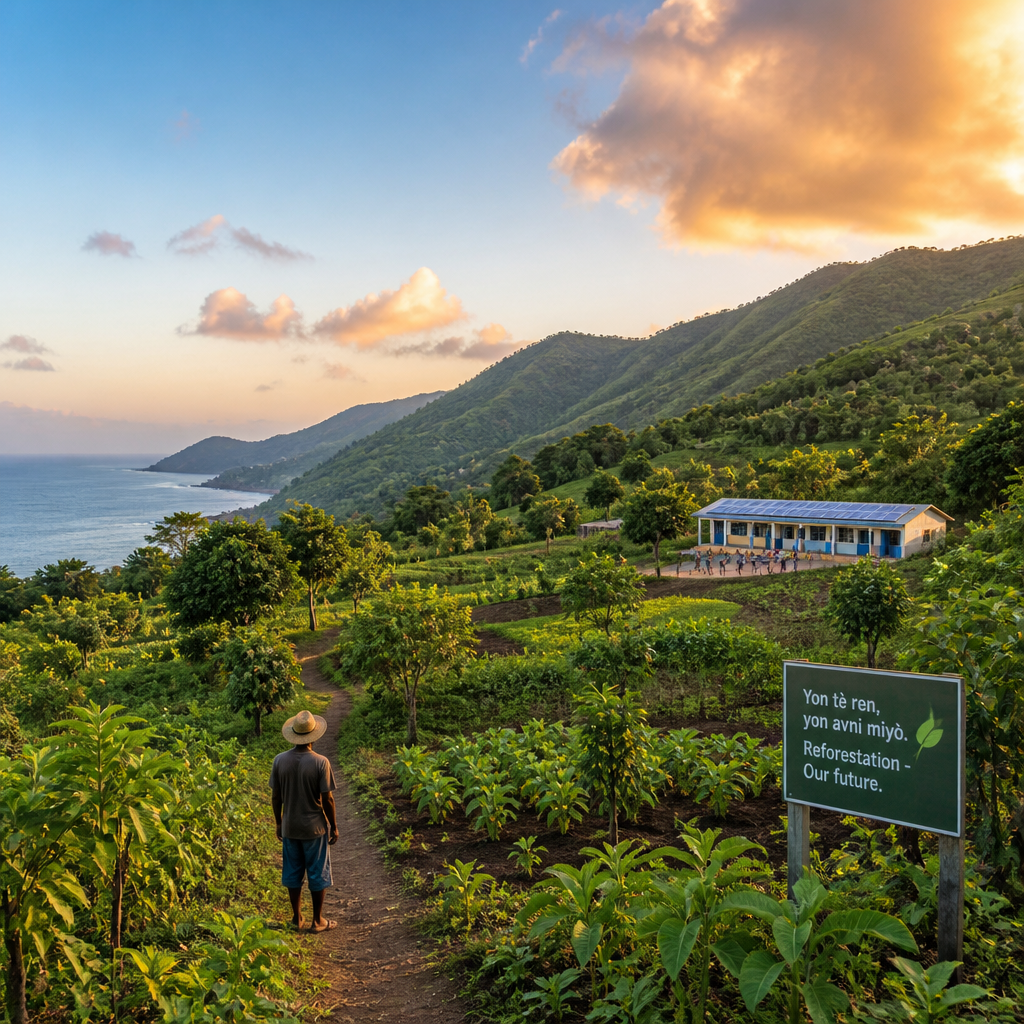
Haiti’s deforestation crisis is well documented and deeply connected to every other development challenge in the country, including soil erosion, water source depletion, flooding risk, and agricultural decline. C2C’s mountainside partner community has planted 14,000 seedlings to begin reversing that damage at a local level.
The reforestation initiative is explicitly linked to water source protection. Without tree cover on the mountainside, the spring that feeds the community’s water distribution system is vulnerable to sedimentation and contamination. Planting trees is not an environmental gesture. It is infrastructure maintenance for the water system.
The food security dimension of this work extends further. The Mountainside Partner Community has adopted sustainable farming practices alongside the planting program, and has introduced a goat program providing families with animals for milk, meat, and market sale. This is the kind of interconnected programming that turns a reforestation project from a tree-planting exercise into a livelihood system.
The 2024 planting target of 10,000 additional trees underscores that reforestation in Petit-Goâve is understood as an ongoing commitment, not a completed milestone. Mountainside ecology takes years to stabilize, and APHD’s continued focus on this initiative reflects exactly the long-term thinking that community-led development requires.
Poor road access in Haiti’s mountainside communities does more than inconvenience residents. It isolates farmers from markets, prevents emergency vehicles from reaching families in crisis, makes school attendance unsafe for children, and raises the cost of every good and service the community needs to import or export. The road construction initiative in Petit-Goâve is categorized under economic development in the HRTPP because that is precisely what it delivers.
Phase 1 of road construction was completed by APHD under the HRTPP. Phase 2 is a primary focus for 2024, extending the road network further into the mountainside community and deepening the economic connectivity that the first phase began to create.
When Hurricane Melissa struck Petit-Goâve, the La Digue river burst its banks, killing dozens of people including infants and children, destroying homes and livelihoods, and collapsing entire roads. The aftermath revealed two things simultaneously: how devastating inadequate infrastructure makes natural disasters in remote communities, and how essential local organizations like APHD and ODCP are when national and international aid cannot reach isolated areas. Road infrastructure is not a development luxury. It is a survival necessity.
In 2017, C2C conducted a health assessment survey in the mountainside communities of Petit-Goâve. The findings shaped the Continuous Care Initiative (CCI), a community-based approach to preventative healthcare that works through local health workers rather than relying on external medical missions or distant clinics.
The CCI is explicitly not a hospital or advanced medical facility. It is a daily community health worker system, partnered with both APHD and ODCP, that provides health education, preventive medications for identified illnesses, and in-country resources for families who cannot access distant healthcare. The distinction matters. A medical mission that arrives, treats patients, and leaves does not build local health capacity. The CCI is designed around the opposite principle: health knowledge and practice embedded in the community itself.
The 2024 roadmap for APHD includes construction of a health and wellness center that will serve 1,200 families. This represents a significant expansion of the CCI’s reach and a shift toward permanent health infrastructure that the community will own and operate. Combined with the water and sanitation work, it positions Petit-Goâve’s mountainside community to address the root causes of preventable illness rather than managing its recurring consequences.
Many development organizations operating in Haiti describe themselves as community-centered. The practical test is simple: who makes the decisions, who holds the assets, and who remains when the international partner’s funding cycle ends? In Petit-Goâve, the answers are APHD, ODCP, and the communities themselves.
| Approach | Decision-Making Authority | Long-Term Sustainability |
|---|---|---|
| Top-down aid delivery (common among many international organizations) | Headquarters or external experts define priorities and methods | Low. Projects often stall or collapse when external funding ends |
| Community-consulted development | Communities are asked for input but external organizations retain control | Moderate. Some local ownership but dependency on external management remains |
| C2C’s Community-Led Collaborative Framework (Petit-Goâve model) | Local peasant associations (APHD, ODCP) drive priorities, implementation, and governance | High. The goal is explicit self-sufficiency with C2C as a resource partner, not an operator |
The difference is not philosophical. It shows up in operational detail. When a cholera outbreak hit Petit-Goâve, APHD did not wait for C2C to organize a response. They purchased supplies, ran workshops, and installed handwashing stations. When Hurricane Melissa struck and roads collapsed and families needed rescue, APHD and ODCP were conducting search-and-rescue missions before national aid reached the area. That level of institutional readiness and local capability is built over years of genuine partnership, not manufactured by short-term project cycles.
C2C’s model is also transparent about its end goal. The vision is explicitly a Haiti where partner communities no longer need C2C’s financial or organizational support because they have achieved genuine self-sufficiency. That is an unusual thing for a development organization to say out loud. Most prefer language that keeps the dependency relationship intact. C2C’s founding vision, articulated from inception, is to work toward its own irrelevance in each community it serves.
Petit-Goâve offered a combination of organized local peasant associations capable of genuine partnership, a geography that mixed mountainside and urban-adjacent populations, and proximity to Port-au-Prince without being overshadowed by the capital’s development activity. It was a realistic proving ground for a model designed to be replicated across Haiti.
The Haiti Restoration and Transformation Pilot Project is C2C’s flagship development program, launched in April 2011 in Petit-Goâve. It is structured around four community-determined initiatives: water distribution, reforestation, education, and road construction for economic development. Each initiative is managed by local partner associations, APHD for the mountainside community and ODCP for Petit-Goâve Proper, with C2C mobilizing financial and human resources in support.
The Saul Louis Community School is the only school in the mountainside partner community. It started as a pre-K through 6th grade institution, added a trade school in 2022, and is currently expanding to include 7th, 8th, and 9th grades. Keeping children educated locally removes the safety risks of long daily travel to distant schools and eliminates the primary reason parents in remote areas withdraw children from education.
APHD (Mountainside Partner Community Peasant Association) and ODCP (Petit-Goâve Proper Partner Community Peasant Association) are the primary governing and implementing bodies for development work in their respective communities. They are not committees created by C2C. They are independent local organizations that C2C partners with, resources, and supports while those organizations retain decision-making authority over their own development priorities and operations.
C2C activates its Emergency Response Initiative when crises occur, as it did when Hurricane Melissa caused catastrophic flooding, loss of life, and road destruction in Petit-Goâve. Because APHD and ODCP are permanently embedded local organizations with trained community health workers and established leadership structures, they can conduct search-and-rescue, distribute aid, and relocate families to temporary shelters immediately, often before national or international aid reaches the area.
Self-sufficiency, in C2C’s framework, means that APHD and ODCP can secure their communities’ basic needs, including water, food, shelter, sanitation, and health and hygiene, without ongoing dependence on foreign aid or external organizations. The HRTPP in Petit-Goâve is the model for what that looks like in practice: locally governed infrastructure, locally managed schools and health systems, and local economic development that keeps resources circulating within the community.
Donors can support C2C’s work in Petit-Goâve through directed contributions toward active initiatives including the Phase 2 road construction, the planned health and wellness center for 1,200 families, the Saul Louis Community School expansion to 9th grade, the ongoing reforestation program targeting 10,000 new trees, and the Continuous Care Initiative health worker program. C2C’s transparency about each initiative’s phase and next steps makes it possible for donors to connect their giving directly to measurable outcomes on the ground.
If you have experience working with community-led development programs in Haiti or have supported C2C’s work in Petit-Goâve, share what you have seen from the ground. Your perspective matters to the people reading this and considering whether to get involved.