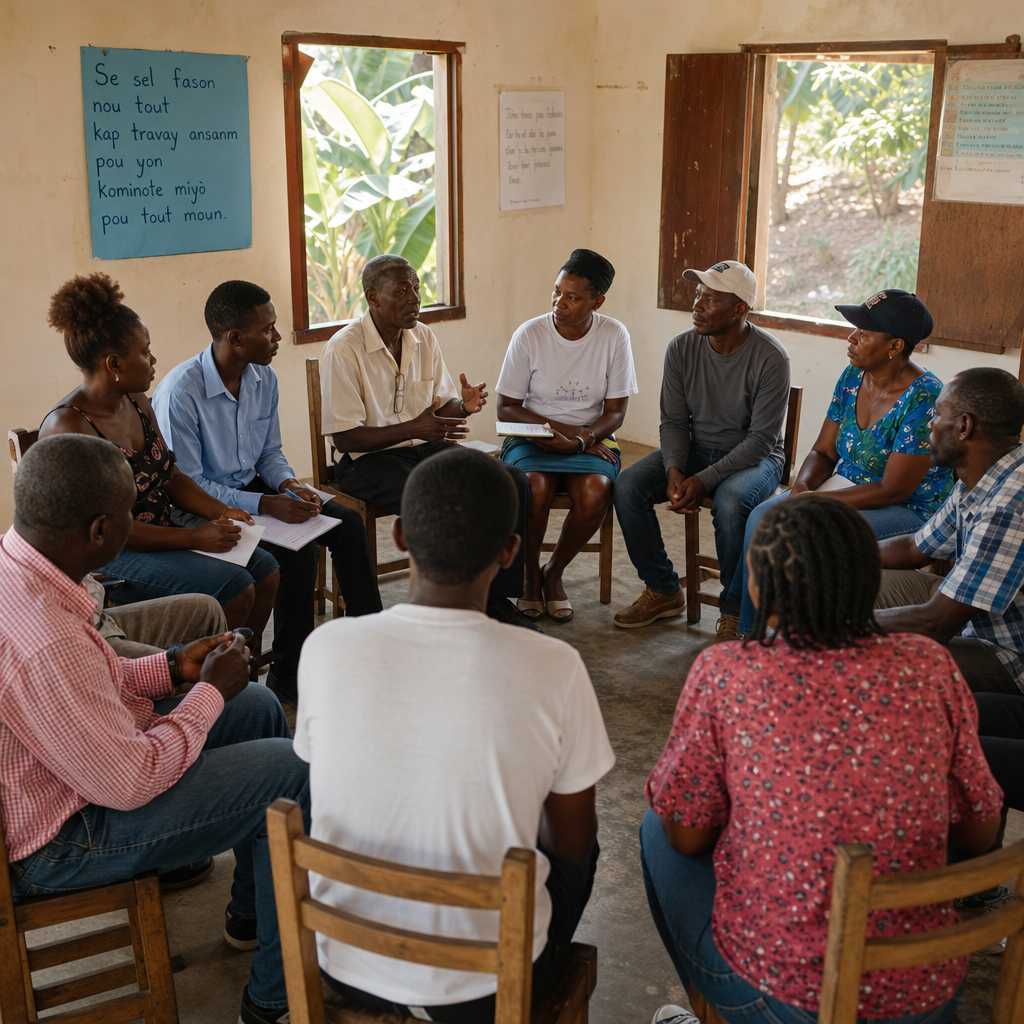
Most recurring giving campaigns quietly expire without anyone noticing. This one is different. The C2C Neighbor monthly donor program closes enrollment today, and if you have been waiting for the right moment to commit to sustainable, community-led development in Haiti, that moment is right now. According to the Fundraising Effectiveness Project, monthly donors give 42% more annually than one-time donors, and they stay engaged an average of 5.4 years longer. What you decide today has compounding consequences for real Haitian families, not in the abstract, but in communities where C2C’s Collaborative Framework is already delivering measurable results.
| Key Insight | Explanation |
|---|---|
| Enrollment closes today | The C2C Neighbor monthly donor program has a hard enrollment deadline. Missing it means waiting for the next intake cycle, which delays your impact on partner communities. |
| Monthly donors fund continuity, not just projects | One-time gifts fund moments. Monthly gifts fund the sustained presence C2C needs to implement multi-year community development plans without disruption. |
| Recurring giving reduces Haiti’s aid dependency | Predictable revenue allows C2C to plan community-led programs that build local capacity, directly addressing the reliance on foreign aid that keeps communities vulnerable. |
| C2C’s model is community-led, not charity-driven | Unlike many Haiti nonprofit donations that fund top-down interventions, C2C works within partner communities, which means your gift supports dignity and self-determination. |
| Even small monthly amounts have outsized impact | Because C2C operates with low overhead and direct community partnerships, a monthly gift of $25 or more translates to tangible program funding rather than administrative costs. |
| Recurring giving in Haiti is underfunded relative to need | Most Haiti nonprofit donations are event-driven, spiking after disasters and disappearing afterward. Recurring giving fills the chronic underfunding gap between emergencies. |
| The Neighbor program signals a relationship, not a transaction | C2C Neighbors receive updates directly tied to the communities their gifts support, creating accountability that one-time donors rarely experience. |

The C2C Neighbor program is Community2Community’s structured recurring giving initiative. It exists to solve a specific and well-documented problem: development work in Haiti cannot be sustained on episodic donations alone. The program enrolls donors who commit to a monthly contribution, and in return, those donors are treated as genuine stakeholders in the communities C2C serves.
The name is intentional. C2C’s entire philosophy is built on the idea that lasting development happens neighbor-to-neighbor, community-to-community, not through distant charity relationships. When you become a C2C Neighbor monthly donor, you are not sponsoring a statistic. You are joining a framework that has been designed specifically to restore dignity and reduce foreign aid dependency in Haitian partner communities.
In practice, Neighbor donors are the financial backbone that allows C2C to execute its Collaborative Framework without constantly chasing emergency funding. That stability is not a minor administrative benefit. It is the difference between a program that runs and a program that lasts.
Deadline-based fundraising campaigns are often treated with skepticism, and fairly so. Many nonprofits use artificial urgency to pressure donors without genuine operational reasons behind the cutoff. The C2C Neighbor program deadline is different, and it matters to understand why.
C2C operates through structured cohorts of monthly donors. When a new enrollment cycle opens, the organization uses that cohort to plan specific program commitments with partner communities in Haiti. Those commitments require a known, stable funding base before they begin. Enrolling after the cohort is set creates budget uncertainty that flows directly into the field.
This is not a technicality. The data consistently shows that nonprofits operating with predictable multi-year funding achieve significantly better outcomes than those managing volatile revenue. A 2020 report from the Stanford Social Innovation Review found that funding stability is among the top three predictors of nonprofit program effectiveness. C2C’s cohort model reflects that evidence directly.
If you intend to support recurring giving Haiti programs, delaying enrollment does not mean pausing impact. It means a gap. The communities C2C works with do not pause their needs while a donor waits for the next intake. Joining today means your giving starts now, not in the next cycle.
Pro tip: If you are on the fence about the monthly amount, start at the minimum and increase it at the next review period. A smaller consistent gift enrolled today delivers more value to C2C’s planning than a larger one-time gift made next month.
The case for monthly giving over one-time donations is not a matter of opinion. It is backed by consistent sector data, and it applies with particular force in Haiti, where funding volatility is one of the primary barriers to long-term development progress.
“Monthly donors have a retention rate of approximately 80-90%, compared to just 23% for first-time one-time donors.” Fundraising Effectiveness Project, 2023 Annual Report
That retention gap is not just a fundraising metric. For organizations like C2C, it represents the difference between a community partner who can plan a two-year health education initiative and one who has to scale back because a donor did not renew. Haiti nonprofit donations that are one-time, however generous, create a boom-and-bust cycle that community-led development cannot absorb effectively.
When C2C knows its monthly revenue 12 months in advance, it can hand more decision-making authority to partner communities rather than directing programs based on what funding happens to be available. That is not a side benefit of recurring giving. It is the central mechanism through which the C2C Collaborative Framework actually works.
One-time gifts, even substantial ones, lock C2C into reactive program design. Monthly gifts free C2C to be proactive, community-responsive, and aligned with the UN Sustainable Development Goals the organization explicitly targets: poverty elimination, health, education, and sustainable infrastructure.

Abstract impact statements are a common failure of nonprofit communication. “Your gift changes lives” means nothing without specifics. Here is what C2C Neighbor monthly donor contributions actually fund within the Collaborative Framework.
C2C partner communities identify infrastructure needs internally and develop implementation plans with C2C’s support. Monthly donor revenue funds the materials, technical support, and community labor coordination that brings those plans to execution. This is not C2C arriving with a solution. It is C2C resourcing a solution the community has already designed.
Programs targeting child health, maternal care, and primary education require consistent funding to employ local practitioners and maintain supplies. A gap in monthly revenue is not an inconvenience for these programs. It is a service interruption for families who have no alternative provider. Recurring giving Haiti initiatives like the Neighbor program exist precisely to prevent those interruptions.
This is the long-term goal that separates C2C from most organizations operating in Haiti. When communities have stable, locally-managed resources, they become less dependent on the unpredictable cycles of international humanitarian funding. Your monthly gift is not just supporting a program. It is funding the conditions under which communities eventually no longer need external support at all.
Pro tip: When you enroll as a C2C Neighbor monthly donor, ask to receive the quarterly community update specific to the partner community your cohort is supporting. The specificity of those updates will tell you more about your actual impact than any aggregate statistic.
Not all recurring giving programs for Haiti development are structured the same way. Understanding the differences helps donors make decisions aligned with their values and with what the evidence shows actually works.
| Giving Model | Structure and Accountability | Impact on Community Self-Sufficiency |
|---|---|---|
| C2C Neighbor Monthly Donor Program | Cohort-based enrollment with direct community updates. Funds go to partner communities identified and managed through the C2C Collaborative Framework. Donors are treated as stakeholders, not passive contributors. | Explicitly designed to reduce foreign aid dependency. Community-led planning means funds support locally-determined priorities, building long-term capacity and dignity. |
| Large INGO Recurring Giving (e.g., World Vision-style models) | Centralized program management with standardized reporting. Recurring gifts enter a general fund allocated by organizational leadership. Donor connection to specific communities is minimal. | Often funds service delivery rather than capacity-building. Communities receive support but may remain dependent on external organization presence for continued program operation. |
| One-Time or Event-Driven Haiti Donations | No structural commitment from either donor or organization. Funding spikes after disasters and drops significantly during non-crisis periods, creating volatile revenue for implementing partners. | Least effective for long-term self-sufficiency. Disaster-driven giving reinforces a crisis framing of Haiti rather than supporting the community-led development work that produces lasting change. |
The process is straightforward, but the timing is not. Enrollment closes today, and the steps below need to happen now, not after you finish your workday.
Visit c2chaiti.org and navigate to the Neighbor program enrollment page. Select your monthly giving amount. C2C accepts multiple payment methods to reduce friction. The entire enrollment process takes under five minutes.
A common mistake donors make is assuming they can complete the process later and still meet the deadline. Enrollment systems for cohort-based programs close at a specific time, not at the end of the day in every time zone. If you are reading this, the window is still open. That status will change.
Once enrolled, you will receive confirmation and information about the specific partner community your cohort supports. From that point, your Haiti nonprofit donations operate on autopilot, giving C2C the predictable revenue it needs while you receive regular updates on the work your money is funding.
If enrollment closes before you join, you will need to wait for the next cohort intake cycle. C2C opens new Neighbor program cohorts periodically, but the timing is tied to community planning cycles, not to donor convenience. Missing today’s deadline means your monthly giving does not start supporting the current cohort’s work, and there is a real gap between your intention and your impact.
C2C structures the Neighbor program to be accessible at multiple giving levels. Because C2C operates with direct community partnerships and intentionally low overhead, even a monthly gift in the $25 range translates into meaningful program support. The more important variable is consistency, not amount. A sustained smaller gift is operationally more valuable to C2C’s planning than a large one-time contribution.
The primary difference is the community-led framework. Most Haiti nonprofit donations, including recurring programs from larger organizations, fund service delivery managed by the external organization. C2C’s model funds programs designed and directed by partner communities themselves. Your gift supports community agency and self-determination, not just service provision. That structural difference is what makes the Neighbor program specifically aligned with long-term development rather than ongoing humanitarian dependency.
Yes. C2C, like all reputable nonprofit organizations, allows monthly donors to pause or cancel their recurring gifts. The goal of the Neighbor program is to build a reliable base of committed donors, but that commitment is not a legal obligation. If your circumstances change, you can contact C2C directly to adjust your giving. The organization would rather you give at a sustainable level long-term than overcommit and cancel after two months.
C2C provides cohort-specific updates to Neighbor donors that connect directly to the partner community their cohort supports. This is not aggregate impact reporting. It is community-level accountability. You will receive information about specific programs, specific communities, and specific outcomes, which is a level of transparency that most large international NGOs operating in Haiti do not provide to their recurring donors.
Community2Community operates as a registered nonprofit organization. Monthly donor contributions are generally tax-deductible in the United States, subject to standard IRS rules for charitable giving. You will receive documentation of your monthly contributions for tax purposes. For specific questions about your tax situation, consult a qualified tax advisor, as individual circumstances vary.
If you have given to C2C before or are considering joining the Neighbor program today, share what influenced your decision in the comments. Your perspective helps other donors understand what community-led development in Haiti actually looks like from a supporter’s point of view.
We would love your feedback and any insights you would share with others. What perspective would you add?