
Haiti has one of the highest maternal mortality ratios in the Western Hemisphere, with an estimated 350 deaths per 100,000 live births, and roughly 5.3% of children under five do not survive to their fifth birthday. These are not abstract statistics. They represent families in mountainside communities who walk two hours down rough terrain just to reach a hospital, families who cannot afford a doctor visit, and communities where preventive health education has never arrived. This is the terrain where Haiti health programs must operate, and where Community2Community (C2C) has committed to building something more durable than a one-time medical mission.
| Key Insight | Explanation |
|---|---|
| SDG 3 demands whole-person care | Good health and well-being means physical, mental, emotional, and spiritual health. Programs that only treat illness miss the larger goal. |
| Geographic barriers kill more than disease | In Haiti’s mountainside communities, a two-hour walk to the nearest hospital is a death sentence for emergencies. Local care access is a non-negotiable first step. |
| C2C’s Continuous Care Initiative reduced blood pressure cases | Monthly doctor visits led to a 30% decrease in high blood pressure through education and medication in C2C partner communities. |
| Cost reduction matters as much as proximity | Costs for doctor visits in C2C partner communities dropped by 92% from the start of the Continuous Care Initiative, removing the financial barrier to care. |
| Community-led health education prevents disease before it starts | Teaching families about hygiene, nutrition, and preventive care reduces vulnerability without requiring large-scale medical infrastructure. |
| Local partnerships outlast foreign missions | C2C partners with local clinics and community leaders, building health networks that continue after international teams leave. |
| A Health and Wellness Center will add telehealth capability | C2C’s planned Health and Wellness Center includes a telehealth system linking local Haitian health workers with medical professionals in C2C’s network for real-time guidance. |
The United Nations Sustainable Development Goal 3 targets good health and well-being for all people by 2030. For most countries, this means incremental improvements to already functioning systems. For Haiti, it means building those systems nearly from the ground up in communities that have been underserved for generations.
Haiti spends roughly US$83 per capita annually on healthcare, the lowest in the Western Hemisphere. There are approximately 25 physicians and 11 nurses per 100,000 people. In rural areas, only about 8% of residents have access to a primary care facility. These are not funding gaps that a temporary relief mission can close. They represent a structural reality that requires sustained, community-rooted intervention.
The connection between SDG 3 health Haiti and every other development goal is direct. Children who are sick cannot learn. Mothers who die in childbirth leave families in poverty. Communities where preventable disease is common cannot build economic stability. Addressing health is not a silo. It is a precondition for almost every other form of progress C2C works toward.

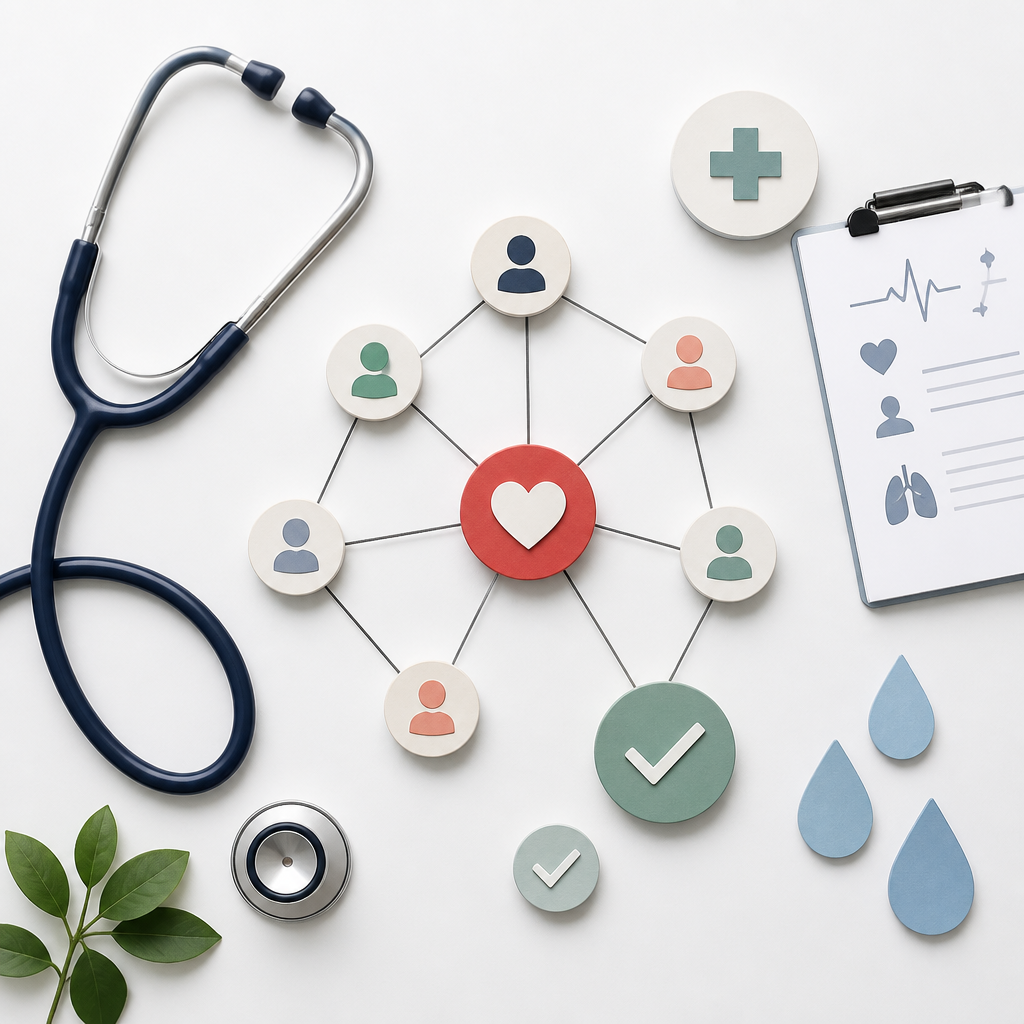
SDG 3 is broader than reducing mortality rates. Its targets include ending preventable deaths of newborns and children under five, reducing maternal mortality, ending epidemics of communicable diseases like malaria and tuberculosis, ensuring universal access to sexual and reproductive healthcare services, and achieving universal health coverage. For Haiti, all of these targets remain active challenges.
Haiti has national health policies and international commitments on paper. The gap exists in implementation. In 2018, only 65.1% of births in Haiti were attended by skilled birth personnel. That figure already reflects years of improvement, but it still means more than one in three Haitian mothers gives birth without trained support nearby.
Most rural communities face not just a shortage of doctors, but a shortage of everything that makes healthcare functional. Reliable electricity, clean water, diagnostic equipment, a stocked pharmacy, and trained community health workers are all prerequisites that foreign aid projects routinely underestimate. Community health in Haiti cannot be sustained through periodic outside interventions. It must be rooted in what communities can maintain themselves.
Curative care is expensive, reactive, and dependent on functioning supply chains. Prevention, education, and community-based monitoring are far more scalable in resource-constrained environments. Teaching a family about hand-washing, oral rehydration, nutrition during pregnancy, and signs of hypertension can deliver measurable health outcomes at a fraction of the cost of hospital-based treatment. This is not idealism. It is the operational reality that effective community health workers demonstrate every day.
Real health equity in Haiti is not achieved by airlifting in medicines or foreign doctors for a week. It is achieved by training local people, building local systems, and trusting communities to sustain the health of their own families.
C2C’s approach to community health Haiti is built on a principle that distinguishes it from relief-focused models: it works with communities, not for them. The C2C Collaborative Framework places community leaders and families at the center of every initiative, including health programming. This is not a philosophical preference. It is a practical strategy that produces outcomes which persist after any external support reduces or ends.
C2C treats well-being as encompassing physical, mental, emotional, and spiritual health. This integrated view is important in Haitian communities where faith, family, and community identity are central to how people understand health and resilience. A program that addresses only the clinical dimension misses the cultural and relational factors that determine whether families actually adopt healthier behaviors.
C2C’s health programming includes health education for families, nutritional guidance, mentorship for caregivers, and support for the safe and nurturing environments children need to develop well. These elements work together. A mother who understands nutrition, trusts local health workers, and has social support is far more likely to access care and sustain healthy practices than one who receives a single clinical visit with no follow-up.
Rather than running parallel systems that compete with or bypass local health infrastructure, C2C partners with local clinics and Haitian health initiatives. This approach strengthens what already exists in communities. It also means that when C2C’s direct involvement in a given initiative evolves, the local health network it helped build remains functional.
Pro tip: If you are evaluating any Haiti health program for philanthropic support, ask specifically how the program transfers capacity to local workers and leaders. A program that cannot describe this transfer in concrete terms is likely building dependency, not resilience.
C2C’s Continuous Care Initiative (CCI) is the most concrete expression of how it addresses SDG 3 in its partner communities. The CCI was designed specifically to move communities from dependency on outside healthcare to ownership of their own health systems. It engages local community members throughout the process, not just as recipients of care but as active participants in building it.
The results from the CCI are specific and measurable. Monthly doctor visits in C2C’s mountainside partner community near Petit-Goâve led to a 30% decrease in high blood pressure through education and medication. Costs for doctor visits dropped by 92% compared to what community members paid before the CCI began. And critically, the access barrier was reduced from a two-hour walk down a mountain to reach the nearest hospital to a ten-minute walk to the monthly doctor visit held within the community itself.
C2C is working to build a Health and Wellness Center as the next phase of the CCI. This center will expand on everything the monthly doctor visits already deliver and add capabilities that the mountainside community currently cannot access at all. Among the planned additions is a telehealth system that connects local medical staff in Haiti with medical professionals in C2C’s broader network, enabling real-time troubleshooting, guidance, and training.
This telehealth component matters for a specific reason. Haiti has a severe shortage of specialists. A community health worker who can videoconference with a physician while assessing a complicated case can provide a level of care that would otherwise require hours of travel. It extends the reach of skilled medical judgment without requiring that skilled physician to be physically present every week.
Pro tip: When donors ask how technology fits into community development in Haiti, the telehealth model in C2C’s Health and Wellness Center is a useful example. Technology does not replace local capacity. It amplifies it, particularly when the local workers have already been trained and trusted to lead.
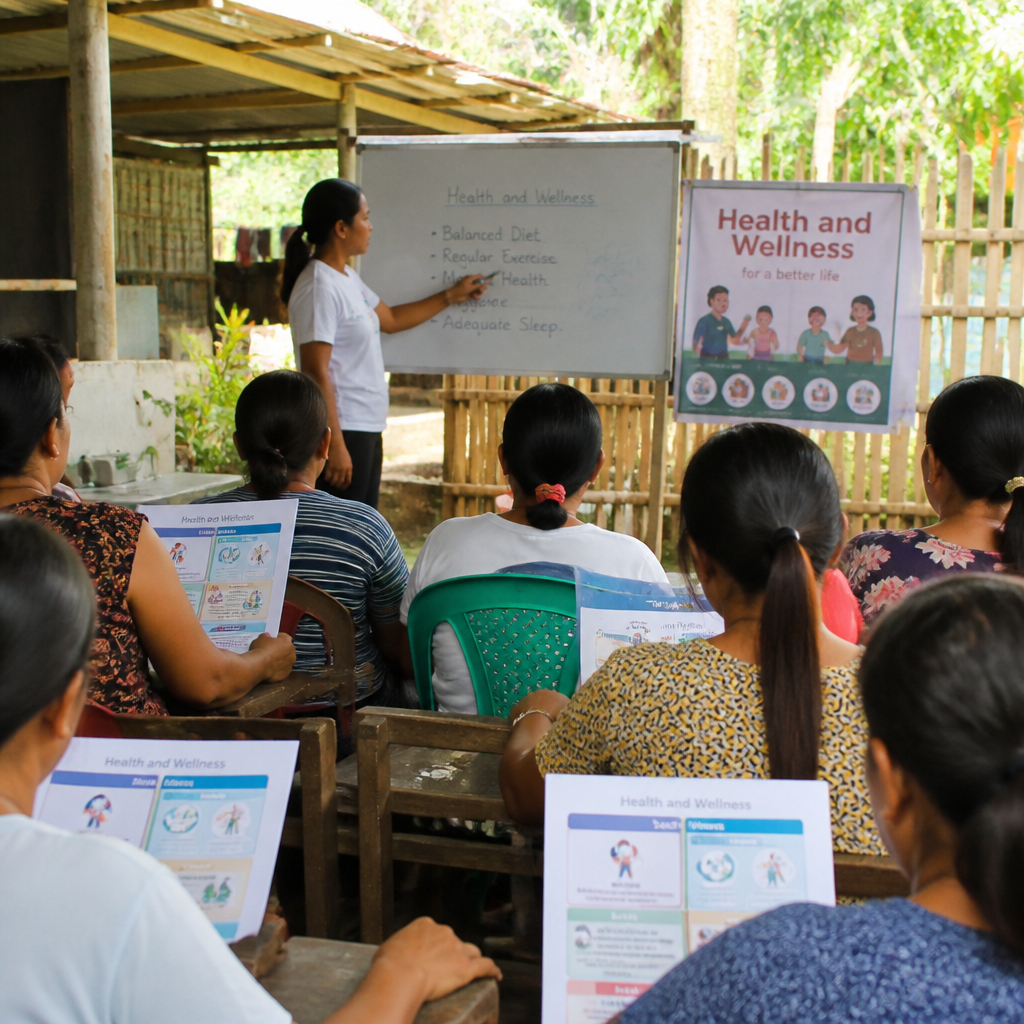
Not all Haiti health programs approach SDG 3 the same way. Understanding the structural differences between models helps donors and community leaders make informed choices about where their support produces the most durable impact.
| Health Delivery Model | Key Characteristics | Long-Term Sustainability |
|---|---|---|
| Short-term medical missions | Foreign volunteers deliver clinical services for days to weeks. High visibility, fast deployment. Limited follow-up care or community training. | Low. Health outcomes typically revert when the team leaves. No local capacity is built. |
| Externally managed clinics | International organizations establish and staff clinics, often with foreign-paid staff. Services available but dependent on continued external funding and management. | Medium. Services persist as long as funding holds, but communities do not own or manage the system. |
| C2C Community-Led Health Model (CCI) | Monthly doctor visits led by trained local health workers. Partnerships with local clinics. Health education integrated into community life. Planned Health and Wellness Center with telehealth capability. | High. Communities own the process. Capacity transfers to local workers. Costs drop as local systems mature. |
Progress on SDG 3 health Haiti is not measured in the number of patients seen during a mission week. It is measured in whether communities are healthier next year than they were this year, and whether they have the local knowledge, tools, and relationships to keep improving without waiting for the next foreign team to arrive.
The 30% reduction in high blood pressure in C2C’s CCI community is a meaningful example of what this looks like. High blood pressure is a chronic condition. Managing it requires ongoing education, medication adherence, and follow-up. It cannot be solved in a single visit. The fact that the CCI achieved this result through monthly visits combined with education shows that frequency and consistency matter more than intensity. A steady, trusted, affordable presence in a community outperforms a sporadic high-resource intervention almost every time.
Health education is the highest-leverage preventive tool available in resource-limited settings. Teaching communities about hygiene, nutrition, early warning signs of illness, and when to seek care reduces the burden on clinical systems by preventing cases that would otherwise require treatment. C2C integrates health education into its programs at the family level through schools and through partnerships with local leaders who carry credibility within their communities.
A common mistake in health programming is to treat education as a secondary activity, something that happens in the margins of clinical work. C2C’s model treats it as primary. When caregivers understand nutrition, when parents recognize the signs of dehydration in an infant, and when community members know how to manage a chronic condition between doctor visits, the entire health system functions better.
Haiti’s communities have endured generations of compounding hardship, from natural disasters to political instability to economic stress. The mental and spiritual dimensions of well-being are not secondary concerns. SDG 3 explicitly includes mental health among its targets, and C2C’s whole-person approach takes that seriously. Mentorship programs, faith-rooted values of compassion and stewardship, and nurturing community environments are not soft additions to the health program. They are structural components of it.
For international donors and philanthropists committed to Haiti health programs, the question is not whether to give, but how to give in ways that produce durable outcomes. The wrong investments can inadvertently undermine local systems. The right ones compound over time as communities build capacity and ownership.
The most impactful donor support for community health Haiti goes toward things that communities themselves identify as priorities, that build local skills and infrastructure, and that are designed from the outset to become community-owned rather than donor-dependent. C2C’s Continuous Care Initiative and the planned Health and Wellness Center both meet these criteria. The CCI was designed to move communities along a continuum from dependency toward self-sufficiency. The Health and Wellness Center will extend that trajectory by adding permanent, locally managed infrastructure.
Donors who fund the Health and Wellness Center are not funding a foreign-managed clinic. They are funding a community asset that will be operated by trained Haitian health workers, connected to the broader medical network through telehealth, and governed by the community it serves. That is a fundamentally different investment from a donation that funds a one-week mission visit.
You can learn more about supporting C2C’s health work and the Continuous Care Initiative at c2chaiti.org/initiatives/continuous-care-initiative and explore the broader goals C2C addresses at c2chaiti.org/goals/health-and-well-being.
SDG 3 is the United Nations Sustainable Development Goal for Good Health and Well-Being, targeting universal access to quality healthcare, reductions in maternal and child mortality, and the elimination of preventable disease by 2030. Haiti faces compounding obstacles: very low per-capita healthcare spending, severe rural access barriers, a shortage of trained health workers, and the ongoing effects of political and economic instability. These factors make achieving SDG 3 in Haiti significantly harder than in most countries, and they make community-led approaches with strong local ownership more important, not less.
C2C operates through the C2C Collaborative Framework, which places Haitian community leaders and families at the center of every program. Rather than delivering services to communities, C2C works with them to build systems they can own and sustain. The Continuous Care Initiative is a clear example: it trains local health workers, uses monthly on-site doctor visits to reduce access barriers, integrates health education into daily community life, and is designed to transition fully to community management over time. The 92% reduction in healthcare costs and 30% reduction in high blood pressure rates in CCI communities show what this model produces.
The Health and Wellness Center will expand the Continuous Care Initiative’s existing offerings and add permanent local health infrastructure. Its telehealth system will connect Haitian health workers with specialists in C2C’s network, extending the reach of skilled medical judgment into communities that currently have no access to specialists. This directly addresses SDG 3 targets around universal health coverage and quality care, while keeping the center community-managed and locally rooted rather than dependent on sustained foreign staffing.
SDG 3 explicitly includes mental health and well-being, and C2C takes a whole-person approach that integrates mental, emotional, and spiritual dimensions of health alongside physical care. This includes mentorship programs, health education delivered through relationships and trusted community networks, and a programmatic commitment to faith-based values of compassion and stewardship that resonate with Haitian culture. These are not peripheral additions. They are core to building the kind of community resilience that sustains health improvements over time.
The most durable donor investments go toward programs that build local capacity, are identified as priorities by communities themselves, and are designed from the outset to become community-owned. For C2C specifically, supporting the Continuous Care Initiative and the Health and Wellness Center means funding infrastructure and systems that Haitian communities will own and operate. Donors should also prioritize transparency: programs that can show measurable, community-level health outcomes over time are doing the work that short-term visibility-driven projects often cannot deliver.
In C2C’s mountainside partner community near Petit-Goâve, the Continuous Care Initiative has produced measurable results. Monthly doctor visits led to a 30% reduction in high blood pressure cases through a combination of education and medication. The cost of a doctor visit dropped by 92% compared to costs before the CCI began. And the physical access barrier was reduced from a two-hour walk down a mountain to a ten-minute walk within the community. These outcomes reflect what consistent, affordable, education-centered care can achieve in underserved rural communities.
If you have experienced the gap between relief-oriented health programs and truly community-led models in Haiti or elsewhere, share your perspective below.
We would love your feedback and any insights you would share with others. What perspective would you add?