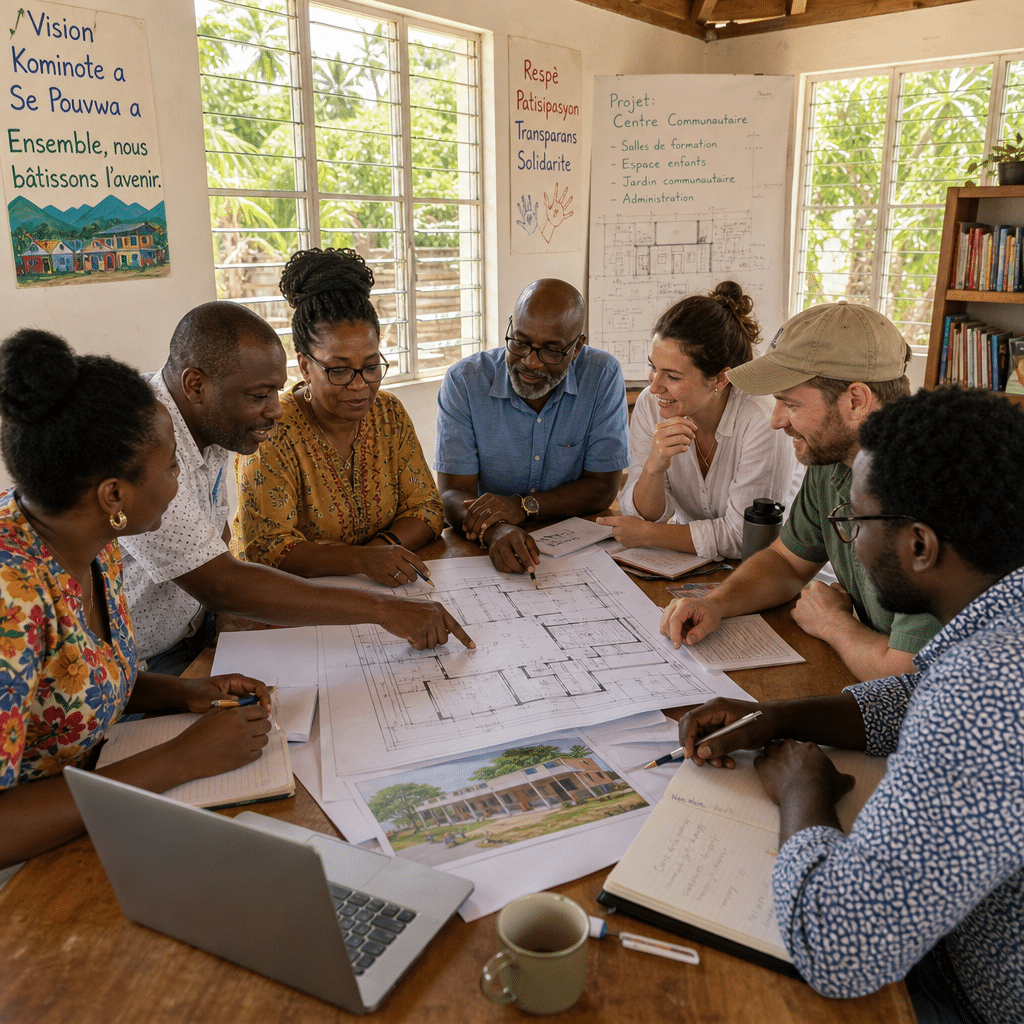
Foreign aid has poured into Haiti for decades, and yet the country remains among the most aid-dependent nations in the Western Hemisphere. The problem is not money. The problem is structure. Haiti development partnerships built on community ownership, shared accountability, and aligned incentives consistently outperform top-down charity models. The data on this is not ambiguous. When local organizations and international supporters work as genuine partners rather than recipient and donor, outcomes improve in every measurable category from school attendance to infrastructure durability. This article explains exactly why, and what real partnership looks like in practice.
| Key Insight | Explanation |
|---|---|
| Community ownership drives durability | Projects designed and managed by local Haitian communities last significantly longer than externally imposed programs because communities maintain and defend what they built themselves. |
| SDG 17 is not optional for Haiti | UN Sustainable Development Goal 17 explicitly calls for multi-stakeholder partnerships. Haiti’s development deficit makes this goal more urgent here than in almost any other country in the hemisphere. |
| Parallel structures kill local capacity | NGOs that create their own implementation teams instead of building local organizational capacity actively undermine the long-term self-sufficiency they claim to support. |
| Funding alignment determines partnership quality | When donor reporting requirements and community priorities conflict, community priorities lose. Genuine partnerships restructure incentives so both sides move toward the same outcome. |
| Trust takes longer than a project cycle | Most NGO project cycles run 12 to 36 months. Meaningful community trust in Haiti, given the country’s history with foreign organizations, typically requires a multi-year consistent presence before real collaboration begins. |
| Local knowledge reduces costly mistakes | Infrastructure built without deep community input frequently conflicts with land tenure customs, seasonal migration patterns, or informal governance structures, leading to abandonment or conflict. |
| Partnerships multiply donor impact | A dollar channeled through a genuine community partnership in Haiti generates more measurable output than the same dollar managed through a foreign implementation team, because local labor, materials, and knowledge are not imported at premium cost. |
Haiti has received more than $13 billion in international aid since the 2010 earthquake alone, according to figures tracked by the Congressional Research Service. The country’s poverty rate has not moved in a meaningful direction. That is not a coincidence. It is a structural outcome.
Aid without partnership creates dependency by design. When an external organization arrives with a predetermined solution, a foreign implementation team, and a reporting structure oriented entirely toward international donors, the local community becomes a backdrop, not a participant. Projects finish. Organizations leave. And communities are left with infrastructure they did not design, do not fully understand, and have no institutional memory to maintain.
In practice, this plays out in predictable ways. Schools built by foreign NGOs sit empty because no one trained local teachers or engaged the community in identifying where the school should actually go. Water systems installed without community buy-in fall into disrepair within two years because no one feels responsible for them. The problem is not Haitian capacity. The problem is that aid without partnership never builds it.

Pro tip: Before committing funding to any Haiti-focused organization, ask one specific question: who made the decisions about what to build, where to build it, and how to maintain it? If the answer is the NGO’s program team, that is a warning sign regardless of how polished the impact report looks.
Genuine Haiti development partnerships are not complicated in theory. They are just difficult to execute, especially for organizations whose funding structures reward quick deliverables over slow trust-building. In practice, they share three characteristics that separate them from conventional aid programs.
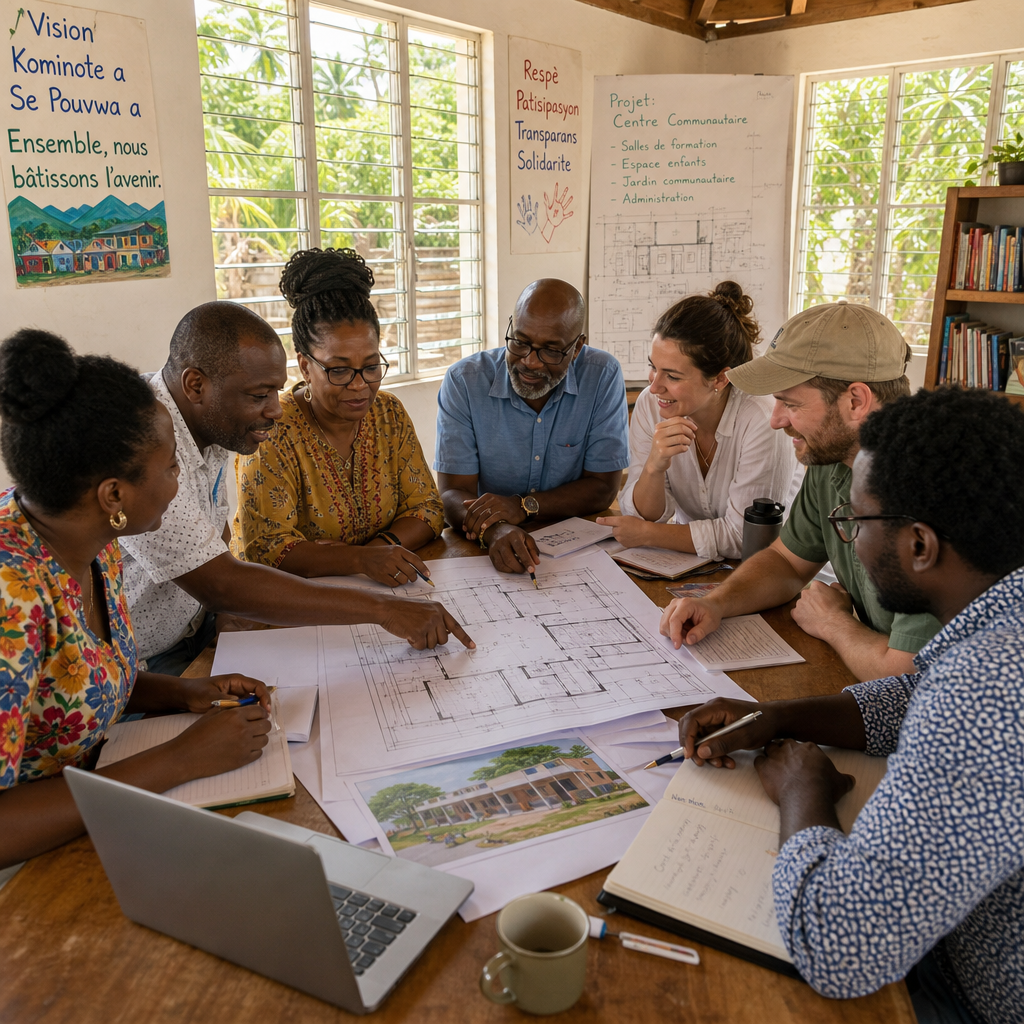
In a real partnership, community leaders are not consulted after a program is designed. They are at the table before anyone writes a proposal. This means Haitian community members have veto power over project scope, location, and design. It means the partnership agreement is written in Haitian Creole as well as English or French. It means the organization can walk away from a funding opportunity if the donor’s requirements conflict with what the community has decided.
This is not how most NGOs operate. It requires organizational discipline to turn down restricted funding, and it requires donors who are comfortable with slower, less predictable timelines. But the outcomes justify the friction.
Most NGO accountability structures run in one direction: the organization reports to its donors. The community has no formal mechanism to hold the organization accountable for broken promises, poor quality construction, or programs that simply do not match local needs. Genuine partnerships build accountability in both directions. The organization is answerable to the community it serves, not just to the people funding it.
C2C’s Collaborative Framework is built specifically around this principle. Partner communities in Haiti set development priorities, participate in implementation, and evaluate whether the outcomes match their original goals. This is what separates genuine partnership from well-branded charity.
UN SDG 17, titled Partnerships for the Goals, is the seventeenth Sustainable Development Goal in the United Nations 2030 Agenda. It explicitly calls for strengthening global partnerships to support sustainable development, particularly in the least developed countries. Haiti, which ranks among the lowest on the Human Development Index in the Western Hemisphere, is precisely the context SDG 17 was written for.
SDG 17 is often treated as a soft goal because it is about process rather than a specific measurable output like reducing child mortality or improving school enrollment. That framing is a mistake. The evidence from Haiti’s own development history shows that process failures, specifically the failure to build genuine multi-stakeholder partnerships, are the direct cause of outcome failures in every other SDG category.
When international donors cite SDG 17 Haiti commitments without actually restructuring how decisions are made and who controls implementation, it becomes a branding exercise. The goal requires that organizations not just partner with each other internationally, but that they genuinely partner with the communities they serve. That distinction matters enormously in Haiti’s context.
“Effective partnerships between governments, the private sector and civil society are needed to achieve the Sustainable Development Goals. These inclusive partnerships built upon principles and values, a shared vision, and shared goals that place people and the planet at the center, are needed at the global, regional, national and local level.” United Nations, 2030 Agenda for Sustainable Development.
For donors evaluating Haiti-focused organizations, SDG 17 compliance should be measured at the community level, not the organizational level. Does the Haitian community have real decision-making power? Are local organizations growing their capacity or being bypassed by foreign teams? These questions have concrete answers, and serious organizations should be able to provide them.

Not all NGO partnerships Haiti are created equal. The sector contains a wide spectrum from organizations doing genuine collaborative work to those whose partnership language is primarily for donor communication. Understanding the difference requires looking at operational structure, not mission statements.
A common mistake among international NGOs operating in Haiti is building parallel implementation structures. Instead of working through and strengthening existing Haitian organizations, they create their own field teams, their own supply chains, and their own community liaison staff. This is faster in the short term and easier to control from headquarters. It is also deeply counterproductive.
Parallel structures siphon skilled Haitian professionals away from local organizations into foreign NGO payrolls. They prevent local organizations from accumulating the institutional knowledge and donor relationships they need to become self-sustaining. And they ensure that when the NGO’s funding cycle ends, nothing is left behind except a finished project with no one trained to replicate or maintain it.
Effective NGO partnerships in Haiti require capacity building as an explicit program goal, not an afterthought. The organizations getting this right are not just delivering services. They are actively transferring skills, building financial management capacity in local partners, and designing exit strategies from the moment they enter a community. The goal is to make the NGO unnecessary, and the best organizations say that openly.
Organizations like C2C operate under a framework where the end state is full community management of development initiatives, with international partners playing a supporting rather than leading role. That orientation changes every operational decision from hiring to reporting to program design.
Pro tip: When reviewing an NGO’s annual report, look for the ratio of international to local staff in field positions. If the organization employs primarily foreign nationals in decision-making roles within Haiti, its partnership model is almost certainly extractive rather than empowering, regardless of its stated mission.
Community2Community’s approach to development in Haiti is built around what it calls the C2C Collaborative Framework, a model that positions Haitian communities not as aid recipients but as active partners with defined rights and responsibilities in the development process. This is not a rhetorical position. It is an operational structure with specific mechanisms.
Under this framework, C2C works directly with partner communities in Haiti to identify development priorities, design interventions, and manage implementation. International donors fund the work but do not determine its direction. Community leaders hold accountability over outcomes. And the metrics used to evaluate success are defined partly by the communities themselves, not solely by international reporting frameworks.
This model directly addresses the dignity deficit that conventional aid creates. When a Haitian community decides what its school needs, builds it with local materials and labor, and manages the ongoing operation, the school belongs to that community in every meaningful sense. That ownership produces better maintenance, higher attendance, and stronger community investment in the outcomes than any externally managed program can replicate.
For donors who want their contributions to produce lasting change rather than temporary relief, the C2C model represents the most direct path from funding to durable impact. The organization’s work across Haiti’s partner communities documents this approach in concrete terms, with communities at the center of every initiative under the C2C Collaborative Framework.
The differences between development approaches are not subtle. They produce measurably different outcomes at every stage of a project’s life cycle. The table below compares three distinct models operating in Haiti’s development sector.
| Approach | Decision-Making Structure | Typical Long-Term Outcome in Haiti |
|---|---|---|
| Traditional Donor-Driven Aid (e.g., large multilateral programs) | International staff and donor requirements determine program scope. Community input is consultative at best and optional in practice. | High completion rates during funding periods. Rapid deterioration after funding ends. Minimal local capacity gains. Continued dependency on external resources. |
| NGO-Led Service Delivery (e.g., operational NGOs with Haitian field presence) | NGO program managers make key decisions. Local staff implement. Community leaders are engaged but rarely have formal authority over program direction. | Better on-the-ground responsiveness than multilateral programs. Still creates dependency on the NGO. Local organizations often weakened by competition for staff and resources. |
| Community-Led Collaborative Partnership (e.g., C2C Collaborative Framework) | Haitian community leaders hold decision-making authority over priorities and design. International partner provides resources, technical support, and accountability structures but does not direct implementation. | Slower initial build but significantly more durable outcomes. Communities maintain infrastructure, replicate successful models, and reduce reliance on external funding over time. |
The data consistently shows that community-led models produce the highest ratio of sustained impact to donor dollar over any period longer than five years. The reason is straightforward: communities do not abandon their own decisions.
Standard foreign aid is typically designed, funded, and implemented by external actors with community members playing a passive role. Haiti development partnerships, when structured correctly, place Haitian communities in decision-making positions from the start. The community identifies priorities, participates in implementation, and holds accountability over outcomes. This structural difference is what determines whether development produces lasting change or temporary relief.
SDG 17 calls for multi-stakeholder partnerships to support sustainable development in least developed countries. Haiti meets the criteria for this category and has one of the highest aid-dependency ratios in the hemisphere. In the Haitian context, SDG 17 compliance means not just international organizations partnering with each other but international organizations genuinely partnering with Haitian communities, transferring decision-making authority and capacity rather than simply delivering services.
The most common failure mode is what practitioners call the parallel structure problem. NGOs build their own implementation teams in Haiti rather than working through and strengthening existing local organizations. When their funding cycle ends, they leave with no local institution capable of continuing the work. A secondary failure mode is misaligned accountability, where organizations report primarily to international donors rather than to the communities they serve, meaning community priorities consistently lose when they conflict with donor requirements.
Ask five specific questions. First, who made the decisions about program priorities? Second, what percentage of field staff are Haitian nationals in decision-making roles? Third, what is the organization’s explicit exit strategy and how is local capacity being built to sustain outcomes? Fourth, does the community have any formal mechanism to hold the organization accountable? Fifth, has the organization ever declined funding because it conflicted with community priorities? Organizations that can answer all five clearly are operating genuine partnerships. Organizations that cannot answer them clearly are not.
The C2C Collaborative Framework is Community2Community’s operational model for community-led development in Haiti. Unlike conventional NGO models where the organization designs programs and communities receive them, the C2C framework positions Haitian partner communities as the primary decision-makers. C2C provides resources, technical expertise, and accountability structures. The community provides direction, local knowledge, and labor. The explicit goal is to build community capacity to the point where external support becomes unnecessary, which is the opposite orientation from most aid-dependent NGO models.
Small donors are essential to community-led development models precisely because these models are less attractive to large institutional funders who prefer scalable, standardized programs. Organizations like C2C depend on individual donors who understand that slow, community-driven development produces better outcomes than fast, donor-directed programs. A consistent small donor who funds community-identified priorities contributes more to long-term impact than a large grant that comes with predetermined program requirements the community did not ask for.
Have you supported or worked within a Haiti development partnership? Share what you observed about what made it effective or where it fell short, your perspective helps others make more informed decisions about where to direct their support.