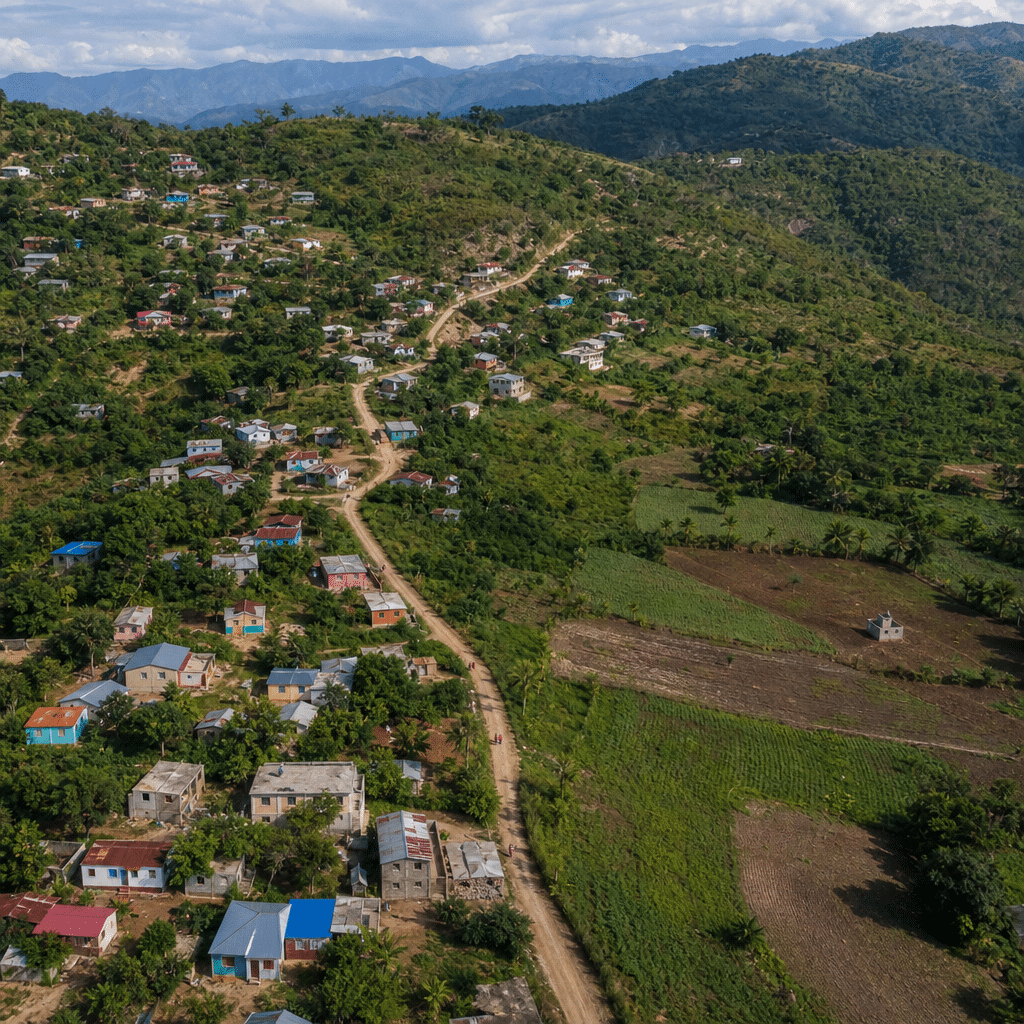
Foreign aid to Haiti has exceeded $13 billion since the 2010 earthquake, yet the country remains among the poorest in the Western Hemisphere. For donors serious about Haiti development 2026 and beyond, that gap between money spent and outcomes achieved demands a frank explanation. The problem is rarely the generosity of donors. It is the model through which aid is delivered. This guide cuts through the noise to help philanthropists and institutional donors understand the current landscape, identify which approaches actually produce lasting change, and make funding decisions that create real community-level impact rather than perpetual dependency.
| Key Insight | Explanation |
|---|---|
| Aid dependency is the core problem, not the solution | Models that route resources through foreign organizations without transferring ownership to Haitian communities consistently underperform over a 10-year horizon. |
| Community-led frameworks outperform top-down aid | Organizations like C2C that place decision-making authority inside partner communities produce measurably better infrastructure and health outcomes than externally managed projects. |
| The Haiti NGO landscape is crowded and uneven in quality | There are over 10,000 NGOs operating or formerly operating in Haiti. Fewer than a fraction maintain transparent financial reporting and verifiable community outcomes. |
| Donor dollars in 2026 must align with UN SDG priorities | Poverty elimination, clean water, quality education, and sustainable infrastructure are the four areas where Haiti has the greatest measurable need and donor funding gap. |
| Vetting an NGO requires more than reading their website | Donors should request community partnership agreements, third-party audits, and multi-year outcome data before committing significant funding. |
| Dignity-centered development changes long-term trajectories | Programs that treat Haitian communities as capable partners rather than aid recipients reduce dependency and increase sustainability of every project built. |
| Geographic specificity matters in Haiti funding | Rural communities face fundamentally different infrastructure and access challenges than Port-au-Prince. Donors should ask which specific communities a program serves and how. |
The data consistently shows that short-term, supply-driven aid creates the very conditions it claims to solve. When outside organizations arrive with pre-packaged solutions, built by foreign staff and funded on 12-month grant cycles, communities receive a structure they did not design, cannot maintain, and do not own. That pattern has repeated itself across Haiti for decades.
A common mistake among well-intentioned donors is conflating activity with impact. A newly built school building counts as a deliverable. Whether teachers show up, whether families trust the institution enough to send children, whether the community has any mechanism to repair the roof in three years, those questions rarely appear in the funder’s final report.
In practice, the organizations producing lasting results in Haiti are those that slow down. They invest years in relationship-building, community assessment, and local leadership development before a single structure goes up. That timeline feels uncomfortable to donors accustomed to visible, fast results. But the alternative, the rapid-build, rapid-exit model, has a documented failure rate that should be disqualifying for any serious philanthropist.
“The goal of development is to make itself unnecessary. If an organization’s presence is still required in 20 years to maintain what it built, it did not build the right thing in the right way.” – Development practitioner principle, widely cited in the community-led development literature
Pro tip: Ask any Haiti-focused NGO to show you a project they completed five or more years ago and describe its current status without their involvement. The answer will tell you more about their model than any glossy annual report.
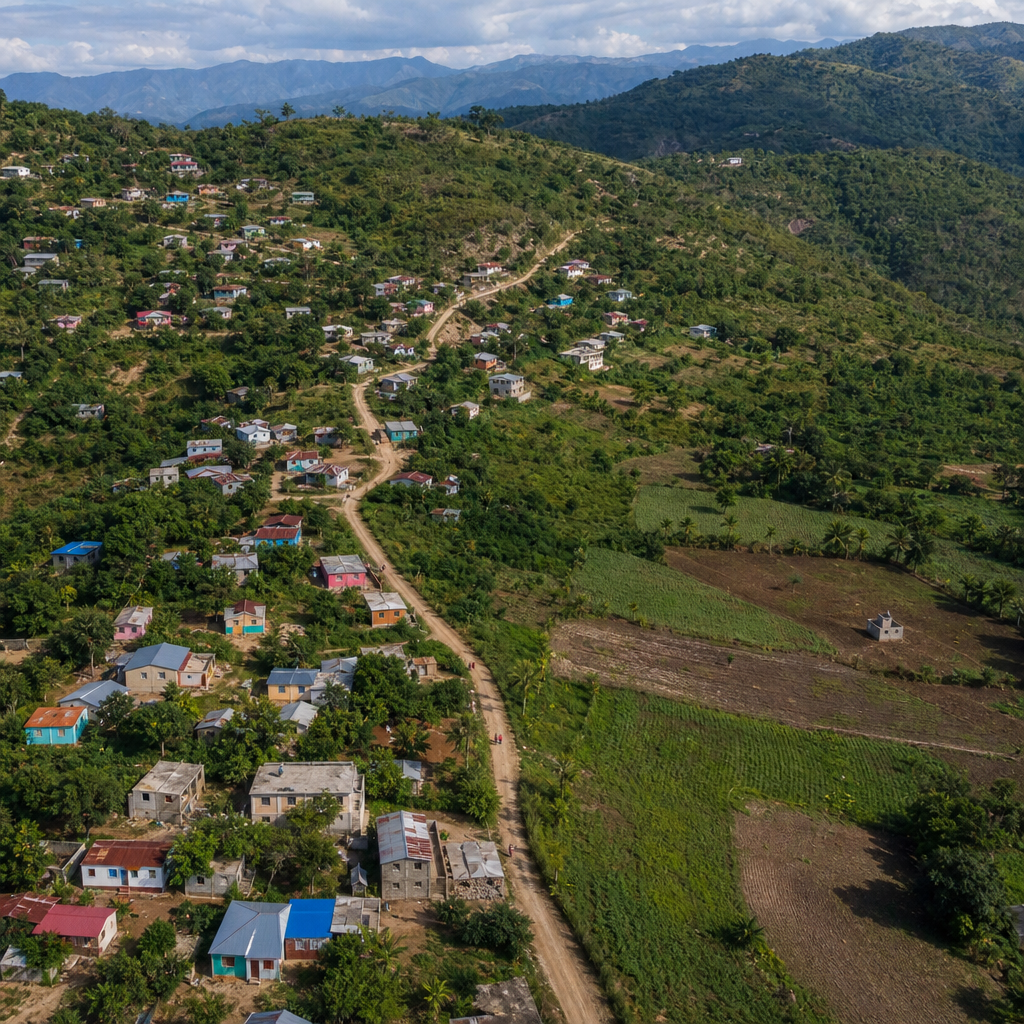
Haiti development 2026 planning must start with honest ground-level facts. According to the World Bank, approximately 60 percent of Haiti’s population lives below the national poverty line, and the country ranks 163rd out of 191 on the UN Human Development Index. These numbers have not meaningfully improved since 2010 despite billions in aid disbursed during that period.
Political instability following the assassination of President Jovenel Moise in 2021 and the ongoing security crisis driven by armed gang activity have displaced hundreds of thousands of Haitians and severely disrupted service delivery. Donors considering Haiti funding in 2026 must account for this operating environment honestly. Organizations that work with embedded community partners face fewer operational disruptions than those relying on foreign staff rotations.
Clean water access remains one of the most critical unmet needs. Fewer than 45 percent of Haitians have access to safely managed drinking water, according to WHO and UNICEF joint monitoring data. Education access has improved on paper but quality and completion rates, particularly for girls, remain severe problems in rural areas.
Healthcare infrastructure is fragmented and largely donor-dependent. In communities where organizations have transferred operational knowledge and resources to local health committees, outcomes are consistently better than in communities served by rotating foreign medical teams.
Gang control over major corridors in and around Port-au-Prince is not an abstract policy problem. It directly affects which communities receive development services and which remain cut off. Organizations with deep community trust and local leadership structures can often operate in areas inaccessible to externally managed programs. This is a concrete operational advantage, not just a philosophical preference, for donor-funded work in 2026.
Haiti has been called the “Republic of NGOs.” After the 2010 earthquake, the NGO presence exploded, with estimates suggesting more than 10,000 organizations operating in the country at the peak. That number has contracted, but the Haiti NGO landscape in 2026 still contains a wide spectrum of operational quality, accountability standards, and community impact.
For donors, the critical distinction is between organizations that operate in Haiti and organizations that partner with Haiti. The first category sends staff, manages projects, and reports outcomes to foreign funders. The second category transfers resources, skills, and decision-making authority to Haitian community structures, then steps back.
Organizations like World Vision and similar large-scale international NGOs bring genuine resources and brand recognition. But their model is structurally oriented toward institutional scale, not community ownership. A large international NGO’s Haiti program must serve the needs of its global fundraising operation, which means simplified messaging, rapid deployment, and measurable short-term outputs.
That is not a character flaw. It is a structural reality. Donors who want community-level transformation should actively seek organizations whose entire model is built around that specific goal, not organizations for whom Haiti is one of dozens of country programs managed from a headquarters in a wealthy nation.
In practice, the most effective organizations operating in Haiti share three characteristics. First, they have multi-year relationships with specific named communities, not generic “program areas.” Second, their leadership structure includes Haitian decision-makers at the program design level, not just implementation. Third, they can produce outcome data that tracks community self-sufficiency metrics over time, not just activity counts.
Community2Community (C2C) is built around exactly these principles. Their C2C Collaborative Framework places community leaders at the center of every decision from needs assessment through project maintenance, which is structurally different from the standard aid delivery model used by most internationally recognized NGOs.

Choosing where to donate to Haiti effectively requires understanding the structural differences between development models, not just the stated missions of individual organizations. The table below compares three real approaches operating in the Haiti context.
| Approach | Key Characteristics | Long-Term Sustainability Record |
|---|---|---|
| Community-Led Development (C2C Collaborative Framework) | Communities identify needs, lead project design, own outcomes. Foreign organization provides resources and technical support only. Multi-year community relationships. Haitian decision-makers at every level. | High. Projects continue functioning without organizational presence. Community capacity builds over time. Reduced dependency is a measurable goal. |
| Partnership-Model Mid-Size NGOs (e.g., Haiti Partners) | Focus on education and leadership training. Some community partnership emphasis. Lighter footprint than large internationals. Local staff employed in meaningful roles. | Moderate. Educational programming shows retention, but infrastructure projects require ongoing organizational involvement. Accountability reporting is stronger than large NGOs. |
| Large International NGO Programs (e.g., World Vision, Global Communities) | Scale-driven delivery model. Foreign staff management. Annual program cycles tied to external funding. Significant brand and fundraising infrastructure. Broad geographic coverage. | Lower for community self-sufficiency. Strong immediate relief capacity. Infrastructure projects frequently require sustained organizational maintenance. Community ownership transfer is rare. |
The comparison above is not meant to dismiss the relief work that large organizations do during acute crises. Emergency response and development programming require different models. The problem arises when emergency-response organizations apply their frameworks to long-term development contexts, which is exactly what has happened repeatedly in Haiti since 2010.
Pro tip: When evaluating any Haiti development organization, ask specifically whether community members have veto power over project design. If the answer is no, or if the question seems surprising to the fundraising staff, you are looking at a top-down model regardless of how the mission statement is worded.
Donors who decide to donate to Haiti without conducting meaningful due diligence are not being generous. They are being careless with resources that communities need to be deployed well. Rigorous evaluation is not skepticism about Haiti. It is respect for the communities whose futures depend on whether the funding reaches them effectively.
Any credible Haiti-focused organization should provide audited financial statements without being asked twice. Look at the ratio of administrative and fundraising costs to program expenditure. For development organizations operating in Haiti, a program cost ratio below 70 percent should raise questions. Above 80 percent is a positive indicator, but only when combined with strong outcome data.
Check IRS Form 990 filings for US-registered nonprofits through platforms like ProPublica’s Nonprofit Explorer. Cross-reference stated program costs with the scope of work described in annual reports. Significant discrepancies between financial reporting and program descriptions are a warning sign.
The most important question a donor can ask is: who holds this organization accountable to the communities it serves? For most NGOs operating in Haiti, the honest answer is: their donors and their board. That is backwards. Organizations serious about community-led development build formal accountability structures that give partner communities recourse when the organization is not delivering.
Ask whether the organization has community partnership agreements with named communities. Ask whether community leaders participate in setting program goals and evaluating outcomes. Ask what happens when a community disagrees with a proposed project. An organization that cannot answer these questions clearly is not practicing community-led development, regardless of the language on its website.
Meaningful impact data for Haiti development programs should track outcomes over three to five year periods, not 12-month activity counts. Look for metrics like community income diversification, school completion rates, functional infrastructure maintenance rates, and reduction in aid dependency over time. Organizations that only report outputs (buildings constructed, meals served, children enrolled) without following up on whether those outputs translated to durable community improvement are not giving donors the information they need.
Community2Community’s model is worth examining in detail because it represents a structural departure from how most internationally funded Haiti development work is organized. The C2C Collaborative Framework is not a tagline. It is a defined operational approach that changes who holds authority at every stage of a development project.
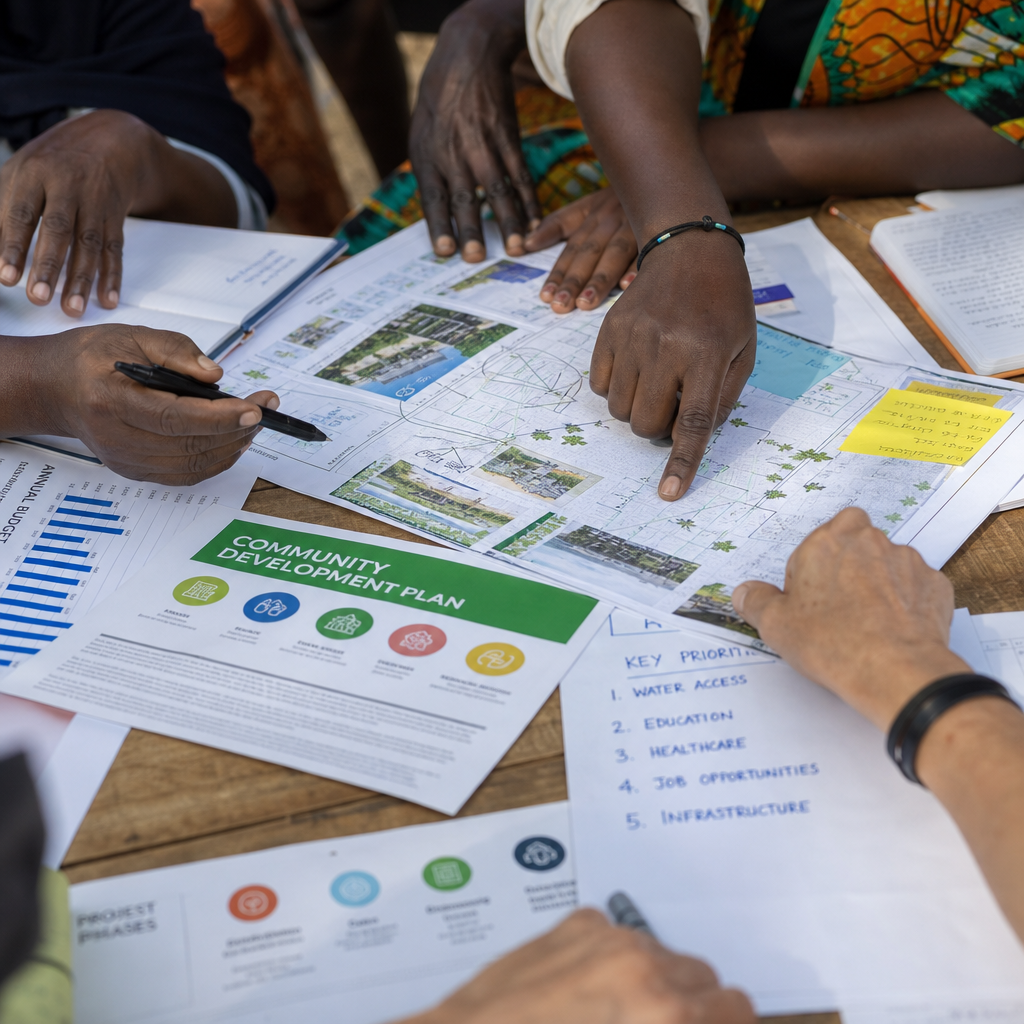
In the C2C model, partner communities begin by conducting their own needs assessments using structured community dialogue processes. C2C does not arrive with a predetermined project type. The organization provides facilitation support and resources, but the community identifies which problems to address first and how. That sequencing matters enormously for long-term ownership.
Once a priority is identified, community members participate directly in project design, often including training in construction, maintenance, or program management relevant to that project. The labor and materials are not imported wholesale from outside. Local skills and local supply chains are used wherever possible, which directly builds community economic capacity alongside the physical or social infrastructure being created.
This approach aligns directly with the UN Sustainable Development Goals that Haiti most urgently needs to address: SDG 1 (no poverty), SDG 3 (good health and well-being), SDG 4 (quality education), and SDG 9 (sustainable infrastructure). C2C’s framework is designed to produce progress on all four simultaneously within a single community project cycle.
Compared to Global Communities or World Vision, C2C operates at a fundamentally different organizational scale and with a fundamentally different accountability structure. Large international NGOs must manage programs across dozens of countries, which means standardized program templates and centralized decision-making. C2C’s model is specifically designed for deep, sustained engagement with specific Haitian partner communities, not for geographic breadth.
Compared to Haiti Partners, which focuses heavily on education programming, C2C addresses the full spectrum of community development needs, including infrastructure, health, and economic self-sufficiency, through the same community-owned framework. The goal in both cases is dignified self-sufficiency, but the C2C model applies that principle across a broader set of community needs.
Donors who align their Haiti funding with the UN Sustainable Development Goals are not following a trend. They are recognizing that the SDGs represent an internationally validated framework for identifying where human development investment has the highest return. For Haiti in 2026, four SDGs are particularly urgent and particularly underfunded.
SDG 1, the elimination of extreme poverty, is the foundation. Haiti’s poverty rate is not just a social problem. It is the environment in which every other development challenge exists. Programs that build household economic resilience directly, through skills training, agricultural support, or cooperative enterprise development, address SDG 1 while creating the conditions for progress on health and education goals.
Haiti’s maternal mortality rate is the highest in the Western Hemisphere, at approximately 480 deaths per 100,000 live births according to WHO data. Cholera, which the UN peacekeeping mission inadvertently introduced in 2010, remains a recurring public health threat. Donors funding health programs in Haiti should prioritize organizations that train and support community health workers from within those communities, not those that rely on periodic foreign medical missions that leave no lasting capacity behind.
Haiti’s primary school enrollment rates have improved over the past decade, but completion and quality remain serious problems. Approximately 80 percent of Haitian schools are privately operated, most by churches or NGOs, creating an uneven, fragmented system with no standardized quality assurance. Donors funding education in Haiti should ask whether the program supports public or community school structures that will persist, or private institutions dependent on continued donor funding.
Infrastructure, SDG 9, is where community ownership matters most visibly. A road, water system, or clinic built without community involvement in maintenance planning will deteriorate within years in Haiti’s operating environment. Organizations that build maintenance capacity alongside physical infrastructure see dramatically better 5-year and 10-year infrastructure survival rates than those that hand over finished projects without operational training.
Request multi-year outcome data from specific named communities, not aggregated program statistics. Effective organizations can tell you what happened to a school or water system they built five years ago and whether the community is maintaining it independently. They can also describe how community leaders are involved in program governance, not just implementation. Financial transparency through audited statements and publicly available Form 990 filings is a baseline requirement, not a differentiator.
Relief addresses immediate survival needs during or after a crisis: food, emergency shelter, medical triage. Development addresses the structural conditions that determine whether a community can meet its own needs over time without external intervention. Both matter, but they require different organizational models. A common and costly mistake is funding relief-oriented organizations to do long-term development work. They are structurally optimized for speed and scale, not for community ownership and sustained impact.
For long-term development outcomes, smaller organizations with deep community partnerships consistently outperform large international NGOs in Haiti. Large organizations have advantages in emergency response and advocacy. But for building community self-sufficiency, the organizational incentives of a global NGO, which must maintain donor interest across many countries, work against the slow, community-centered approach that durable development requires. Donors serious about Haiti development 2026 outcomes should consider organizations whose entire model is built around community-led transformation in Haiti specifically.
C2C’s framework is specifically designed to address SDG 1 (poverty elimination), SDG 3 (health), SDG 4 (education), and SDG 9 (infrastructure) simultaneously within partner communities. Rather than running separate siloed programs for each goal, C2C works with communities to identify priorities that often address multiple SDGs through a single project cycle. A community water system, for example, addresses SDG 6 directly and SDG 3 indirectly by reducing waterborne disease burden, while the community management structure built around it contributes to SDG 16 on strong institutions.
For development organizations, a program cost ratio of 75 to 85 percent is a reasonable benchmark. Below 70 percent should prompt questions. But raw percentage is not sufficient on its own. An organization spending 85 percent of revenue on program costs but running programs that do not produce measurable community outcomes is not a better choice than one spending 78 percent on genuinely effective community-led work. Ask for both financial ratios and outcome evidence simultaneously.
The structural problem is that most Haiti aid has been designed to serve donor needs for visible, rapid results rather than community needs for sustainable self-sufficiency. Grant cycles of 12 to 24 months create perverse incentives to build things quickly rather than build community capacity slowly. Foreign organizations employing foreign staff to manage projects keep decision-making authority outside Haiti. And accountability flows upward to donors and boards rather than downward to the communities being served. These are structural problems in the aid system, not evidence that Haitian communities cannot drive their own development when given the authority and resources to do so.
What has been your experience evaluating Haiti development organizations as a donor or community partner? Share what questions or criteria have mattered most to you.