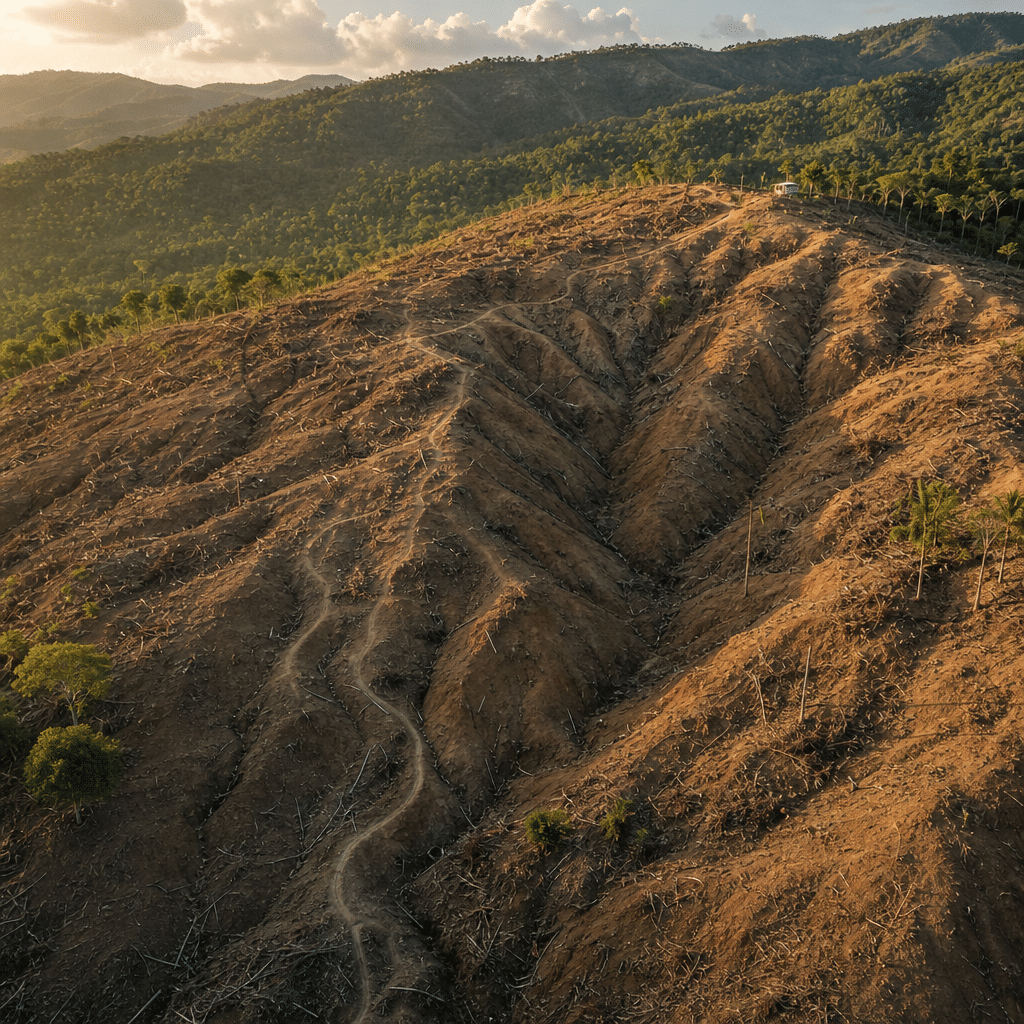
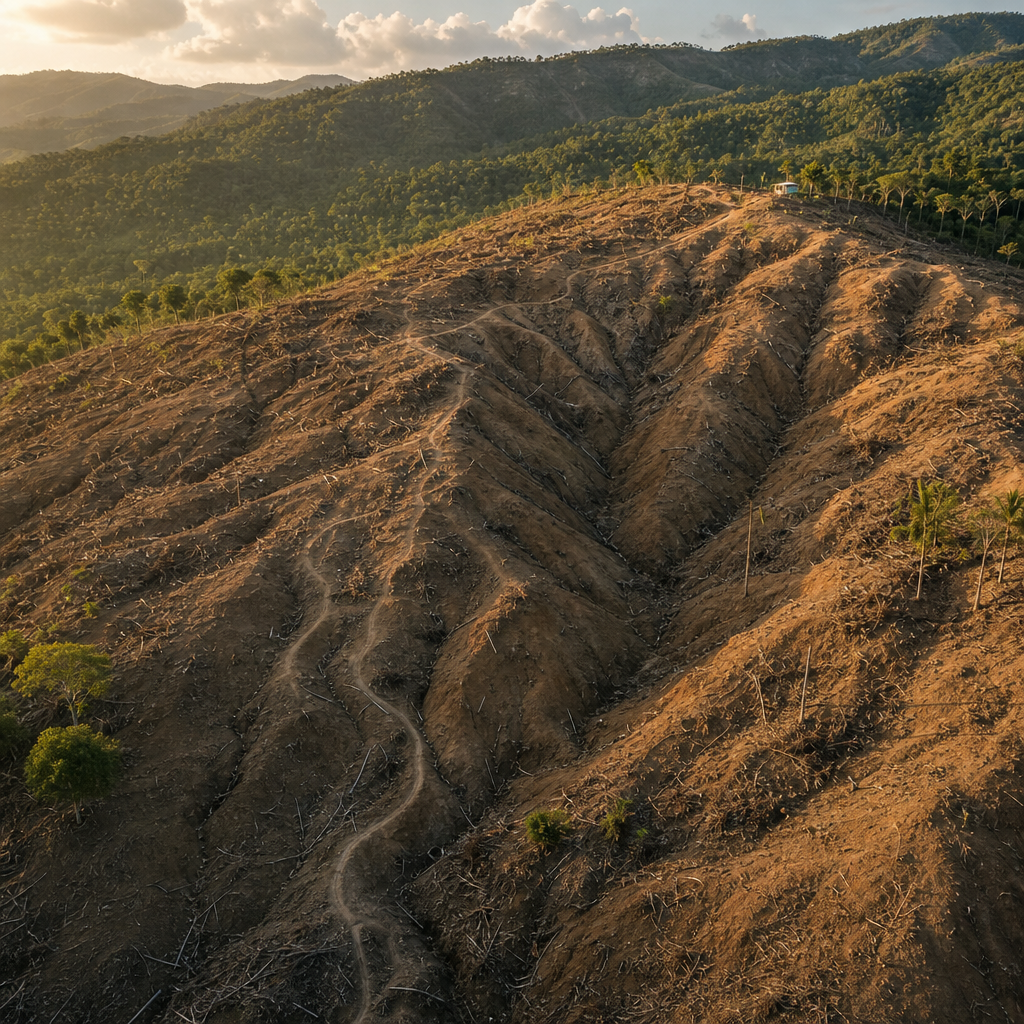
Haiti has lost more than 98% of its original forest cover. That single number explains more about poverty, food insecurity, and disaster vulnerability in Haiti than almost any other statistic you will find. Haiti deforestation is not an environmental story sitting separate from the human development story. It is the same story. When hillsides lose their trees, topsoil washes into the sea, aquifers dry up, crops fail, and families who were already fragile collapse entirely. Community2Community (C2C) works inside this reality every day, and the organization’s approach to forest protection is inseparable from its broader mission to help Haitian communities become self-sufficient and reduce dependence on foreign aid.
| Key Insight | Explanation |
|---|---|
| 98% of Haiti’s forests are gone | Haiti has one of the highest deforestation rates in the Western Hemisphere, leaving communities exposed to floods, landslides, and crop failure. |
| Deforestation is a poverty driver, not just a symptom | When forests disappear, agriculture collapses, water sources dry up, and household incomes shrink. Forest loss actively creates poverty rather than simply reflecting it. |
| Community ownership is the only durable reforestation model | Externally imposed tree-planting programs in Haiti have repeatedly failed. When communities own the process, survival rates for replanted trees increase dramatically. |
| UN SDG 15 directly applies to Haiti’s development path | Life on Land targets under SDG 15 require halting deforestation and restoring degraded land. Haiti’s progress on nearly every other SDG depends on meeting this one first. |
| Charcoal production is the immediate cause, not the root cause | Haitian families burn charcoal because they have no affordable energy alternative. Solving deforestation requires addressing energy poverty alongside tree planting. |
| C2C’s Collaborative Framework ties forest restoration to food and water security | Rather than treating reforestation as a standalone environmental project, C2C integrates it with agriculture, clean water, and livelihood programming so communities have reasons to protect trees. |
| Donors funding reforestation without community integration waste resources | Projects that plant trees without addressing why families cut them down see 60-80% tree mortality within two years. Community-led models tied to income generation perform significantly better. |
The conventional framing of Haiti deforestation as an environmental problem leads donors and policymakers toward tree-planting campaigns that miss the point. Trees die because families need charcoal to cook. Families need charcoal because there is no affordable alternative. And families without food security cannot afford to wait years for an agroforestry investment to pay off. The crisis is circular, and any intervention that does not account for the full circle will fail.
In practice, every community C2C partners with in Haiti lives inside this loop. Hillside farming without tree cover accelerates erosion. Erosion removes the topsoil that makes farming possible in the first place. Within a generation, a farming family can watch the land that fed their grandparents become completely unproductive. This is not a metaphor. It is a documented pattern repeating across Haiti’s rural landscape.
The link between forest cover and disaster vulnerability is equally direct. Haiti’s death toll from hurricanes and tropical storms is disproportionately high compared to neighboring Dominican Republic, which shares the same island but has maintained significantly more forest cover. Deforested watersheds cannot absorb rainfall. Landslides and flash floods kill people who would survive identical weather events in a forested landscape. Calling this an environmental issue understates what it actually is: a matter of life and death for millions of Haitians.
According to the United Nations Environment Programme, Haiti’s forest cover has declined from roughly 60% in the early 1900s to less than 2% today. The pace of loss accelerated sharply after the 2010 earthquake, when displaced populations moved into rural areas and accelerated charcoal production to meet urban fuel demand. The data consistently shows that deforestation rates spike during humanitarian crises precisely when the international community is focused elsewhere.
“Deforestation in Haiti is not simply an environmental problem. It is a symptom of deep poverty and a driver of deeper poverty. You cannot address one without addressing the other.” – United Nations Development Programme, Haiti Country Report
The numbers from the UN Food and Agriculture Organization confirm that Haiti loses an estimated 30 million trees per year to charcoal production alone. Reforestation efforts across all organizations operating in Haiti have not come close to matching that rate. The gap between trees removed and trees planted remains enormous, which is why incremental planting programs with no community economic integration consistently fail to move the needle.
The comparison with the Dominican Republic is instructive and uncomfortable. Both countries occupy the same island, face the same tropical weather systems, and share a colonial history of land clearing. The Dominican Republic has maintained approximately 40% forest cover. Haiti has less than 2%. The difference is not geography. It is decades of different economic policy, land tenure systems, and investment in rural communities. That difference is recoverable, but only through the kind of sustained, community-rooted work that organizations like C2C are doing.
UN SDG 15, Life on Land, calls for protecting, restoring, and promoting sustainable use of terrestrial ecosystems, sustainably managing forests, combating desertification, halting land degradation, and reversing biodiversity loss by 2030. For most countries, this goal is measurable at the margins. For Haiti, it represents a civilizational challenge that underpins every other SDG target.
Consider what SDG 15 failure means in concrete terms for a Haitian farming family. No forest cover means no watershed protection, which means unreliable water for drinking and irrigation. No water security means no crop reliability. No crop reliability means food insecurity. Food insecurity drives children out of school and into labor. And the family has no capacity to think about planting trees when they are focused on feeding children today. SDG 15 is the foundation that SDG 1 (no poverty), SDG 2 (zero hunger), SDG 3 (good health), and SDG 4 (quality education) all rest on in Haiti.
Why Haiti’s SDG 15 Progress Lags Even in the Caribbean Region
The Caribbean region has made measurable progress on several SDG 15 indicators over the past decade. Haiti has not. The primary reason is that most SDG 15 interventions in Haiti have been project-based and externally driven rather than community-embedded. A foreign NGO plants trees in year one, reports positive metrics, and exits. In year three, 70% of those trees are gone because nobody in the community had a stake in protecting them.
C2C’s approach directly challenges this model. By working within the C2C Collaborative Framework, the organization ensures that forest restoration is tied to community economic outcomes. When families benefit directly from healthy trees through fruit production, erosion control that protects their farm plots, and improved water access, they protect those trees. That is not an idealistic claim. It is the mechanism that makes community-led development actually work where externally-imposed programs fail.
Pro tip: International donors evaluating reforestation programs in Haiti should ask specifically what percentage of replanted trees survived at the three-year mark. Programs below 40% survival rates are almost certainly operating without genuine community ownership structures.
A common mistake in analyzing Haiti deforestation is treating charcoal production as the cause rather than the symptom. Approximately 80% of Haitian households rely on charcoal or wood as their primary cooking fuel. This is not a cultural preference. It is an economic constraint. Propane and electricity are either unavailable or unaffordable for the majority of rural and peri-urban households. Families cut trees because the alternative is not cooking food.
Unclear and contested land ownership in Haiti creates a destructive incentive structure. When farmers do not have secure tenure over the land they cultivate, they have no rational motivation to invest in long-term soil health or tree planting. Why protect a resource you may not legally control next season? This is why international tree-planting programs that ignore land tenure reform produce trees that nobody protects.
The 2010 earthquake worsened an already fragile land record system. Property boundaries dissolved, records were destroyed, and disputes multiplied. Communities that had informal but functional land-use agreements found those agreements destabilized. Reforestation in this environment requires building social trust and community governance structures alongside actual planting, which is precisely what C2C’s community-led model prioritizes.
Slash-and-burn agriculture remains common in Haiti’s rural highlands because it is the fastest way to prepare land for planting when a family has no capital for alternative soil preparation methods. The practice clears vegetation, releases nutrients from ash in the short term, and makes fields productive for one or two seasons. After that, without tree cover to replenish organic matter and prevent erosion, the land degrades rapidly.
Agroforestry systems that integrate trees directly into crop production offer a viable alternative. But transitioning to agroforestry requires farmers to accept reduced income during a transition period, which is only possible when they have other economic supports in place. This is another reason C2C’s integrated approach, which addresses livelihoods and agriculture alongside reforestation, is more likely to produce durable results than single-issue interventions.
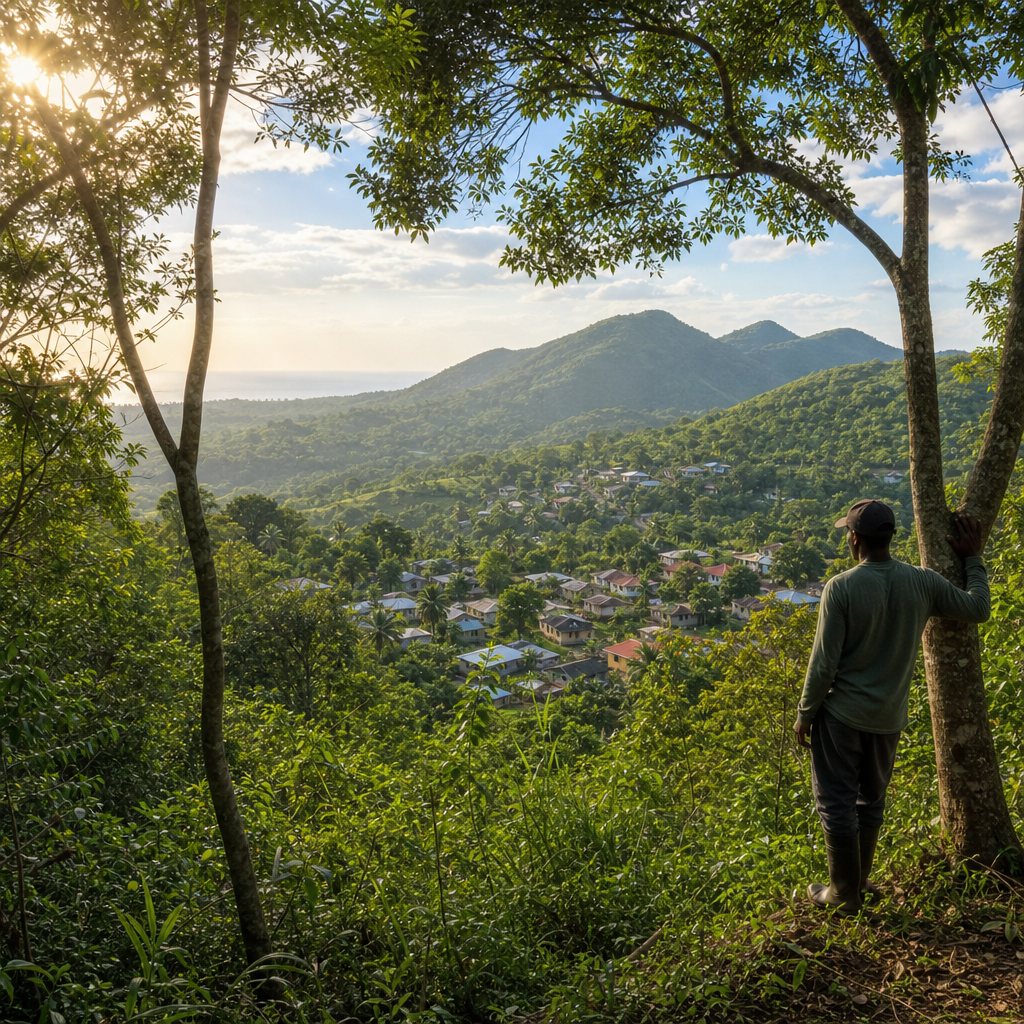
C2C does not operate a standalone reforestation program. Forest protection in the C2C model is woven into everything else the organization does because the organization understands that trees stay in the ground only when communities have economic and social reasons to keep them there. This is the key structural difference between C2C’s approach and the approaches taken by larger international NGOs that parachute in with seedlings and departure timelines.
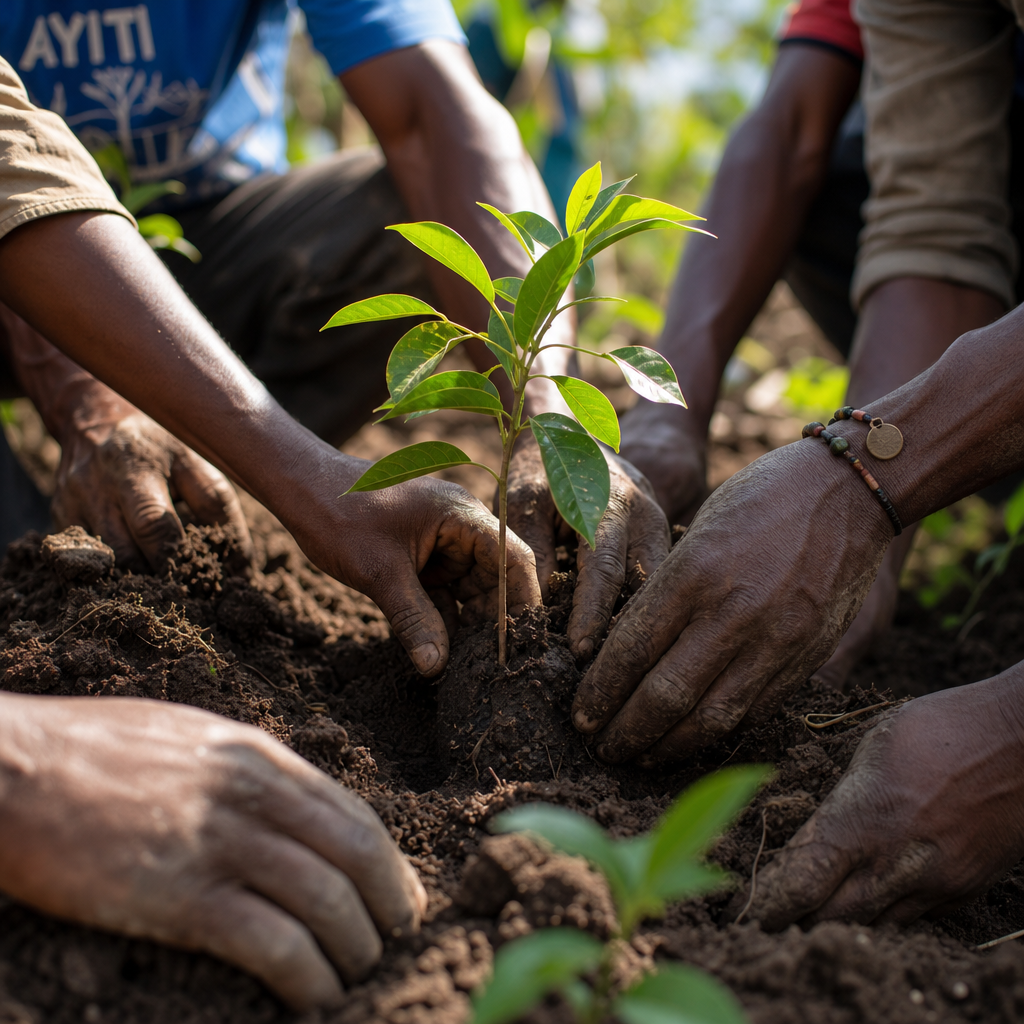
In practice, C2C works with partner communities to identify which land areas are most critical for watershed protection and food security. Communities themselves map these zones and establish governance rules around how land is used. This is not a participatory consultation that produces a report. It is a functional community decision-making process that creates accountability structures within the community itself.
One of the most effective tools C2C uses is promoting species selection that serves both environmental and economic functions. Fruit trees, nitrogen-fixing trees that improve soil fertility, and timber species with long rotation cycles can all be integrated into farming systems in ways that make financial sense for families in the near term. A mango tree that shades a hillside and prevents erosion also produces income. That dual function changes the calculation families make about whether to cut or protect.
Compare this to programs that plant fast-growing but non-productive species purely for carbon metrics or erosion control optics. Those programs serve donor reporting requirements. They do not serve communities. C2C’s approach serves communities first, which is why the results persist after the organization’s direct involvement in a given activity ends.
Forest governance requires social enforcement, not just technical planting. Communities that have internalized the connection between forest cover and their own water supply, crop yields, and disaster resilience will protect forests without external pressure. C2C invests heavily in building this understanding through community education and cross-community learning exchanges where Haitian community leaders share what they have observed in their own landscapes. This peer-to-peer knowledge transfer is more credible and more durable than any external expert training.
Pro tip: Organizations and donors looking to support life on land Haiti initiatives should prioritize programs where community members can articulate specifically why forest protection benefits their household, not just programs where communities have received trees. Understanding drives protection. Trees alone do not.
| Approach | Structure and Method | Documented Weaknesses |
|---|---|---|
| External NGO Tree-Planting Programs (e.g., large international relief organizations) | Centrally managed seedling distribution, usually tied to a project timeline of 1-3 years, often with paid labor for planting | High tree mortality after program exit. Communities have no ownership stake. Survival rates often below 30% at year three. Fails to address charcoal demand or land tenure. |
| Government-Led National Reforestation Programs | Policy-driven mandates with state nurseries and targets set at national level, sometimes tied to conditional aid requirements | Implementation is uneven across regions, politically vulnerable, and frequently disconnected from local land use realities. Governance instability in Haiti has repeatedly interrupted continuity. |
| C2C Community-Led Integrated Reforestation | Communities identify priority areas, select species with dual food and environmental functions, establish their own governance rules, and integrate trees into existing agricultural systems | Slower to scale across multiple communities simultaneously. Requires significant upfront investment in community relationship-building before planting begins. Not suitable for donors seeking rapid deliverables. |
The comparison above is honest about C2C’s model having trade-offs. Community-led work does not scale as fast as a seedling distribution campaign. It requires trust, time, and consistent presence in partner communities. But the data consistently shows that fast-scaling tree-planting without community ownership produces trees that do not survive. For donors who care about long-term forest cover rather than short-term planting metrics, the choice is clear.
Forest recovery is not an abstraction for a farming family in Haiti’s Central Plateau or Artibonite Valley. It means that the spring they draw water from does not dry up in March. It means that the soil on their hillside plot does not wash away in the first heavy rain of the season. It means that the fruit trees they planted three years ago now produce income that supplements crop sales. These are tangible, measurable changes in family welfare, and they compound over time.
The health connections are equally concrete. According to research from the World Resources Institute, restored watersheds in tropical environments directly improve water quality for downstream communities. In Haiti, where waterborne illness is a leading cause of child mortality, this is not a secondary benefit. It is a primary health intervention. Protecting trees upstream protects children’s lives downstream. The two are biologically inseparable.
C2C’s work connects to multiple UN Sustainable Development Goals simultaneously because forest restoration produces cascading benefits across SDG 1, 2, 3, 6, and 15. Donors who fund C2C’s community forest protection work are not buying a single outcome. They are funding the environmental foundation that makes every other development gain possible. That multiplier effect is what distinguishes integrated community development from siloed project funding.
For international philanthropists evaluating where their Haiti investments will produce the most durable impact, the evidence points to organizations that treat UN SDG 15 Haiti targets not as a standalone environmental checklist but as the precondition for everything else. C2C’s model is built on exactly that understanding. Explore the full scope of C2C’s work through their Collaborative Framework to understand how forest protection connects to the organization’s broader community development programming.
Less than 2% of Haiti’s original forest cover remains, compared to roughly 60% in the early twentieth century. This makes Haiti one of the most severely deforested countries in the Western Hemisphere. The Dominican Republic, which shares the same island, has maintained approximately 40% forest cover, demonstrating that the loss is a product of policy and economic conditions rather than geography.
The primary drivers are charcoal dependence for cooking fuel, unclear land tenure that discourages long-term investment in trees, decades of agricultural practice without soil restoration, and a cycle of poverty that forces families to prioritize immediate survival over long-term land health. Political instability has also repeatedly disrupted any sustained national reforestation policy.
UN SDG 15, Life on Land, targets the protection and restoration of terrestrial ecosystems, including forests. For Haiti, SDG 15 is the foundational goal because forest loss directly causes water insecurity, soil degradation, agricultural failure, and increased disaster mortality. Progress on nearly every other SDG in Haiti depends on first stabilizing and restoring the country’s land cover.
Community-led reforestation starts with communities identifying the land areas that matter most to their own food and water security, selecting tree species that serve both ecological and economic functions, and establishing their own governance rules for land protection. Standard tree-planting programs distribute seedlings based on external targets, often with paid labor, and exit after project timelines end. The survival rate difference between these two approaches at the three-year mark is dramatic, with community-led programs consistently outperforming externally-managed ones.
C2C embeds forest protection within a broader community development framework rather than treating it as a standalone environmental project. This means reforestation is integrated with food security, clean water access, and livelihood programming so that communities have direct economic and health incentives to protect trees. Larger international organizations often run reforestation as a discrete project with metrics tied to trees planted rather than trees surviving and communities benefiting.
Yes, but not through planting campaigns alone and not on short timelines. Agroforestry systems that integrate trees into active farming can begin improving soil health within three to five years. Watershed recovery takes longer but produces measurable improvements in water availability within a decade of sustained cover restoration. The key constraint is not biological. It is social and economic: communities need viable alternatives to charcoal and secure land tenure before they will make long-term investments in tree cover. Programs that address those constraints produce genuine recovery. Programs that ignore them produce metrics without results.
If you work in Haiti’s development sector or fund reforestation programs in the Caribbean, we want to hear what approaches you have seen actually hold up past the project exit date.