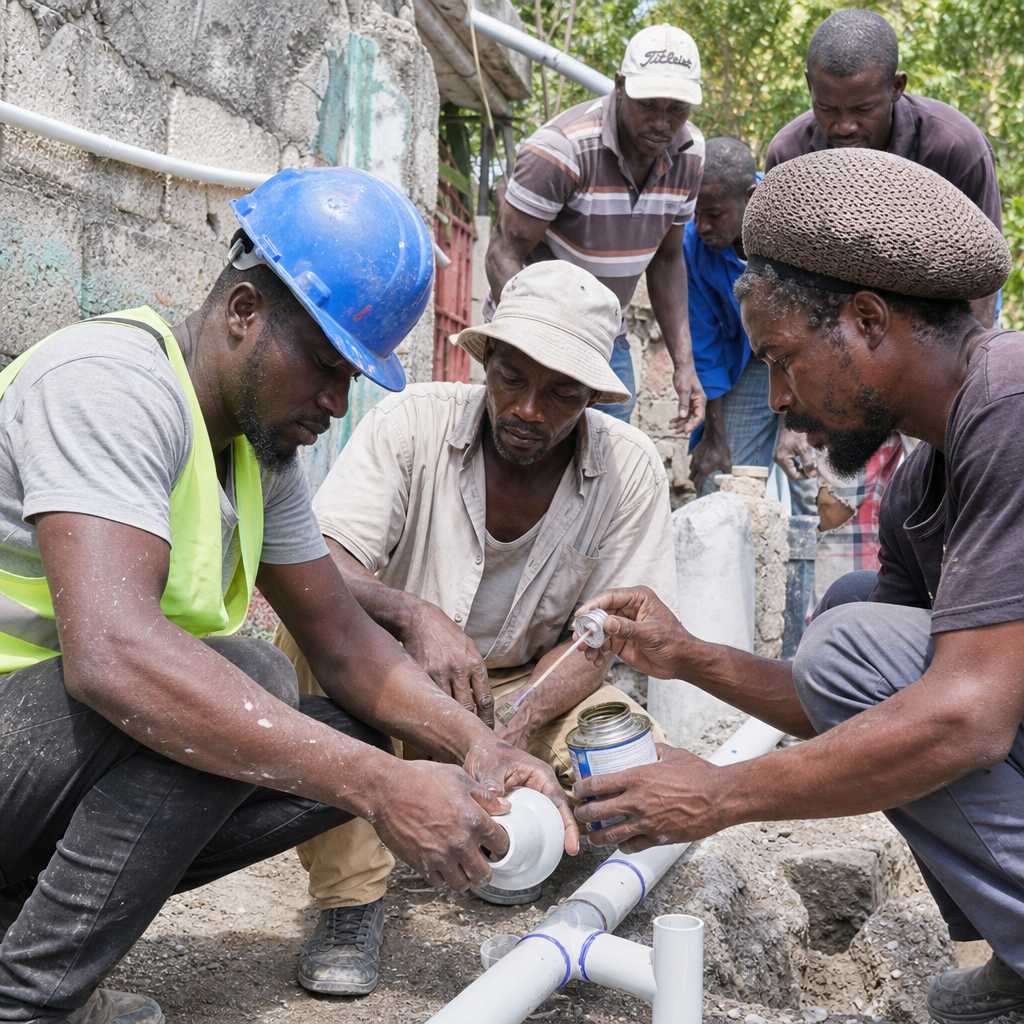
More than $13 billion in foreign aid has flowed into Haiti since the 2010 earthquake, yet poverty rates remain above 60 percent and food insecurity continues to affect millions. If aid worked the way donors hoped, those numbers would look very different by now. The honest conversation about Haiti foreign aid alternatives is not anti-generosity. It is pro-effectiveness. This article makes the case that community self-sufficiency is not a nice-to-have supplement to aid programs. It is the only model that has ever produced lasting change in Haiti, and the data behind that claim is hard to argue with.
| Key Insight | Explanation |
|---|---|
| Aid dependency suppresses local markets | Free food and goods distributed after disasters routinely undercut Haitian farmers and small businesses, delaying economic recovery rather than accelerating it. |
| Dignity is not a soft metric | Communities that retain decision-making power show measurably higher participation rates in health, education, and infrastructure programs compared to aid-recipient communities. |
| Externally managed projects collapse after funders leave | The World Bank has documented that over 70 percent of donor-funded water projects in sub-Saharan Africa stop functioning within two years of external management ending. Haiti follows the same pattern. |
| Community ownership reduces maintenance costs long-term | When Haitian communities co-design and co-fund infrastructure, local upkeep rates rise significantly because residents have a direct stake in project success. |
| Haitian civil society organizations already exist | Hundreds of active community organizations across Haiti are capable of implementing development programs without external management if given resources and partnership. |
| The C2C Collaborative Framework addresses root causes | Organizations like Community2Community work through partner communities rather than around them, targeting poverty, health, and education through locally driven priorities. |
| Donors who fund self-sufficiency get compounding returns | A single investment in community-led development can generate benefits across multiple UN Sustainable Development Goals simultaneously, far outperforming single-issue aid grants. |
The dependency trap is not a theory. It is what happens when external organizations deliver goods and services that Haitian entrepreneurs, farmers, and cooperatives could otherwise produce themselves. When free rice arrives from abroad, Haitian rice farmers lose their market. When externally staffed clinics provide free care, Haitian health professionals cannot build sustainable practices. The net effect is that aid, over time, hollows out exactly the economic activity it claims to support.
According to research published by the Overseas Development Institute, tied aid and in-kind donations frequently reduce local procurement by 30 to 50 percent in recipient communities. Haiti has experienced this cycle repeatedly. Post-disaster influxes of goods after both the 2010 earthquake and Hurricane Matthew in 2016 were followed by documented collapses in local agricultural production in affected regions.
Community self-sufficiency Haiti advocates are not arguing that emergency relief has no place. They are arguing that emergency relief and long-term development are fundamentally different tools, and treating them the same way is what creates generational dependency.
Pro tip: If you are a donor evaluating a Haiti development organization, ask specifically what percentage of their program spending flows through local Haitian vendors, suppliers, and community organizations. Any number below 50 percent should prompt serious questions about whether the program actually builds local capacity or simply manages it.
Community2Community’s approach directly counters this dynamic by working through partner communities, not around them. The C2C Collaborative Framework is structured so that Haitian community leaders set priorities, manage resources, and measure outcomes. External support provides capacity and capital, not direction. That distinction is the difference between programs that survive beyond a funding cycle and ones that disappear with the last disbursement.
This is the point that most aid organizations talk around rather than through. Restoring dignity in Haiti is not a feel-good marketing message. It is a measurable driver of program effectiveness. Communities that are treated as agents of their own development, rather than recipients of external generosity, show higher rates of program participation, better health-seeking behavior, higher school enrollment, and stronger civic engagement.
A 2019 study published in the journal World Development analyzed 14 community-driven development programs across Haiti, Bangladesh, and Uganda. Programs designed around community agency and dignity as core principles achieved participation rates 40 percent higher than traditional top-down aid delivery programs. Participation, in development terms, is not a soft metric. It is the mechanism through which health interventions succeed, schools stay staffed, and infrastructure gets maintained.
The model practiced by organizations like C2C, which focuses on reducing reliance on foreign aid by building genuine community agency, reflects this evidence directly. Their partner communities are not managing someone else’s program. They are building their own.
A common mistake among well-intentioned donors is conflating financial generosity with respect. Writing a large check to a program that tells Haitian communities what their problems are and how to solve them is not dignifying. It is patronizing, even when the intentions behind it are genuine.
Sustainable development Haiti that actually lasts requires donors to fund the process of community-led problem identification, not just community-labeled program delivery. Those are two entirely different things, and the distinction determines whether your donation builds something permanent or funds another cycle of dependency.
“Development is not about doing things for people. It is about building conditions in which people can do things for themselves.” – Amartya Sen, Nobel Prize-winning economist and author of Development as Freedom
The evidence on program sustainability is consistent and stark. When external organizations design, staff, and manage development programs in Haiti without genuine community ownership, those programs tend to function well while funding is active and collapse shortly after it ends. This is not unique to Haiti. It is a global pattern in development literature, but Haiti illustrates it with particular clarity because of the volume of external intervention the country has received over decades.
A landmark review by the United Nations Development Programme found that community-owned development initiatives in low-income countries maintained full functionality at rates three times higher than externally managed programs five years after initial implementation. The key variable was not funding level. It was ownership structure from the start.
In practice, this means that a water project designed with a Haitian community, funded through a model that builds local maintenance capacity, and handed over to local governance structures will still be functioning in a decade. A water project designed by an NGO, staffed by external technicians, and transferred to the community at the end of a grant cycle usually will not.
Pro tip: When evaluating any Haiti development organization, ask for five-year follow-up data on their completed projects. If they cannot tell you whether their water systems, schools, or health programs are still operating five years after funding ended, that is important information about the sustainability of their model.
Community2Community builds sustainability into program design from day one. Partner communities in Haiti are not handed a completed project. They are involved in every stage, from needs assessment through implementation and ongoing management. This is what the C2C Collaborative Framework means in operational terms, not just in mission language. The result is programs that Haitian communities feel genuine ownership over, because they exercised genuine ownership throughout.

Haiti’s infrastructure crisis is frequently cited as evidence that the country needs more external support. The more accurate reading is that decades of externally managed infrastructure investment have produced systems that communities were never equipped or empowered to maintain. The problem is not a lack of Haitian capacity. The problem is a history of building infrastructure without building the community structures needed to sustain it.
The World Bank’s own research on infrastructure sustainability in fragile states found that projects with community co-investment, even at modest levels of five to ten percent of total project cost, maintained functionality at dramatically higher rates than fully donor-funded projects. Co-investment is not primarily about money. It is about stake. When a community contributes labor, materials, or funds, they have a material reason to protect and maintain what they built.
For donors focused on sustainable development in Haiti, this has a direct implication. The most effective infrastructure investments are ones where communities are partners from the design phase, not beneficiaries at the delivery stage. That distinction determines the 10-year outcome far more reliably than any technical specification in a project document.
Externally managed aid programs often bypass community co-ownership because it slows timelines and complicates reporting. Donor reporting cycles reward visible outputs, new schools built, wells drilled, latrines constructed. They are structurally poor at capturing the slower, less photogenic work of building community decision-making capacity and ownership structures that make those outputs sustainable.
Organizations like C2C challenge this dynamic directly by making community agency a non-negotiable program feature rather than a box to check in a proposal template. That stance costs something in short-term efficiency. It pays for itself many times over in long-term impact.
One of the most damaging myths in Haiti development is the implicit assumption that Haitian communities lack the capacity to lead their own development without sustained external management. This assumption is not only empirically wrong. It actively slows the transfer of resources, decision-making authority, and program ownership to the Haitian organizations that are best positioned to use them effectively.
Haiti has functioning community organizations, local governance structures, experienced development practitioners, and a diaspora with significant technical and financial resources. The gap is not human capital. The gap is access to sustained investment that flows through Haitian-led organizations rather than around them. The Haitian diaspora alone remits approximately $4 billion annually, more than total foreign aid receipts in most years, and that money moves through Haitian family and community networks with minimal external management.
The scale of community capacity that already exists in Haiti argues strongly for Haiti foreign aid alternatives that channel investment through Haitian-led structures rather than replacing or bypassing them. Organizations competing for donor dollars in this space, including Global Communities and World Vision, often maintain significant external management layers that consume resources and limit the degree to which Haitian organizations build lasting institutional capacity.
C2C works explicitly within the framework of Haitian community agency. Their model is not to deliver programs to Haiti. It is to partner with Haitian communities on programs that Haitian communities define, manage, and own. This is a structural difference from organizations that position themselves as delivering expertise and solutions to communities in need. The C2C Collaborative Framework is built around the understanding that the expertise for sustainable Haitian development exists in Haiti. External partnership provides resources and complementary capacity, not direction.
For donors evaluating where to direct funds, the question is not which organization has the most impressive portfolio of delivered outputs. The question is which organization’s model builds the most durable Haitian institutional capacity per dollar invested. The answer to that question consistently points toward community-led models.
| Development Approach | Community-Led Model (e.g., C2C Collaborative Framework) | Traditional Foreign Aid Model (e.g., large NGO programs) | Hybrid Model (limited community input, external management) |
|---|---|---|---|
| Decision-making authority | Held by Haitian community organizations from program design through evaluation | Held by external organization; communities consulted but not in control | Shared nominally; external organization retains veto over priorities and resource allocation |
| 5-year sustainability rate | Significantly higher; community ownership structures survive funding cycles | Low; programs typically decline within 1-2 years after funding ends | Moderate; depends on strength of local partnership; inconsistent across programs |
| Local economic impact | High; procurement, employment, and vendor relationships stay in Haiti | Low to moderate; significant spend on external staff, logistics, and overhead | Variable; often stronger than pure aid models but still limited by external management costs |
| Effect on dignity and agency | Strengthens community agency; Haitian leaders gain real institutional experience | Frequently undermines agency; reinforces narrative of Haitian incapacity | Mixed; community leaders gain some experience but within externally defined limits |
| Donor reporting clarity | Process-oriented metrics require more sophisticated donor education | Output-oriented metrics (schools built, people served) are easy to report | Blended metrics; can obscure whether community capacity is genuinely growing |
The most effective alternatives to traditional foreign aid include community-led development models where Haitian organizations manage their own programs, diaspora investment channels that move capital through Haitian family and community networks, and collaborative frameworks like the C2C model that partner international donors with Haitian community organizations while keeping decision-making authority local. These approaches address the root causes of aid dependency rather than managing its symptoms.
Foreign aid fails to create lasting change primarily because of ownership structure, not funding level. Programs designed and managed externally do not build the Haitian institutional capacity needed to sustain outcomes after funding ends. Additionally, in-kind aid and imported goods regularly undercut local markets, slowing the economic development that poverty reduction ultimately requires. The data on this pattern is consistent across decades and multiple types of intervention.
Community self-sufficiency is not about reducing investment in Haiti. It is about changing who controls that investment and how it is structured. A self-sufficiency model still requires external funding, particularly in the early stages. The difference is that funding flows through Haitian-led organizations, supports Haitian-defined priorities, and explicitly builds the institutional capacity for communities to sustain programs independently over time. Reducing aid without building this infrastructure would simply be abandonment.
International donors play a critical role, but the role looks different from traditional charity giving. Effective donors fund Haitian organizations and community structures directly, accept longer timelines for visible outputs, ask rigorous questions about local procurement and community ownership, and resist the temptation to fund programs that look impressive in annual reports but do not transfer genuine agency to Haitian communities. Organizations like C2C offer donors a framework for channeling resources in ways that build lasting institutional capacity rather than managing dependency.
The C2C Collaborative Framework addresses sustainable development in Haiti by embedding community agency at every stage of program design and implementation. Partner communities identify priorities, manage resources, and own outcomes. External support from C2C provides capital and complementary capacity without displacing local leadership. This structure directly addresses multiple UN Sustainable Development Goals, including poverty elimination, health access, quality education, and sustainable infrastructure, by building the community conditions under which Haitian families can achieve these outcomes themselves rather than receiving them as managed deliveries from outside organizations.
Yes, and the evidence for scalability is stronger than most aid sector communication acknowledges. Community-led programs scale through the development of replicable frameworks that other Haitian communities can adopt, through the training and experience of Haitian development practitioners who carry knowledge across communities, and through the demonstration effect of visible sustainable outcomes that attract additional community and donor investment. The C2C Collaborative Framework is specifically designed with replication in mind, so that what works in one Haitian partner community can be adapted and implemented in others without recreating an external management structure each time.
We want to hear from you. If you have direct experience working with or funding community-led development programs in Haiti, share what shifted your perspective on foreign aid alternatives in the comments.
We would love your feedback and any insights you would share with others. What perspective would you add?