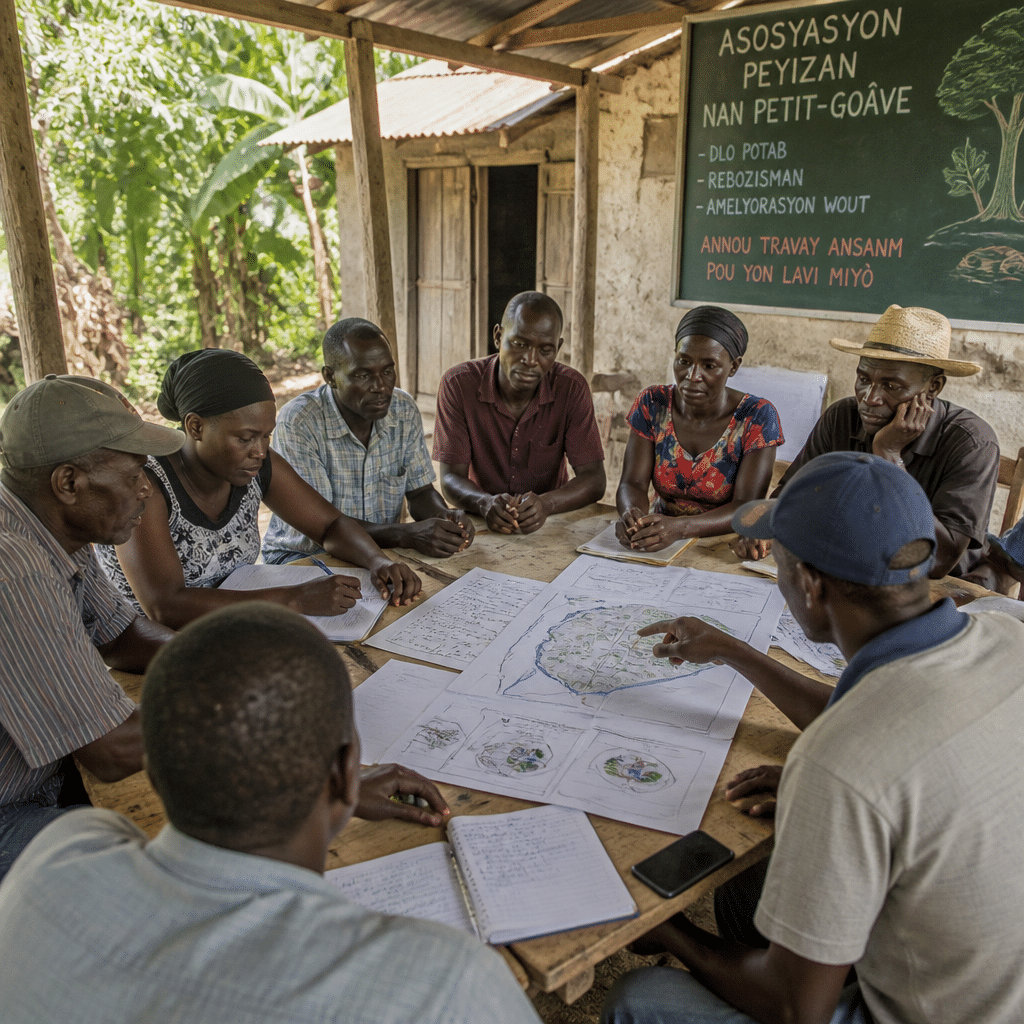
Most charitable giving to Haiti follows the same broken loop: a crisis hits, donations pour in, relief organizations distribute supplies, and then the cycle resets. Nothing changes structurally. If you are tired of that pattern and want your money to build something that outlasts the next disaster, becoming a C2C Neighbor monthly donor is a fundamentally different commitment. Community2Community (C2C) operates through the C2C Collaborative Framework, working directly with Haitian peasant associations in Petit-Goâve so that communities lead their own restoration. Your recurring monthly gift is the engine behind that. This article breaks down exactly what it funds, how it works, and why it matters for real Haiti donation impact.
| Key Insight | Explanation |
|---|---|
| Monthly giving enables planning, not just reacting | C2C uses recurring donations to fund ongoing project phases, teacher stipends, and community operations rather than one-time emergency responses. |
| Communities decide, not outside organizations | C2C works with peasant association leaders in Petit-Goâve to determine priorities. The community’s voice drives every initiative. |
| Your gift reduces reliance on foreign aid | The explicit goal of the C2C Collaborative Framework is self-sufficiency, not permanent dependency on donor funding. |
| One project, four real initiatives | The Haiti Restoration and Transformation Project (HRTP) covers water, reforestation, education, and road construction in a single coordinated effort. |
| Impact is documented and specific | C2C Neighbors have funded 14,000 seedlings planted, 85 latrines built, 160 goats distributed, and stipends for 9 teachers educating 300+ children. |
| You choose your monthly amount | The C2C Neighbor campaign, launched in 2014, lets donors select their own monthly contribution level, removing barriers to entry. |
| Women’s health is part of the model | C2C Neighbor funding has supported cervical cancer screenings for 90+ women across both partner communities. |
A C2C Neighbor is someone who believes in the mission of the C2C Haiti Restoration and Transformation Project and commits to recurring monthly support of the people C2C serves. The Neighbor campaign launched in 2014 with a deliberate design: you choose the amount you contribute each month, so there is no minimum barrier and no pressure to give more than is sustainable for you.
The name “Neighbor” is intentional. C2C frames the relationship between international donors and Haitian partner communities as one of solidarity, not charity. You are not funding a relief handout. You are standing alongside a community that has its own leadership, its own expertise, and its own plan for long-term self-sufficiency.
In practice, C2C Neighbor donations fuel the monthly operations of the Haiti Restoration and Transformation Pilot Project (HRTPP). Without that predictable, recurring revenue, C2C cannot pay teachers, maintain project momentum across multi-year construction phases, or respond quickly when conditions on the ground change.
The Mountainside Partner Community school now educates more than 300 children, from elementary through junior high, with evening classes available for adults. C2C Neighbors provide the quarterly stipend for 9 teachers that keeps this school running. Without that recurring funding, the teachers go unpaid and the school closes, regardless of how solid the building is.
In 2023, C2C expanded the school to include 7th and 8th grade, ensuring those students can continue their education locally without parents worrying about safety risks of distant travel. The next goal is adding a 9th grade curriculum, and that depends directly on sustained monthly giving.
Pro tip: When evaluating the impact of your donation, ask whether it funds an operating cost like teacher salaries rather than just a capital cost like a building. A school without paid teachers is just a building. C2C Neighbor funds cover both.
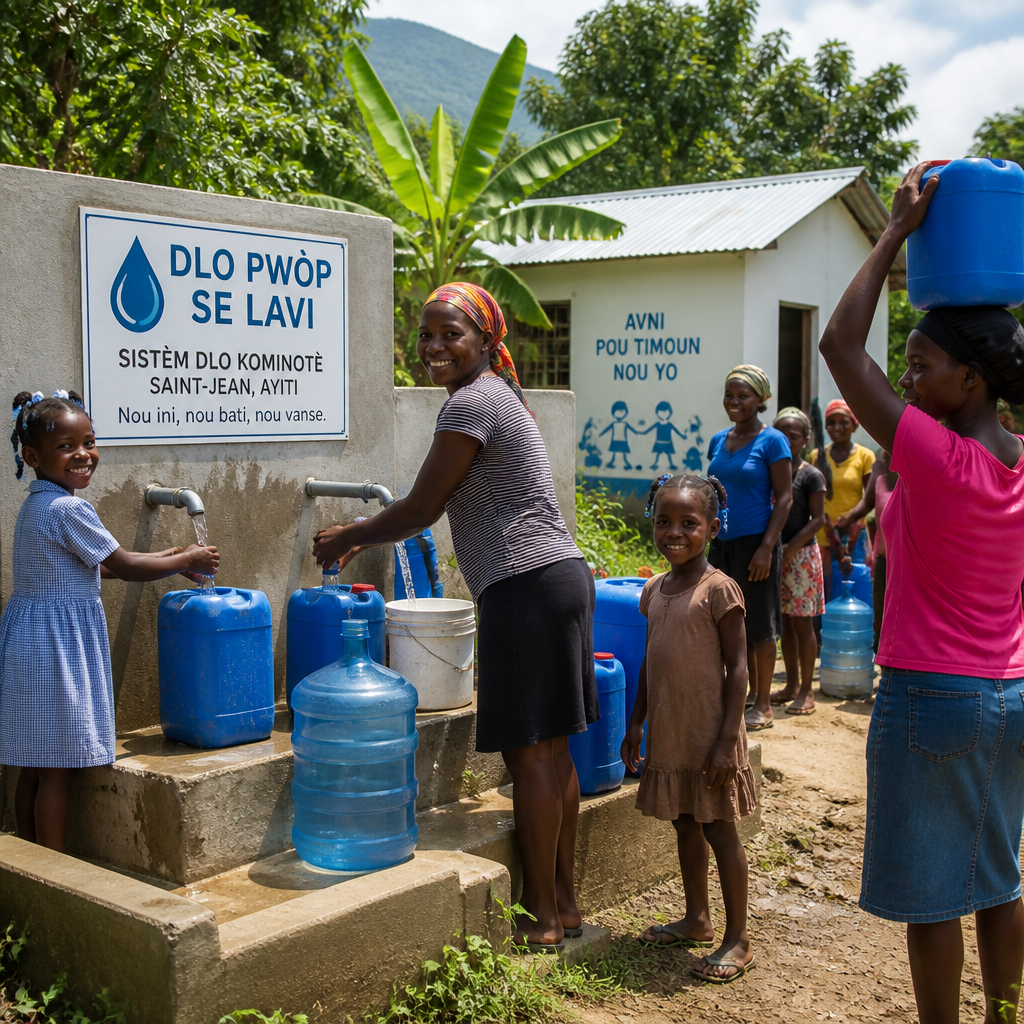
The Mountainside Partner Community’s water initiative provides clean, potable water flowing at 6 gallons per minute from an encased spring. The project has moved through phases: the captage (encasing structure) is complete, the water tank and reservoir are built, and the pump house and treatment system are in progress. Four kiosks with spigots throughout the mountainside will eliminate the long walks, predominantly made by women and children, to reach water.
This kind of phased infrastructure cannot be funded by a one-time donor campaign. It requires the consistent monthly income that C2C Neighbors provide to keep construction moving without interruption between funding cycles.
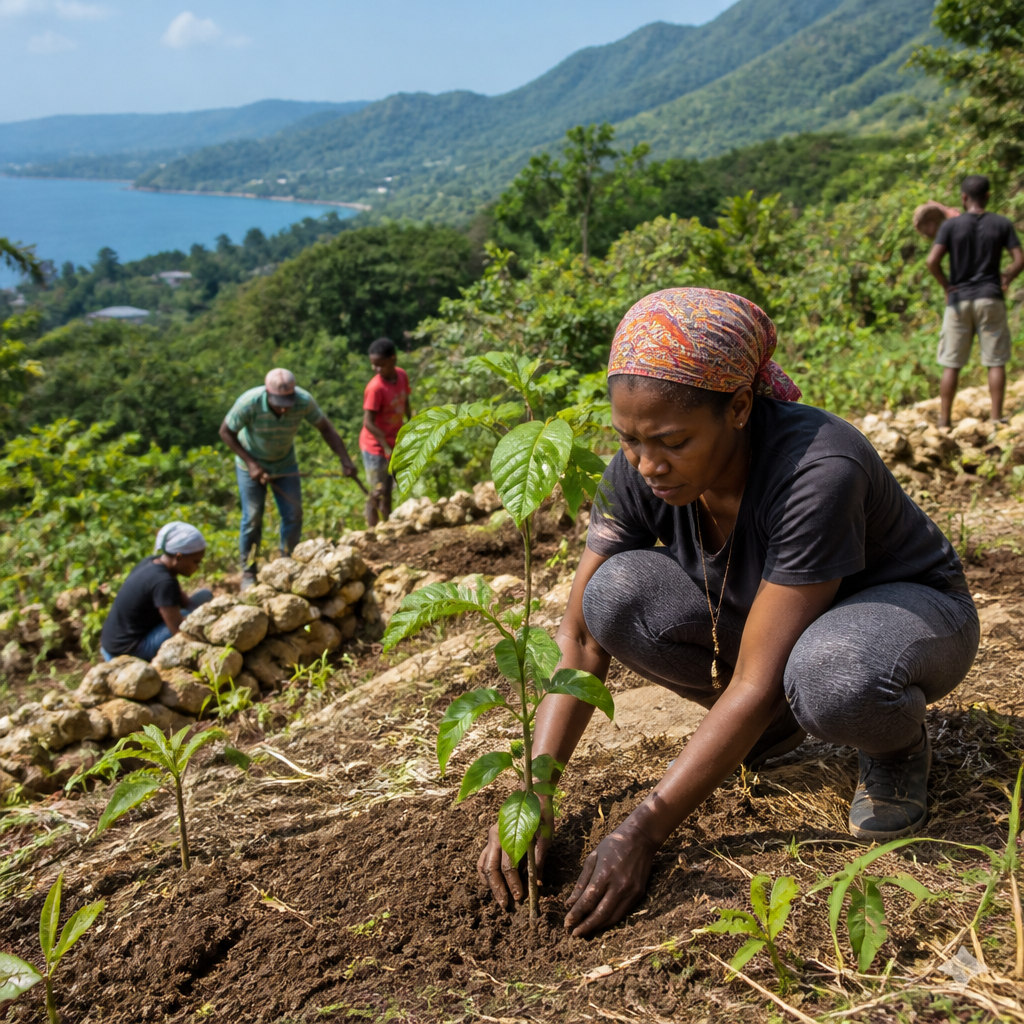
C2C Neighbors have supported the planting of 14,000 seedlings back into the mountainside. The goal in 2024 was to reach 10,000 additional trees. This is not symbolic environmental work. Reforestation directly supports sustainable agriculture, stabilizes slopes against erosion, and creates long-term farming capacity for families who depend on the land for food and income.
The women of the Mountainside Partner Community have been vocal about this work, framing it as protection rather than extraction. Planting trees is an act of ownership over the land’s future.
C2C Neighbors funded the construction of 85 latrines for 85 families in the partner communities. This is direct sanitation infrastructure that reduces disease transmission, protects groundwater, and restores basic dignity to families who previously had no private sanitation options. The canal construction in the Petit-Goâve Proper Partner Community, currently entering phase 2, will further improve health and sanitation conditions for the 85 families in that community.
Following Hurricane Matthew, C2C Neighbors funded the purchase and distribution of 160 goats to 160 families. Goats provide milk, meat, and a marketable asset. This is a form of economic resilience that does not disappear when the next storm comes. An animal can reproduce, be sold, or be consumed, giving families real options instead of a fixed one-time supply.
More than 90 women from both partner communities have received cervical cancer screenings through funding supported by C2C Neighbors. Cervical cancer is preventable and treatable when caught early, but access to screening in rural and mountainside communities in Haiti is limited. This is the kind of health investment that saves lives in a way that does not generate headlines but creates compounding benefit for families and communities over time.
Road construction in the Mountainside Partner Community is actively in progress. The goal is to restore the main road to support safe, stable transportation of people, goods, and services, resulting in increased business development, commerce, and trading. A functional road is not a luxury. It is the physical infrastructure that makes a local economy viable. Farmers cannot sell produce they cannot transport. Families cannot access health care on roads that are impassable after rain.
Pro tip: Road construction is one of the hardest types of infrastructure to fund through traditional grant cycles because funders prefer quick, visible wins. Monthly donor income fills exactly this gap, providing the steady capital needed for multi-year construction that takes time but delivers lasting economic change.
One of the priorities for the Mountainside Partner Community is constructing a health and wellness center to serve 1,200 families. This is a community-determined priority, not an outside organization’s program. C2C Neighbor monthly giving is the financial foundation that makes planning, design, and eventual construction of this facility possible alongside the other active project phases.
Ten high school girls from the partner communities have been supported through a grant from the Haitian Women’s Collective, continuing their high school education and performing at a high level. C2C Neighbor funding contributes to the educational ecosystem that makes sustained secondary schooling possible in communities where it would otherwise be out of reach.
The Haiti Restoration and Transformation Pilot Project is designed to be replicated throughout other areas of Haiti once proven in Petit-Goâve. The entire C2C model, one project covering water, reforestation, education, and road development with community leadership at the center, is built to be portable. When you become a C2C Neighbor monthly donor, you are not just supporting one community. You are funding proof of concept for a community-led development framework that can transform how Haiti approaches its own future.
The goal is not to create communities that depend on C2C indefinitely. The goal is to walk alongside communities until they no longer need us, then watch them lead others. That is what development with dignity looks like.
The distinction between C2C’s approach and conventional foreign aid is not rhetorical. It is structural, and it produces different outcomes. Most large-scale aid programs design solutions in offices far from the communities they serve, then deliver those solutions with little input from recipients. The result is infrastructure that does not match local needs, programs that communities cannot maintain, and dependency that deepens over time.
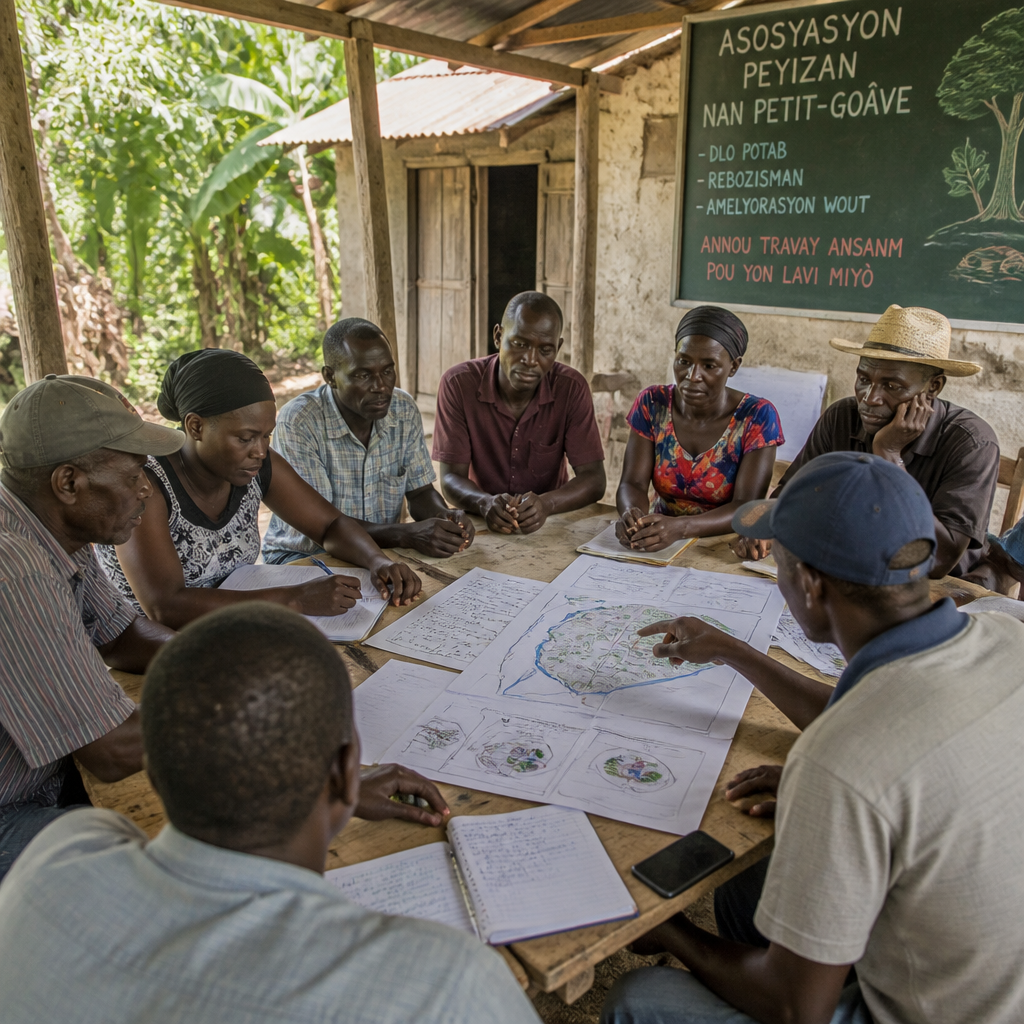
C2C works with peasant association leaders in Petit-Goâve to determine what the community needs and how to pursue it. The community is at the table making final decisions. C2C facilitates access to financial and human resources; it does not dictate the plan. This is the difference between a donor who builds a school the way they want and a partner who funds a school the community designed and will operate.
The C2C Collaborative Framework brings together Haitians in Haiti, the Haitian diaspora, and international supporters around a single, coordinated project rather than scattering resources across unrelated programs. Every initiative under the framework feeds into community self-sufficiency.
C2C also partners with other organizations to respond to short-term needs while designing and executing sustainable long-term solutions. During the COVID-19 response, for example, C2C worked with its existing network through the peasant associations to create community response packets rather than standing up a separate relief program. The infrastructure built by monthly donor funding made that agility possible.
| Initiative | Current Status | Role of C2C Neighbor Funding |
|---|---|---|
| Water Distribution System | Captage and reservoir complete; pump house and kiosks in progress | Funds ongoing construction phases and operational costs |
| Education (Saul Louis School) | 300+ students, elementary through 8th grade; 9th grade expansion planned | Covers quarterly stipends for 9 teachers and school operations |
| Reforestation | 14,000+ seedlings planted; 10,000 more trees targeted | Funds seedling purchase, planting programs, and sustainable agriculture support |
| Road Construction | Active construction in Mountainside Partner Community | Provides capital for multi-year infrastructure work that grant cycles cannot sustain alone |
| Sanitation | 85 latrines built; canal phase 2 in progress in Petit-Goâve Proper | Funded construction and supports ongoing community health work |
| Health and Wellness | 90+ cervical cancer screenings completed; health center in planning | Supports both immediate screenings and long-term facility construction |
Each initiative in this table is connected to the others. Clean water reduces the disease burden that overwhelms a community’s health capacity. A functional road makes it easier to transport goods from reforested farmland. A strong school produces the next generation of community leaders who will manage these systems. Monthly donor funding keeps all four moving simultaneously instead of forcing the community to choose one at the expense of the others.
The C2C Neighbor program is Community2Community’s monthly giving campaign, launched in 2014. A C2C Neighbor is a committed monthly supporter who believes in the mission of the Haiti Restoration and Transformation Project. You choose the amount you give each month, and your recurring contributions fund the ongoing operations, teacher stipends, construction phases, and community programs that make up C2C’s work in Petit-Goâve.
A one-time donation addresses a specific need at a single point in time. A C2C Neighbor monthly donation creates predictable income that allows C2C to plan ahead, maintain multi-year construction phases, pay teachers consistently, and respond to community needs without gaps. Monthly giving moves you from a spectator to a participant in ongoing community-led development.
C2C works in Petit-Goâve, Haiti, with two partner communities: the Mountainside Partner Community, whose peasant association is APHD, and the Petit-Goâve Proper Partner Community, whose peasant association is ODCP. The Haiti Restoration and Transformation Pilot Project, once completed in Petit-Goâve, is designed to be replicated in other areas of Haiti.
Yes. Community2Community and its partner communities are implementing solutions that address UN Sustainable Development Goals 1, 2, 3, 4, 6, 8, 11, 13, 15, and 17. These cover poverty elimination, food security, health, education, clean water, economic growth, sustainable communities, climate action, life on land, and partnerships for the goals.
Community2Community was created in May 2010 and is a registered 501(c)(3) nonprofit organization. The organization has been working with its partner communities in Haiti for over 12 years, building trust, completing infrastructure phases, and advancing toward community self-sufficiency through the C2C Collaborative Framework.
Yes. C2C accepts volunteers who can get involved locally in their own city, remotely through online support, or abroad through Haiti-based projects. Monthly giving and hands-on volunteering are both ways to participate in the C2C mission, and many C2C Neighbors do both.
C2C publishes quarterly impact reports and regular community updates documenting specific milestones: trees planted, latrines built, teacher stipends paid, screenings completed, and construction phases advanced. The organization’s transparency on exact numbers, 14,000 seedlings, 85 latrines, 160 goats, 300+ children in school, is part of what distinguishes its community2community Haiti approach from vague development promises.
If you have supported Haiti development work and want to share what has made recurring giving feel meaningful for you, we would love to hear from you in the comments.
We would love your feedback and any insights you would share with others. What perspective would you add?