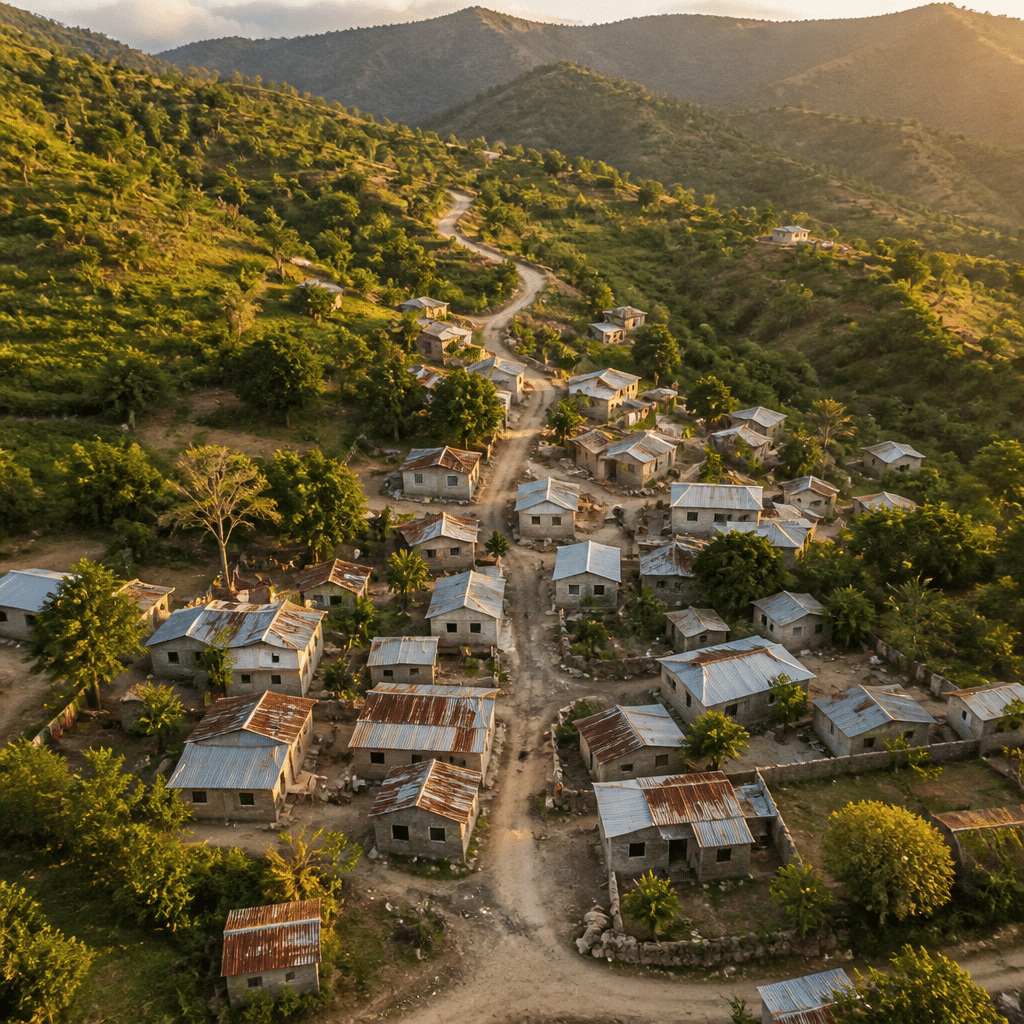
Haiti ranks 151st out of 166 countries on the 2024 SDG Index, with roughly 36.6% of the population living in extreme poverty and only 55% of households accessing safe drinking water. Those numbers are not abstract. They represent the gap between what the UN SDGs Haiti framework promises and what most Haitians experience daily. The question worth asking is not whether Haiti needs help, but what kind of help actually works. Community2Community (C2C) operates on a clear answer: community-led development that builds permanent self-sufficiency beats externally managed aid every time. This article breaks down exactly which Sustainable Development Goals apply to Haiti, where the gaps are widest, and what C2C’s Collaborative Framework is doing differently.
| Key Insight | Explanation |
|---|---|
| Haiti ranks 151st on the 2024 SDG Index | With a score of 52.68 out of 100, Haiti is among the furthest from meeting 2030 SDG targets in the Western Hemisphere. |
| C2C targets 11 specific SDGs simultaneously | C2C partner communities work across SDGs 1-4, 6, 8, 11, 13, 15, and 17, addressing poverty, health, education, water, and economic dignity in parallel rather than in isolation. |
| The Collaborative Framework starts with the community | C2C does not arrive with pre-built solutions. It starts by helping communities identify where they are, where they want to be, and what local assets they already hold. |
| Reducing aid dependency is written into the mission | Unlike organizations that measure success by outputs alone, C2C measures whether communities need less external support over time, creating different incentives for program design. |
| Only 15% of Haitians have handwashing facilities at home | SDG 6 (clean water and sanitation) remains one of the most critical gaps, directly fueling disease outbreaks including cholera. |
| Local professionals are consistently underutilized | Engineers, teachers, and skilled tradespeople in Haitian communities often go unseen by foreign-led programs. C2C’s model specifically activates this existing human capital. |
| The global SDG funding gap hit $4.2 trillion in 2023 | Financing alone cannot close this gap. Approaches that build internal community capacity matter more than volume of aid delivered. |
The United Nations’ 17 Sustainable Development Goals set a 2030 deadline for eliminating extreme poverty, ensuring clean water, delivering quality education, and building resilient infrastructure, among other targets. For Haiti, that deadline is not a distant planning horizon. It is an urgent pressure test that the country is currently failing on multiple fronts.
According to the Sustainable Development Report 2024, Haiti ranks 151st out of 166 countries on the SDG Index, with a score of 52.68. The World Bank reports that approximately 36.6% of Haitians live in extreme poverty, defined as living on less than $2.15 per day, up from 29.9% in 2020. That worsening trend is not simply a result of political instability, though that is a real factor. It reflects decades of development models that delivered outputs without building local capacity.
The SDG framework is useful precisely because it connects what look like separate problems into a single accountability structure. A community without clean water (SDG 6) will have worse child health outcomes (SDG 3), lower school attendance (SDG 4), and reduced economic productivity (SDG 8). C2C’s work addresses these connections directly, rather than treating each problem as a separate project managed by separate international teams.
Development that does not build the community’s own capacity to sustain it is, at best, temporary relief. Real progress is measured by what remains after the outside organization leaves.
The global SDG funding gap grew from roughly $2.5 trillion before the COVID-19 pandemic to approximately $4.2 trillion by 2023. That figure signals something important: the challenge is not solved by adding more money to the same approaches. Efficiency, local ownership, and long-term design matter as much as funding volume.
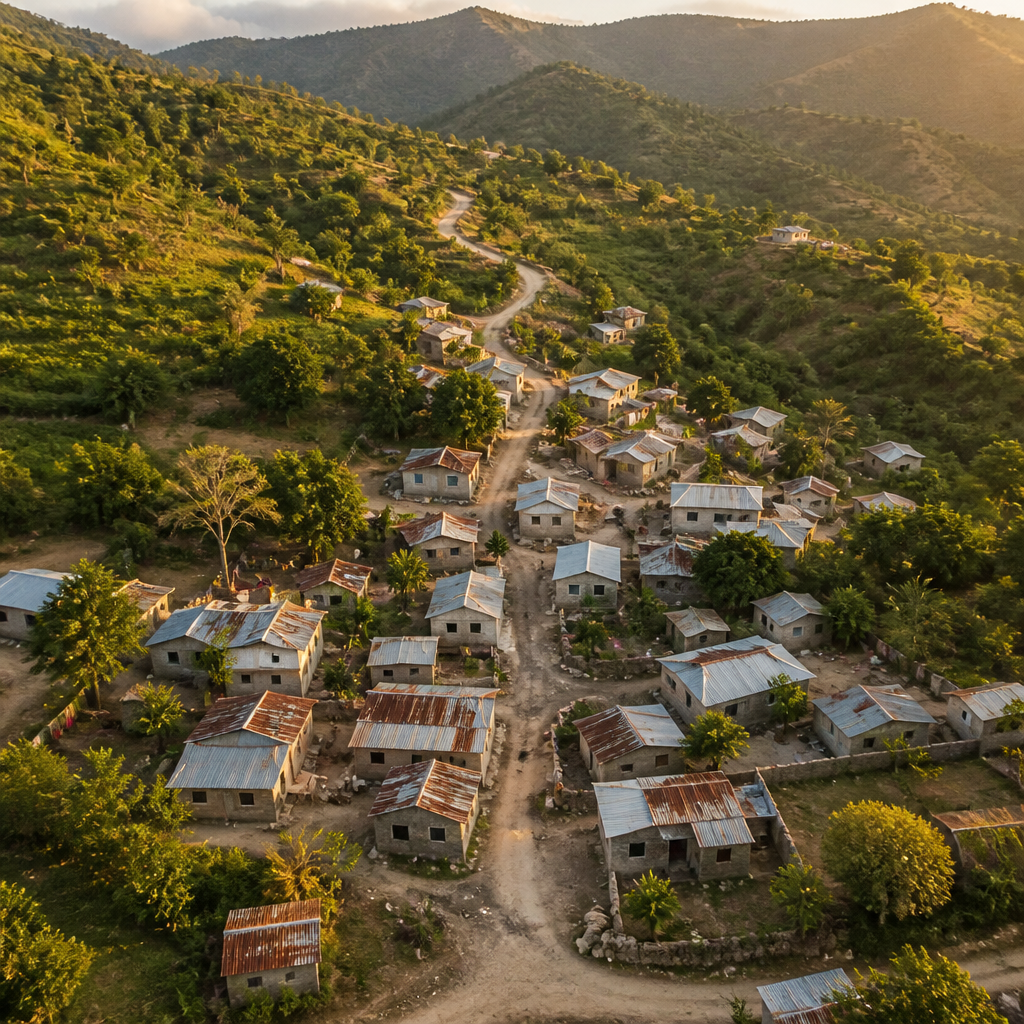
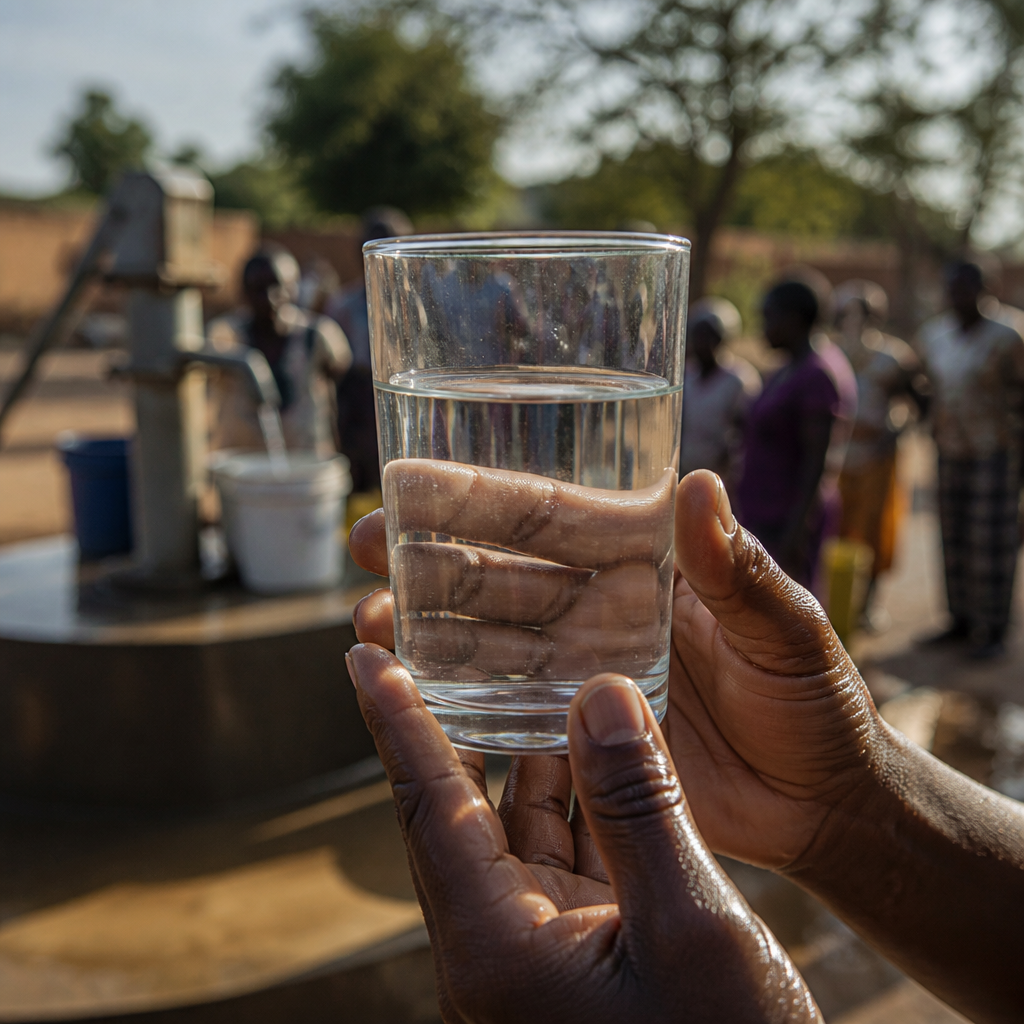
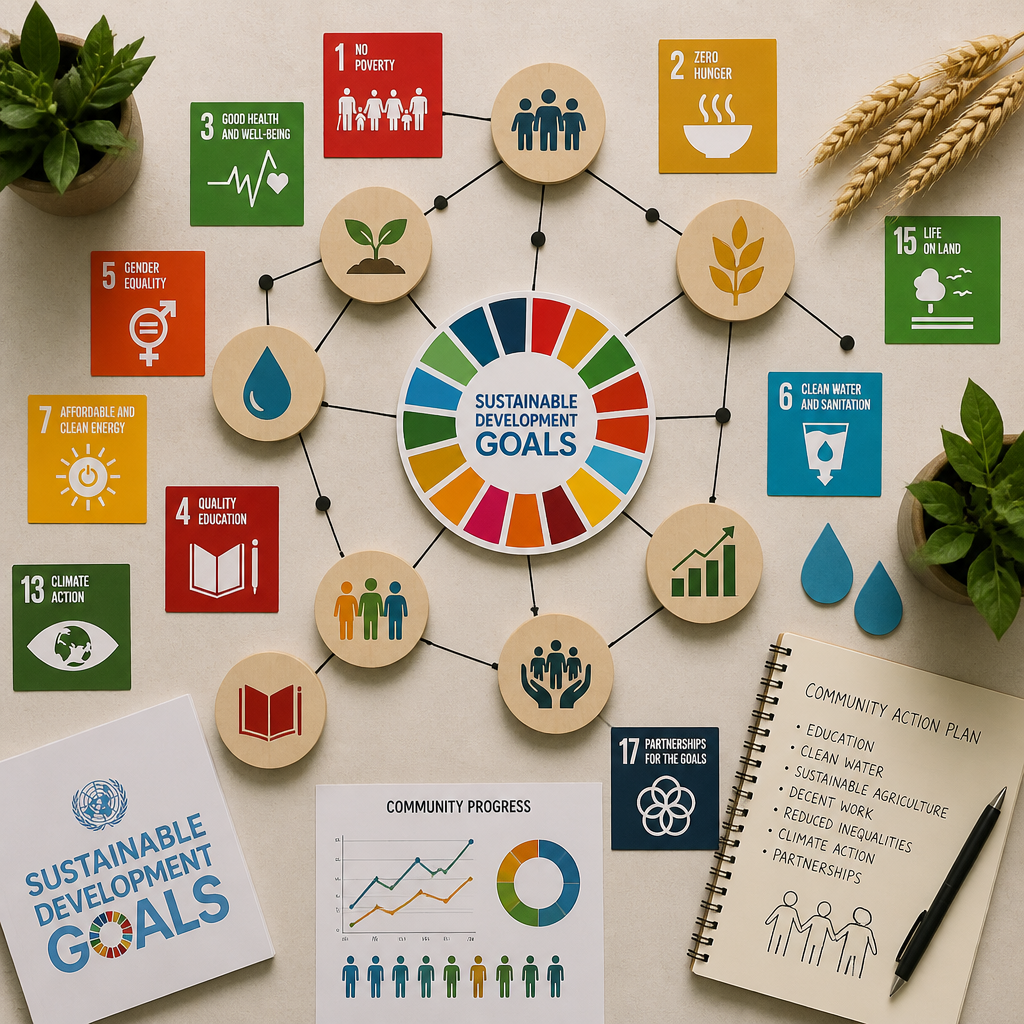
C2C and its partner communities in Haiti are implementing solutions that directly address UN Sustainable Development Goals 1, 2, 3, 4, 6, 8, 11, 13, 15, and 17. That breadth is not a marketing list. It reflects how interlocked the challenges are in practice, and why siloed single-goal programs so often fail to produce lasting change.
C2C is committed to eliminating poverty by equipping communities with tools, opportunities, and the support needed to achieve lasting financial stability. This goes beyond distributing resources. It means helping communities build the economic structures, skills, and local enterprise that make financial stability reproducible without ongoing foreign subsidy.
Food security under SDG 2 is deeply connected. When more than 40% of Haiti’s population experienced acute food insecurity in 2023, the response cannot only be food distribution. It must include sustainable agriculture capacity, local food systems, and economic conditions that allow families to buy and grow food consistently.
C2C is dedicated to improving community health by enhancing access to clean water, sanitation, healthcare, and wellness programs for lasting well-being. In communities where healthcare infrastructure is effectively absent, this requires building it from the ground up, including the local knowledge and administrative capacity to keep it running.
On education, C2C fosters access to quality education by supporting communities with resources, training, and opportunities that empower local teachers and learners. A school built and staffed by community members has fundamentally different sustainability odds than one run by rotating international volunteers.
Only 15% of Haitians have a handwashing facility with soap and water at home. Clean water and sanitation gaps in Haiti are not just health issues. They are economic and educational ones. Children who are sick from waterborne illness cannot attend school. Adults managing sanitation failures cannot be productive workers. SDG 6 sits at the center of C2C’s community health work.
Sustainable communities and climate resilience (SDGs 11, 13, and 15) are not abstract for Haiti, a country exposed to hurricanes, earthquakes, and severe deforestation. C2C’s approach to sustainable infrastructure addresses these realities by designing community assets for resilience, not just for immediate use.
SDG 17 covers partnerships for the goals, including how international organizations work with local actors. This is arguably the most important SDG for assessing development model effectiveness. C2C’s Collaborative Framework is itself an implementation of SDG 17, structured so that local community leaders are genuinely driving decisions, not just receiving them.
Pro tip: When evaluating any Haiti nonprofit or development organization, ask specifically which SDGs they report on and how they measure progress against those goals over time. Organizations that cannot answer precisely are likely tracking outputs rather than outcomes.
The C2C Collaborative Framework is the operational structure that separates C2C from typical aid-delivery models. It is not a program name. It is a methodology built on the principle that sustainable development goals in Haiti will only be achieved when Haitian communities own and drive the process.
C2C does not arrive in a Haitian community with a pre-built school design or a standardized health curriculum. There is no template dropped in from outside that communities are expected to absorb. This distinction matters because the standard model, where an organization designs a solution and a community receives it, produces dependency, not self-sufficiency.
The framework helps communities identify where they are, where they want to be, and what combination of local assets and external resources can move them there. This requires real engagement with the existing human capital inside each community, including the engineers, teachers, skilled tradespeople, and community leaders who are often overlooked by foreign-led programs.
C2C’s collaborative partnership model specifically incorporates working with local community professionals who go unseen or underutilized. This is not a minor operational detail. It changes who makes decisions, who builds solutions, and, critically, who maintains them after the external partner steps back.
Most development organizations measure success by outputs: schools built, meals distributed, children vaccinated. C2C measures success partly by whether communities need less external support over time. That metric creates a fundamentally different design incentive. An organization that profits from ongoing dependency will not design programs that build community self-sufficiency. C2C’s mission explicitly frames reducing reliance on foreign aid as the target, not an unintended side effect.
Pro tip: Donors assessing sustainable development in Haiti should request multi-year reporting from any organization they fund. A program that delivers strong outputs in year one but shows no increase in community capacity by year three is not producing sustainable development. It is producing recurring charity.
Not all development work in Haiti follows the same model, and the differences in approach produce very different outcomes against the sustainable development goals. The table below compares three distinct models operating in Haiti contexts, using C2C and two common alternative structures as reference points.
| Development Approach | How It Operates | SDG Alignment and Sustainability |
|---|---|---|
| C2C Collaborative Framework | Starts with community needs assessment; activates local professionals and leaders; designs solutions with the community, not for them; measures progress by reduction in external dependency over time. | Directly addresses 11 SDGs simultaneously. High alignment with SDG 17 (partnerships). Built for long-term self-sufficiency. Communities own outcomes. |
| Large International NGO Model (e.g., relief-focused organizations) | Designs programs centrally; delivers standardized interventions at scale; relies on international staff and volunteers; measures outputs (schools built, people served) rather than community capacity built. | Strong on short-term humanitarian SDG targets (SDG 2, SDG 3). Weaker on long-term self-sufficiency. Risk of dependency creation. Communities are recipients, not drivers. |
| Government-Linked Aid Programs | Channels funding through national governments; subject to political instability; slow deployment; often disconnected from local community realities on the ground. | Theoretically aligned with all SDGs at national policy level. In practice, weak at community implementation in fragile states like Haiti. Vulnerable to corruption and institutional breakdown. |
The comparison above is not an argument that relief-focused programs have no value. In acute crises, immediate humanitarian response is necessary. The distinction is about what comes after the crisis phase, and which models are designed to produce self-sustaining communities rather than populations that remain reliant on the next round of external funding.
The gap between community-led development and externally managed development is most visible not in program descriptions but in what happens five years after an intervention ends. Community-led programs leave behind local ownership structures, trained local professionals, maintained infrastructure, and communities capable of replicating what they built. Externally managed programs leave behind infrastructure that depends on the external organization returning to maintain it.
Haiti has engineers, teachers, healthcare workers, and skilled tradespeople. C2C’s approach treats this existing human capital as the primary resource for sustainable development, not as a secondary consideration to be engaged after international experts define the plan. In practice, this means local professionals are not just employed in C2C projects. They are central to designing, running, and eventually fully owning the solutions developed.
This is a direct implementation of SDG 8 (decent work and economic growth) and SDG 17 (partnerships). When local engineers build local infrastructure with community oversight, those professionals gain applied skills, economic income, and stakeholder ownership in outcomes that make maintenance far more likely.
C2C specifically engages the Haitian diaspora as a resource for sustainable development. Diaspora members bring expertise across medicine, education, engineering, and communications that can be connected to partner communities in Haiti. This is not a remittance model. It is a human capital transfer model, aligned with SDG 17’s emphasis on meaningful partnerships that combine different forms of resource and expertise.
A common mistake in Haiti nonprofit strategy is treating the diaspora as a funding source only. The expertise and cultural knowledge diaspora members bring is often more valuable over time than the funds they donate.
The 2030 Agenda for Sustainable Development is explicit that the goal is not permanent external support. It is communities and nations that can sustain their own development. For Haiti, that means the measure of any development program is not how much aid it delivers, but whether the communities it works with are more capable of meeting their own needs after the program than they were before it.
This is the hardest test in development work, and most programs are not designed to pass it. External dependency is, paradoxically, often baked into how international organizations fund and structure themselves. Organizations that receive funding based on the number of people served have limited incentive to reduce the number of people who need serving.
C2C’s mission explicitly states that its partner communities are building long-term self-sufficiency and reducing reliance on foreign aid. That framing, where reduced dependency is the measure of success rather than a threat to organizational relevance, is what makes the C2C model credibly aligned with what the sustainable development goals were designed to achieve.
For international donors and philanthropists evaluating where to direct support for Haiti development, this is the key differentiator. Funding organizations that build community capacity creates compounding returns. The communities C2C works with today are developing the institutional knowledge, local leadership, and infrastructure ownership that will enable them to support neighboring communities in the future. That kind of replication at community scale is how SDG targets get reached in practice, not through an indefinite supply of external aid.
Based on current data, SDGs 1 (no poverty), 2 (zero hunger), 3 (good health), 6 (clean water and sanitation), and 4 (quality education) are among the most urgent for Haiti. The country ranks 151st globally on the SDG Index, and conditions on each of these indicators have worsened since 2020. Addressing them in isolation does not work. Progress on SDG 6 directly enables progress on SDG 3 and SDG 4, which is why integrated approaches like C2C’s Collaborative Framework are more effective than single-goal programs.
C2C measures success by whether partner communities need less external support over time, not by outputs delivered. Most nonprofits measure schools built, people fed, or children vaccinated. Those outputs matter, but they do not indicate whether a community is more capable of sustaining its own development. C2C’s model starts with existing community assets, local human capital, and community-led decision-making, which produces fundamentally different long-term outcomes.
Sustainable development in Haiti means a community that can secure its own basic needs, including water, food, shelter, sanitation, and health, without ongoing dependence on foreign aid. It means local professionals managing local infrastructure, local teachers running local schools, and local leaders making decisions about community priorities. C2C defines this as development with dignity, and it is the standard against which all program work is measured.
The most common failure mode is designing programs around what an external organization can deliver rather than what a community can own and sustain. When a school is built by outside contractors and staffed by rotating volunteers, the community has no ownership of its operation or maintenance. When the external organization leaves or funding ends, the program ends with it. Programs designed around community capacity building from the start do not face this failure mode because the community is the program, not just the beneficiary.
Ask for multi-year reporting that shows not just outputs but changes in community capacity. Specifically, look for evidence that local professionals are leading programs, that communities are making decisions about program design, and that the organization tracks whether communities need less external support over time. Organizations that can only report on how many people they served, without addressing whether those communities are more self-sufficient, are not producing sustainable development. They are producing recurring dependency.
SDG 17 calls for partnerships that combine financial resources, knowledge, expertise, and technology in service of sustainable development. C2C’s Collaborative Framework implements exactly this by combining diaspora expertise, donor funding, local community knowledge, and local professional capacity in a structure where the Haitian community drives the process. This is not a passive recipient model. It is a genuine partnership where each actor contributes specific value and the community retains decision-making authority.
What has your experience been with development programs in Haiti, and which approaches have you seen produce the most lasting impact? Share your perspective in the comments below.