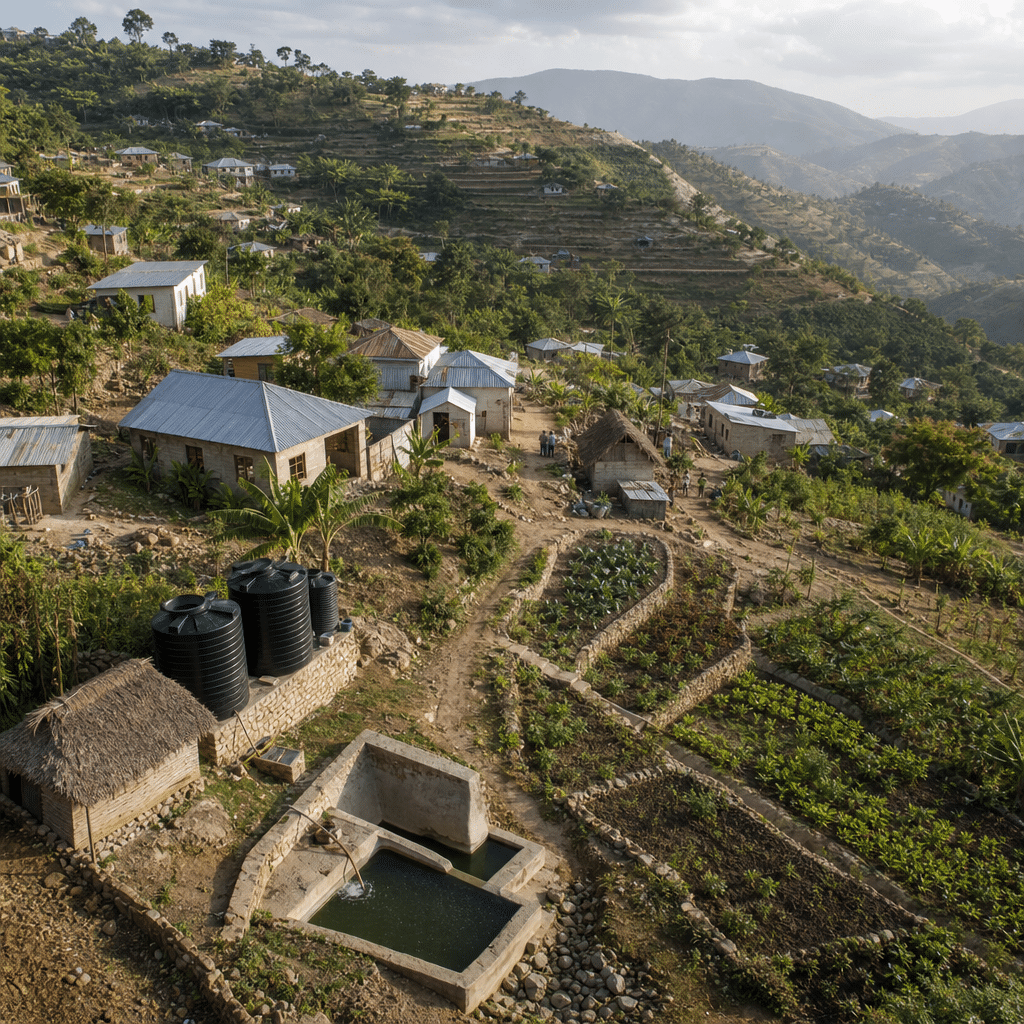
Haiti ranks among the poorest nations in the Western Hemisphere, with over 59% of its population living below the national poverty line, according to the World Bank. Foreign aid has flooded the country for decades, yet dependency has deepened rather than dissolved. The reason is structural: most aid models bypass communities rather than empower them. Community2Community (C2C) takes a fundamentally different approach, one that directly connects its work to UN Sustainable Development Goals Haiti communities can actually sustain. This article maps exactly how C2C’s Collaborative Framework addresses 11 of the 17 SDGs and why that alignment matters for donors who want measurable, lasting impact.
| Key Insight | Explanation |
|---|---|
| C2C addresses 11 of 17 SDGs through one integrated framework | Rather than siloed programs, C2C’s Collaborative Framework connects health, education, water, and economic goals so progress in one area reinforces others. |
| Community ownership is the mechanism, not the tagline | Communities co-design, co-implement, and co-evaluate every project. This is what separates C2C from traditional aid organizations operating in Haiti. |
| Donor funds go further when dependency is eliminated | Because communities maintain their own infrastructure and programs, the cost per sustained outcome is significantly lower than in externally managed projects. |
| SDG 6 (clean water) is a force multiplier for SDGs 3 and 4 | In C2C partner communities, access to clean water reduces child illness rates, which directly increases school attendance, connecting three SDGs through one intervention. |
| Measuring impact against SDGs creates donor accountability | Aligning to the UN SDG framework gives international donors a globally recognized standard to evaluate whether their contributions are producing real change. |
| Local leadership is not optional in Haiti’s context | After the 2010 earthquake, externally imposed reconstruction projects largely failed. C2C’s model prioritizes local decision-making as a non-negotiable condition of partnership. |
| Sustainable development in Haiti requires addressing all SDG pillars together | Poverty in Haiti is interlocking. Addressing income without health, or education without sanitation, produces short-term gains that collapse within one or two generations. |
The UN’s 17 Sustainable Development Goals were adopted in 2015 as a universal blueprint for ending poverty, protecting the planet, and ensuring prosperity by 2030. Haiti is one of the nations farthest from reaching those targets. According to the United Nations Development Programme, Haiti scores in the bottom fifth globally on the Human Development Index. That is not a gap that standard charity fills.
The problem with most Haiti development organizations is that they measure inputs, not outcomes. They count meals distributed, not families no longer needing them. They count classrooms built, not children who graduate and return to teach. C2C measures differently because its framework is built on the SDG logic: systemic, interconnected, and long-term.
For international donors and philanthropists evaluating where to direct resources, SDG alignment provides a non-negotiable filter. If a Haiti development organization cannot map its work to specific, measurable SDG targets, it is operating on faith rather than evidence. C2C maps to 11 SDGs with traceable outcomes at the community level.
Pro tip: When evaluating any Haiti development organization, ask specifically which SDG targets they report against and request community-level data, not national aggregates. National statistics in Haiti mask enormous variation between communities with functioning local governance and those without.
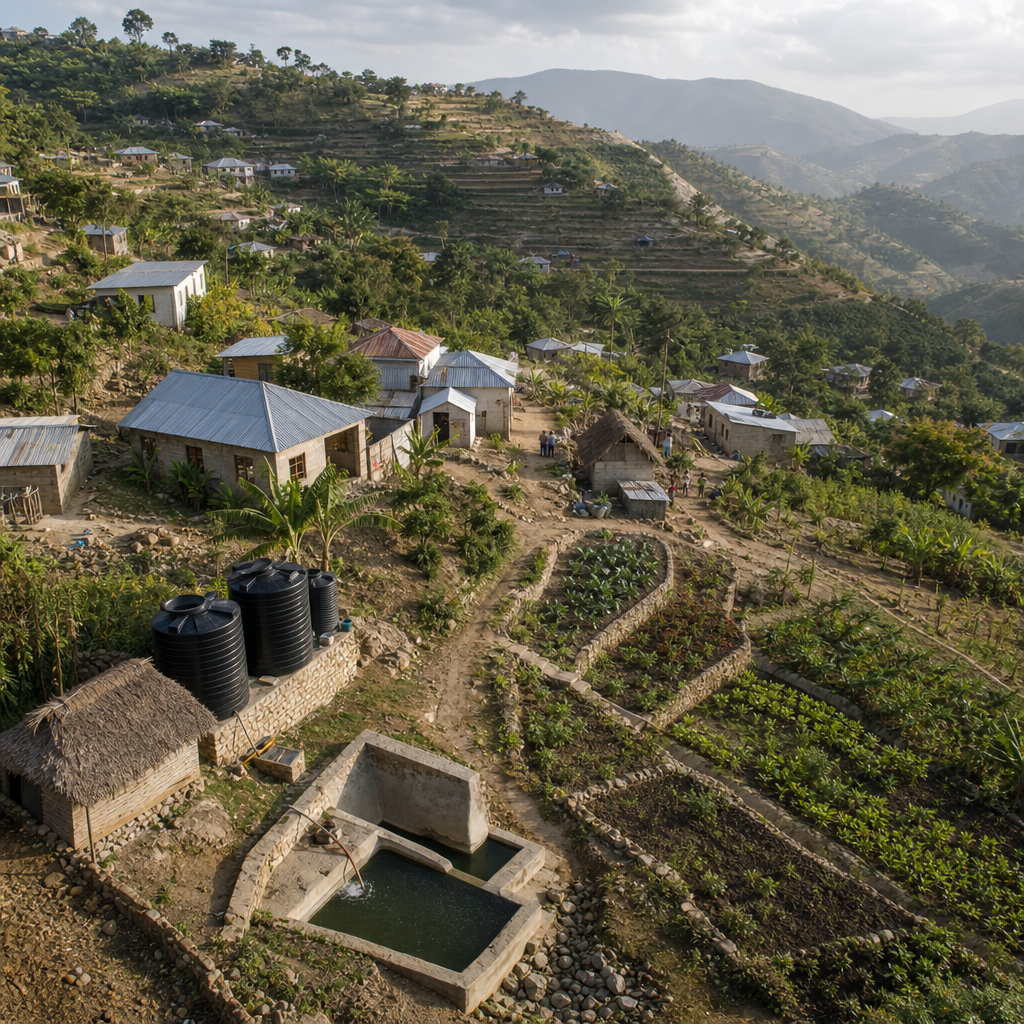
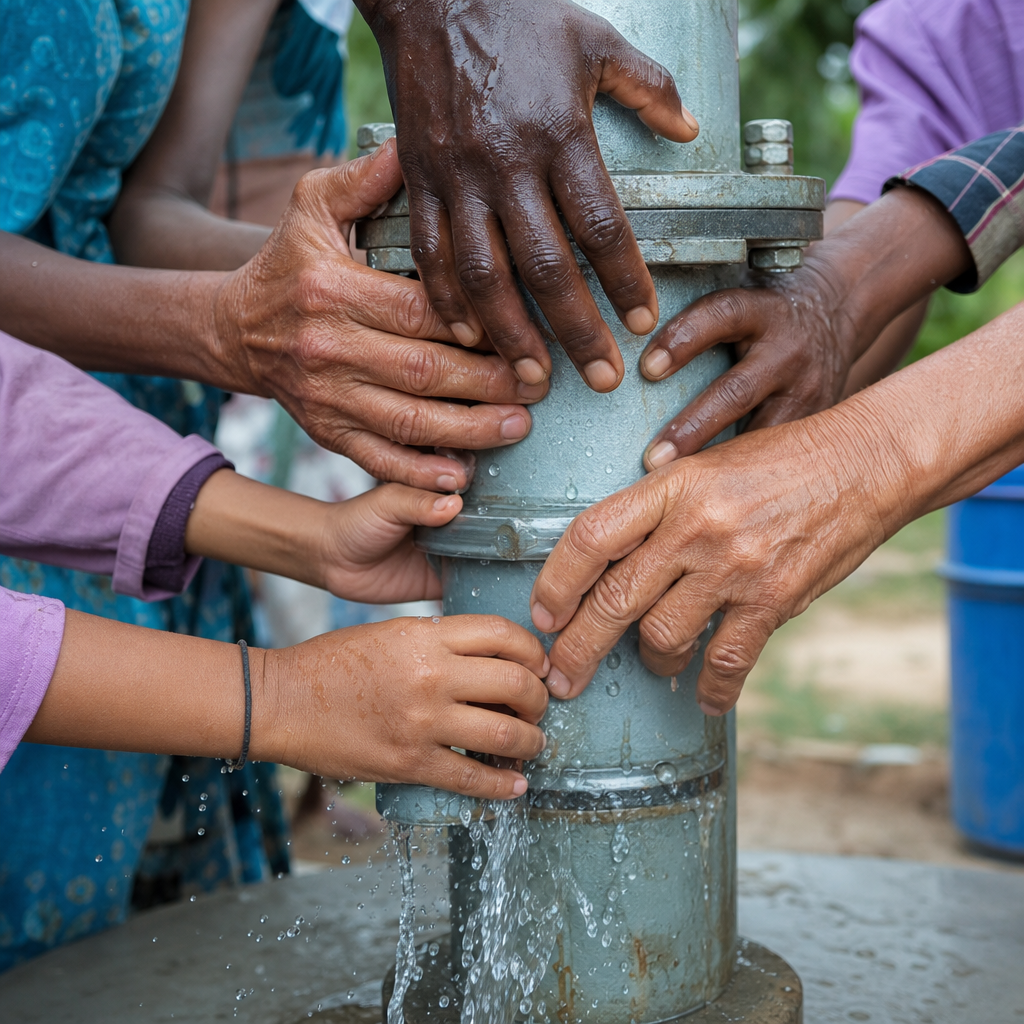
Haiti’s poverty is not primarily a resource shortage. It is a governance and agency problem. Families in rural Haiti often have land, labor, and local knowledge but lack the organizational structures to convert those assets into sustainable income. C2C’s approach to no poverty in Haiti targets this root cause directly.
The C2C Collaborative Framework builds community savings and lending circles, supports local enterprise development, and helps partner communities identify economic assets they already possess. In practice, this means communities are not waiting for external funding to start income-generating activities. They are building financial systems that stay within the community.
This matters because the data consistently shows that cash transfers and charity-based poverty programs produce temporary relief, not structural change. Research from the Brookings Institution demonstrates that community-driven development models achieve poverty reduction outcomes that persist at least five years beyond the initial intervention, compared to project-based aid that often collapses when external support ends.
Food insecurity in Haiti is driven by three overlapping failures: degraded agricultural land, broken supply chains, and dependency on imported food aid that undercuts local farmers. C2C addresses all three without pretending any one of them is easy to solve.
Partner communities work with C2C to restore soil health through reforestation and agroforestry, develop local food storage infrastructure, and build market linkages that allow smallholder farmers to sell at fair prices. This is not agricultural extension work in the traditional sense. It is community-owned food systems development.
A common mistake in Haiti food security programs is flooding communities with imported food aid during crisis periods and then withdrawing suddenly, leaving local food systems weaker than before. C2C’s model prioritizes local food production capacity from the first engagement, not as a phase-two ambition.
Haiti has one physician per 10,000 people, one of the lowest ratios in the hemisphere. External medical missions come and go, but they do not build lasting health capacity. C2C’s health work focuses on what communities can sustain: trained community health workers, preventive health education, maternal health support, and sanitation infrastructure.
In practice, the communities C2C partners with see measurable reductions in preventable child deaths and maternal mortality because health workers are neighbors who stay, not visiting clinicians who leave. Community health workers trained through C2C programs understand local disease patterns, speak the local language without a translator, and are accountable to families they know personally.
Good health in Haiti at a community level is inseparable from clean water access and proper sanitation. C2C does not treat health as a standalone program. It treats it as an outcome of multiple intersecting improvements.
Haiti has one of the lowest primary school completion rates in the Caribbean. The reasons are practical, not cultural: school fees, distance, child labor necessity, and poorly equipped schools drive dropout rates up. C2C’s approach to quality education in Haiti starts with removing those barriers before building new ones.
C2C partner communities identify the specific barriers preventing school attendance in their local context. In some communities, it is the cost of uniforms. In others, it is the distance combined with unsafe roads. Solutions are designed locally, which means they actually address the real problem rather than a generic assumption about what stops Haitian children from attending school.
Schools built through C2C’s collaborative model are maintained by community committees, not dependent on external repair budgets. Communities take responsibility for teacher accountability, material supply, and curriculum relevance. This is why C2C-partnered schools have higher retention rates than externally managed institutions in comparable areas.
Pro tip: Donors evaluating education projects in Haiti should look for two specific indicators: teacher retention rates and the percentage of school governing roles held by local community members. These predict long-term school functionality better than construction quality or enrollment numbers alone.
Approximately 45% of Haiti’s rural population lacks access to safe drinking water, according to UNICEF. Waterborne disease remains one of the leading causes of preventable death. Clean water and sanitation in Haiti is not simply a development priority. It is the foundation on which every other SDG outcome depends.
C2C works with partner communities to build water systems they can operate, repair, and expand without external technical support. This means training local water technicians, establishing community water committees with transparent governance, and sourcing repair materials locally wherever possible. When a pump breaks in a C2C partner community, a trained neighbor fixes it, not a visiting engineer who may not return for months.
The cholera epidemic that followed the 2010 earthquake, which killed over 10,000 Haitians, was a direct consequence of failed sanitation infrastructure and the absence of community-level water governance. C2C builds precisely the local capacity that was missing in that tragedy.
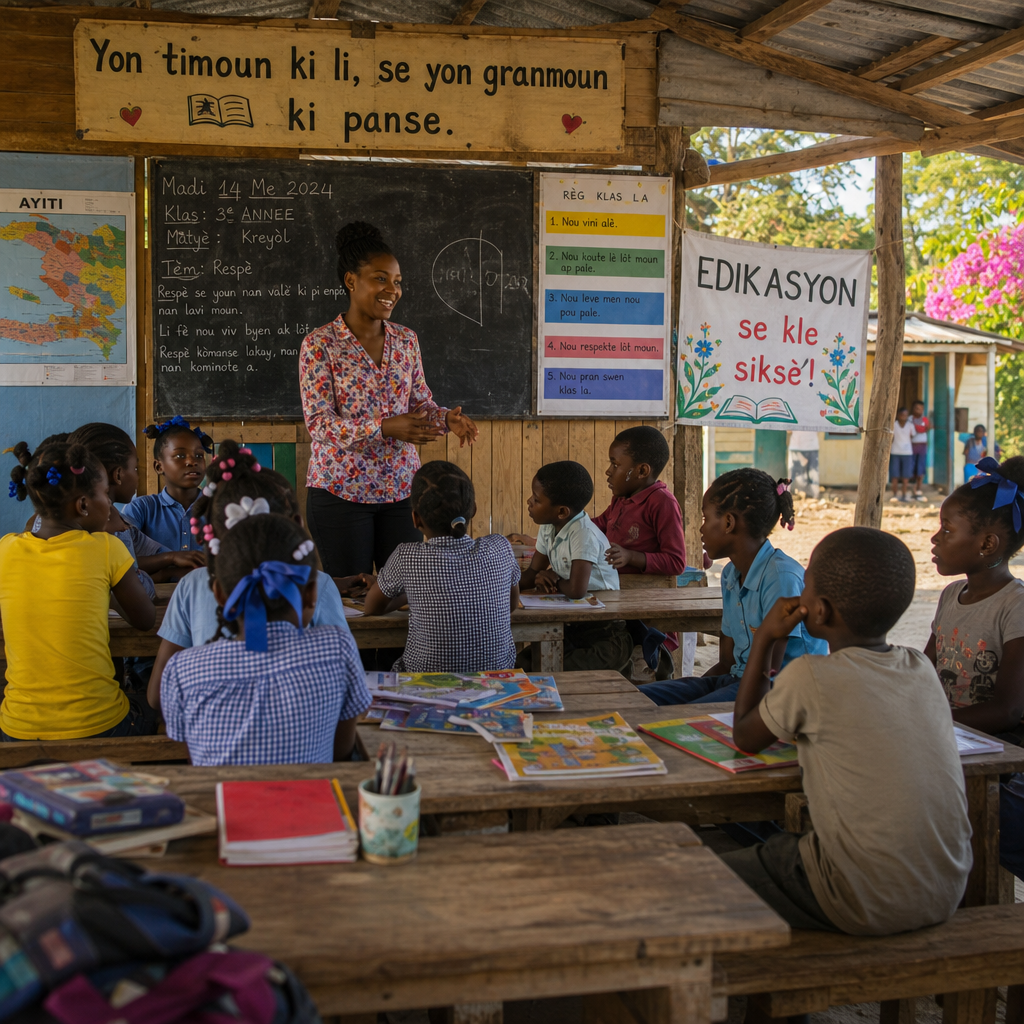
Formal employment in rural Haiti is scarce. The informal economy dominates, often under exploitative conditions. C2C’s approach to economic growth focuses on building dignified livelihoods rather than inserting communities into exploitative supply chains.
Cooperatives, skilled trade training, and market access development are central tools. Communities identify what they can produce, process, or provide and then build the organizational capacity to do so at a scale that generates real income. This is not microfinance as charity. It is economic development grounded in local assets and community governance.
The critical difference between C2C’s economic work and standard vocational training programs is the follow-through. Vocational training that ends at certification produces skilled individuals who cannot find buyers for their skills. C2C’s model pairs skills development with market linkage and cooperative formation so that trained individuals have an economic structure to work within.
Inequality in Haiti operates along multiple axes: urban versus rural, male versus female, and those with connections to international networks versus those without. C2C addresses inequality by centering the voices and leadership of those most marginalized within partner communities.
Women’s leadership is a explicit priority in C2C’s Collaborative Framework. In communities where women have historically been excluded from resource allocation decisions, C2C facilitates processes that shift that dynamic. The evidence from development research is clear: communities where women hold decision-making roles achieve better health, education, and economic outcomes than those where they do not.
Reducing inequality in Haiti also means reducing the power imbalance between international organizations and local communities. C2C’s partnership model gives communities the authority to refuse, redirect, or redesign proposed interventions. That is not a rhetorical commitment. It is a structural feature of how C2C operates.
Haiti’s urbanization rate is accelerating as rural poverty pushes families toward Port-au-Prince and other cities. Building sustainable communities in Haiti means making rural life viable so that urban migration is a choice, not a necessity. C2C’s work in partner communities directly supports this goal.
Community infrastructure built through C2C’s model, including roads, water systems, community centers, and market facilities, is designed for durability and local maintenance. Communities are not handed infrastructure and left with instruction manuals. They build the technical and governance capacity to manage that infrastructure as part of the project itself.
Haiti is also one of the most disaster-prone countries in the world. Community resilience is not an abstract concept here. It is a survival requirement. C2C integrates disaster preparedness into community development planning so that when the next hurricane or earthquake arrives, partner communities have functioning response protocols rather than starting from zero.
Haiti has lost over 98% of its original forest cover, according to environmental assessments from international conservation organizations. Deforestation accelerates erosion, destroys agricultural land, and intensifies the impact of hurricanes and floods. This is not a distant climate problem. It is a present emergency.
C2C partner communities engage in reforestation as both an environmental and economic activity. Trees provide watershed protection, soil stabilization, and eventually timber and fruit income. Community-led reforestation succeeds where government programs have failed because communities have direct stakes in the survival of the trees they plant.
Climate adaptation in Haiti also requires rethinking agricultural practices. C2C supports the transition to climate-resilient crop varieties and farming techniques that reduce water dependency and withstand irregular rainfall patterns, which are increasing in frequency across the Caribbean.
Haiti’s national institutions have been chronically weak, corrupt, or absent in rural areas. The absence of functional local governance is one of the root causes of persistent poverty and vulnerability. C2C does not wait for national institutional reform. It builds strong local institutions at the community level.
Community governance committees, transparent resource management systems, and local accountability mechanisms are core outputs of C2C’s Collaborative Framework. These are not peripheral to development work. They are the infrastructure that makes all other development gains durable.
“Communities that govern themselves well sustain their own development. Communities that depend on external governance collapse when that governance withdraws.” This principle drives every governance-building activity C2C undertakes with partner communities.
SDG 17 recognizes that no single actor can achieve the 2030 agenda alone. C2C’s model is built on partnership at every level: between C2C and communities, between communities and local government, and between Haitian communities and international supporters. The nature of those partnerships matters as much as their existence.
C2C’s international partnerships are structured to serve community priorities rather than donor preferences. This is a meaningful distinction. Many Haiti development organizations shape their programs around what donors want to fund. C2C engages donors who are willing to fund what communities have identified they need. That reversal changes everything about program design, implementation, and outcomes.
For international donors evaluating how to support sustainable development in Haiti, C2C’s partnership model offers a direct channel to community-determined priorities with full transparency on how resources are used and what outcomes they produce.
Not every Haiti development organization operates the same way, and the differences matter enormously for donors choosing where to direct resources. The following table compares C2C’s approach against two other organizations active in Haiti development to help donors make informed decisions.
| Dimension | C2C (Community2Community) | World Vision Haiti | Haiti Partners |
|---|---|---|---|
| Decision-making authority | Held by partner communities through governance committees | Held by international program teams with community consultation | Shared between local leaders and organizational staff |
| Primary model | Community-led Collaborative Framework targeting full self-sufficiency | Large-scale humanitarian and development programs across multiple sectors | Education-focused with leadership development components |
| SDG coverage | 11 SDGs addressed through integrated community programming | Broad SDG alignment across global programs, Haiti-specific depth varies | Primary focus on SDG 4 (education) and SDG 16 (institutions) |
| Dependency reduction approach | Explicit goal: communities graduate to full independence | Long-term program presence with community participation | Leadership training aimed at reducing dependency on external expertise |
| Scale of operation | Deep engagement with specific partner communities in Haiti | Large-scale operations across Haiti and 100+ countries | Focused operations in specific Haitian regions |
The comparison above is not an argument that C2C is the only organization doing valuable work in Haiti. It is an illustration that different organizations have genuinely different operating philosophies, and those philosophies produce different outcomes. Donors who want communities to own their own futures will find C2C’s model the most consistent with that goal.
All 17 SDGs are relevant to Haiti, but the most critical for its current development stage are SDG 1 (No Poverty), SDG 3 (Good Health), SDG 4 (Quality Education), SDG 6 (Clean Water and Sanitation), and SDG 16 (Strong Institutions). Haiti’s challenges in these five areas are structural and interlocking, meaning progress on one accelerates progress on the others. C2C addresses all five as interconnected priorities rather than separate programs.
C2C’s Collaborative Framework is built on direct partnerships with specific communities, with community governance committees maintaining oversight of how resources are allocated and spent. Rather than routing funds through multiple intermediary organizations, C2C works directly with partner communities to co-design budgets and expenditure plans. This structure minimizes administrative overhead and ensures that community priorities, not donor preferences, determine resource allocation.
Traditional foreign aid in Haiti has historically been designed, implemented, and evaluated by external organizations with communities as passive recipients. C2C’s model inverts that dynamic. Communities are active partners in designing every intervention, they hold decision-making authority throughout implementation, and they are equipped to sustain outcomes after C2C’s formal engagement concludes. The goal is a community that no longer needs C2C, which is the opposite of how dependency-based aid operates.
C2C welcomes donors who want to support specific areas of need such as clean water infrastructure, education, or health programs. However, because C2C’s model treats these as interconnected rather than isolated, the most effective donations support the integrated Collaborative Framework rather than single-issue programs. Donors interested in targeted giving are encouraged to contact C2C directly to discuss how their contribution can align with community-identified priorities in a specific partner area.
C2C uses community-level indicators aligned with specific SDG targets rather than national statistics that obscure local variation. Measurements include household income changes, school attendance and completion rates, water access rates within communities, maternal and child health outcomes, and the functionality of community governance systems over time. These indicators are tracked in collaboration with community members who are trained to collect and interpret their own data, which is itself a capacity-building outcome.
C2C facilitates donor engagement with partner communities in ways that respect community dignity and priorities. Visits are arranged with community consent and are structured so that the community demonstrates and explains its own work rather than being observed passively. This approach treats donor visits as opportunities for genuine relationship-building rather than poverty tourism, which is a distinction that serious philanthropists and development-focused donors will recognize as significant.
If you have supported a development organization in Haiti or are evaluating where to direct your next contribution, share what factors mattered most to you in that decision. Your experience adds to the conversation about what effective Haiti development actually looks like in practice.
We would love your feedback and any insights you would share with others. What perspective would you add?