
July 8 is not an arbitrary date. It is the cutoff for joining the C2C Neighbor monthly donor program at its current enrollment tier, and if you miss it, you miss the chance to embed yourself in one of the most transparent, community-led development models operating in Haiti right now. Most international giving platforms ask you to trust a logo and a press release. Community2Community asks you to trust a framework built alongside the very communities it serves, and then it shows you the results.
| Key Insight | Explanation |
|---|---|
| July 8 is a hard enrollment deadline | The C2C Neighbor monthly donor program closes its current enrollment window on July 8. Waiting means missing a structured, recurring giving opportunity tied to active field programs. |
| Monthly giving outperforms one-time donations by a significant margin | According to Nonprofit Source, monthly donors give 42% more per year than one-time donors. Recurring commitment is what sustains multi-year community development projects in Haiti. |
| C2C uses the Collaborative Framework, not top-down aid | The C2C Collaborative Framework puts Haitian community leaders in the decision-making seat. External donors fund priorities the community itself has identified, not what foreign organizations assume they need. |
| Your contribution addresses specific UN SDGs | C2C programs are aligned with UN Sustainable Development Goals covering poverty, health, education, and infrastructure. Your monthly donation is traceable to measurable development outcomes. |
| Neighbor donors receive direct program updates | Unlike passive donors, C2C Neighbors get reporting on the specific communities their funds reach, creating accountability that most international nonprofit giving lacks. |
| Community self-sufficiency is the exit strategy | C2C explicitly works to reduce reliance on foreign aid. Your monthly giving funds a transition toward community-owned systems, not permanent dependency. |
| Haiti nonprofit donations work best when they are predictable | Irregular or one-time funding forces organizations to pause programs mid-cycle. Monthly donors allow C2C to plan, staff, and execute development work without budget gaps. |
The C2C Neighbor program is Community2Community’s recurring monthly donor initiative. It is designed for people who want more than a tax receipt. A C2C Neighbor commits a fixed monthly amount that flows directly into the C2C Collaborative Framework, funding community-identified priorities in Haiti across health, education, economic development, and infrastructure.
The name is deliberate. A neighbor is not a benefactor looking down from a distance. A neighbor shows up consistently, understands the context, and invests in long-term relationships. That is exactly what the program demands and what it delivers in return.
In practice, the Neighbor structure allows C2C to build 12-month program budgets instead of reacting to donation spikes after disaster coverage. That reliability is what separates sustained development work from emergency response charity.

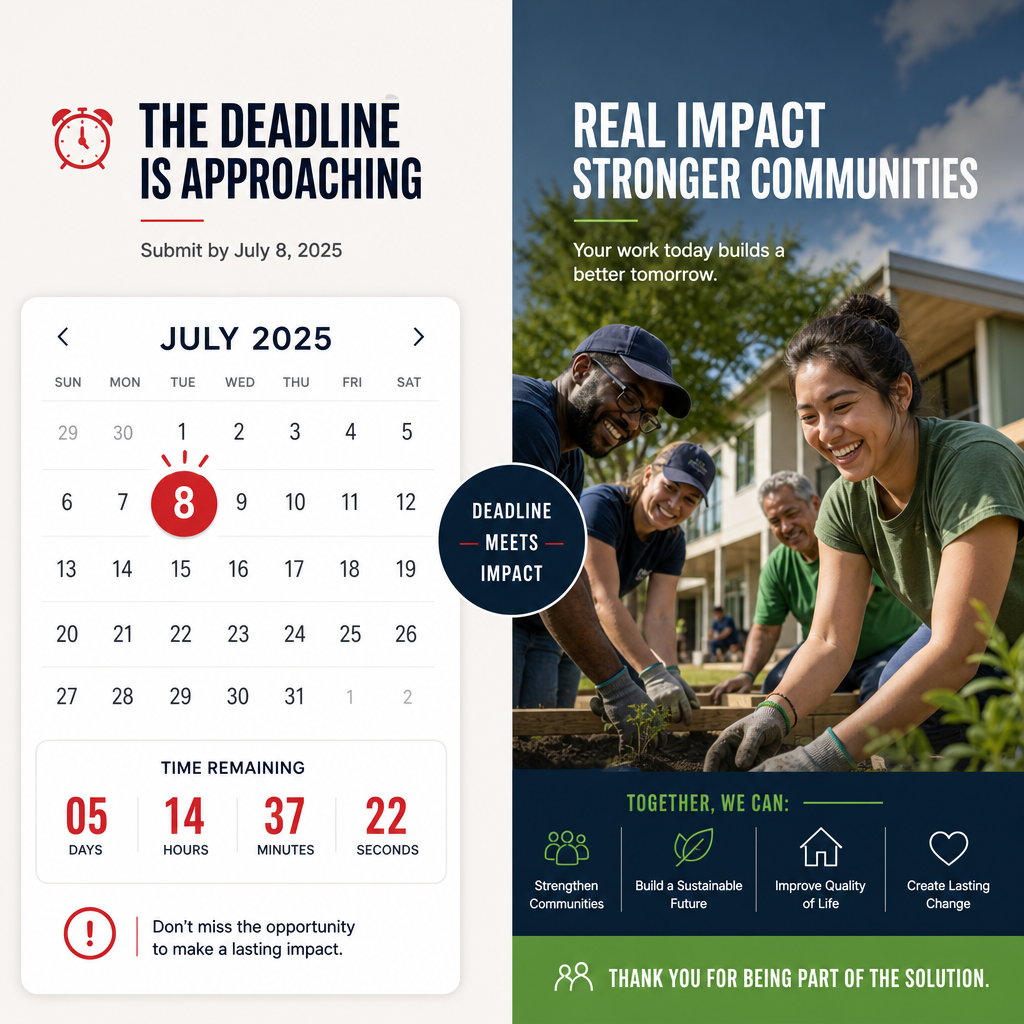
Enrollment windows for structured giving programs exist because program planning requires budget certainty at specific intervals. C2C closes this enrollment tier on July 8 to align new Neighbor commitments with its upcoming program cycle. If you join after that date, your funds will not integrate into the current operational plan at the same level of impact coordination.
This is not manufactured urgency. It is the operational reality of running field-level development programs in Haiti, where community teams, local coordinators, and partner organizations need confirmed funding to begin work. A donor who joins on July 9 is not a bad donor. They are simply a donor whose money cannot be committed to the programs launching in this cycle.
The deadline is a planning tool, not a marketing gimmick. Understanding that distinction is what separates informed philanthropists from reactive ones.
Pro tip: If you are on the fence about the giving amount, start at the minimum monthly commitment and increase it at your next annual review. Joining before July 8 at any level secures your place in the current program cycle.
The phrase “community-led development” gets used so broadly it has nearly lost meaning. At C2C, it has a specific operational definition. Partner communities in Haiti identify their own priorities through structured dialogue facilitated by the C2C Collaborative Framework. External resources, including your monthly donations, are then deployed to support those priorities, not to override them.
This matters because the historical record on top-down foreign aid in Haiti is not good. The 2010 earthquake response, for example, channeled billions of dollars through international NGOs with minimal coordination with Haitian institutions. The result was well-documented failure at the structural level, even when individual interventions succeeded.
“The most effective development happens when communities own the process, not just the outcomes.” – Oxfam International, Principles for Effective Development
C2C operates on that principle with a concrete methodology. Community leaders are not consulted after decisions are made. They make the decisions. C2C provides technical support, coordination, and access to funding. That split of responsibility is what makes the model replicable and, critically, what creates the conditions for self-sufficiency.
What the C2C Collaborative Framework Looks Like on the Ground
Partner communities go through a structured assessment phase where local leaders map existing assets, identify gaps, and rank development priorities. C2C field staff facilitate this process but do not control it. The output is a community development plan that becomes the funding roadmap.
Monthly donor funds are then allocated against that roadmap. This is why C2C Neighbor monthly donor contributions have a different quality of impact than unrestricted donations to large international NGOs. The money goes to a specific plan, not into a general operating fund where traceability disappears.
The question every serious donor should ask before committing to a recurring gift is simple: what does this money actually do? At C2C, the answer is specific and trackable.
Monthly Neighbor contributions currently support active programs across several SDG categories. In health, that means community health worker training and supply chain support for basic medical access in areas with limited clinic infrastructure. In education, it funds school materials, teacher support, and infrastructure repair driven by community-identified school needs. In economic development, it supports micro-enterprise training and cooperative structures that build local income capacity without creating dependency on external employers.
Pro tip: Ask C2C directly what community or program region your Neighbor donation is assigned to before July 8. They can tell you. That specificity is a feature of the Collaborative Framework model that most large Haiti nonprofit donations programs cannot offer.
The infrastructure component is often the one that surprises new donors. Clean water access, erosion control, and community building repairs are not glamorous. But they are the foundational investments that make health and education programs sustainable. C2C funds these because partner communities consistently rank them as priorities, not because they make for good marketing photos.
Choosing where to direct recurring Haiti nonprofit donations requires honest comparison. The three models most donors encounter are traditional international NGOs like World Vision, regional development organizations like Haiti Partners, and community-rooted organizations like C2C. Each has a different theory of change, and the differences are not subtle.
| Model Feature | Traditional International NGOs (e.g., World Vision) | C2C Neighbor Monthly Donor Program |
|---|---|---|
| Decision-making authority | Headquartered externally, priorities set by international staff and donor preferences | Haitian community leaders set priorities through the C2C Collaborative Framework |
| Donation traceability | Funds enter a general operating pool; specific allocation is difficult to track | Neighbor donations are tied to specific community development plans with direct reporting |
| Exit strategy | Long-term program presence often creates structural dependency | Explicit goal of community self-sufficiency; C2C works toward reducing need for its own intervention |
| Overhead and administrative cost | Large international infrastructure carries significant overhead ratios | Lean model with field-level coordination keeps more funds in direct community use |
| Donor relationship | Donor receives periodic newsletters and impact reports | Neighbor donors receive community-specific updates creating genuine accountability |
The data consistently shows that donor retention is higher when givers feel connected to specific outcomes. A 2022 report from the Association of Fundraising Professionals noted that monthly donors who receive specific impact reporting renew at rates 20 to 30 percentage points higher than those receiving only general communications. The C2C Neighbor model is built around that principle.
Not every donor is the right fit for this program, and C2C does not pretend otherwise. The Neighbor program is built for donors who want ongoing engagement, not one-time relief giving. If your philanthropic model is to give once after a crisis and move on, this is the wrong vehicle for that intention.
The right C2C Neighbor is someone who believes that community-led development in Haiti is both more ethical and more effective than externally directed aid. They are comfortable committing to a monthly amount for at least a year. They want to receive specific updates rather than generic impact stories. And they understand that sustainable development is measured in years, not news cycles.
Many experienced philanthropists supporting Haiti have already learned the hard lesson about disaster-response giving. Money poured into Haiti after the 2010 earthquake and the 2021 earthquake frequently did not reach communities in ways that created lasting change. The Red Cross’s well-publicized struggles in Haiti after 2010, where hundreds of millions of dollars produced a handful of permanent homes, became a case study in what happens when external organizations prioritize scale over community partnership.
C2C Neighbor donors are often people who have been through that cycle once and are now looking for a fundamentally different approach. The Collaborative Framework addresses the exact failure mode those donors witnessed.
The Neighbor program also works for community foundations and small institutional funders who want to align a recurring grant with SDG-linked programming in Haiti. C2C’s documentation of outcomes against specific development goals gives institutional donors the reporting infrastructure they need without requiring C2C to build a separate compliance apparatus just for large funders.
If your foundation board asks for SDG alignment on every grant, C2C can deliver that alignment at a level of specificity that most comparable organizations cannot match.
C2C structures the Neighbor program at accessible entry points so that consistent commitment matters more than donation size. Contact C2C directly at c2chaiti.org before July 8 to confirm the current minimum and available giving tiers for the upcoming program cycle.
You can still donate to C2C after July 8, but your contribution will not be integrated into the current program cycle at the Neighbor level. You would need to wait for the next enrollment window to join the structured monthly Neighbor program with full community-specific reporting and allocation.
A standard recurring donation typically goes into a general fund. The C2C Neighbor program ties your monthly contribution to specific community development plans within the Collaborative Framework. You receive updates linked to those plans, and your funding is part of a coordinated budget rather than a discretionary pool.
Community2Community is a registered development organization. Donations are generally tax-deductible for US donors, but you should confirm your specific situation with a tax advisor and verify C2C’s current IRS status directly through their site at c2chaiti.org.
C2C tracks outcomes against the community development plans created through the Collaborative Framework. Neighbor donors receive periodic reporting tied to those specific plans, covering progress on health, education, infrastructure, and economic development priorities the community itself identified. This is fundamentally different from aggregated impact statistics that cannot be traced back to your contribution.
Monthly commitments are flexible. C2C understands that donor circumstances change. You can adjust your amount or cancel by contacting C2C directly. The organization’s model does not depend on locking donors into commitments they cannot sustain, though consistent multi-year support is what produces the most significant development outcomes.
Because perpetual foreign aid dependency has not produced self-sustaining communities in Haiti over decades of international involvement. C2C’s explicit goal is to work itself out of a community’s need by building local capacity, leadership, and systems that function independently of external support. That is the only honest measure of development success, and it is what distinguishes C2C from organizations that measure success by the scale of their own operations.
Have you supported community-led development programs in Haiti before? Share what worked, what did not, and what you would look for in a monthly giving program before you commit.